
Related videos:
For the first time, a Cuban state media outlet has acknowledged a male violence crime as a feminicide.
The publication from Cubadebate last Monday utilized the term -though in its variant "femicide"- to headline a report on the murder of a woman in broad daylight in Holguín at the hands of her husband, an incident that also left the victim's daughter severely injured.
The coverage of the event marks an unprecedented occurrence in the Cuban state media ecosystem, which has traditionally been reluctant to use this type of terminology.
The article regarding the arrest of a man who murdered a young woman and assaulted her daughter was even echoed by agencies such as EFE, which emphasized the rarity of the incident: the use of the word "femicide" in the official Cuban press is virtually nonexistent.
An exception that confirms the rule
The acknowledgment of the term is neither gratuitous nor coincidental. It arises in a context where social pressure, independent activism, and alternative journalism have forced the regime to confront the reality of a gender-based violence crisis on the Island.
The platforms Alas Tensas and Yo Sí Te Creo en Cuba, which independently monitor and verify these incidents, recorded more than 50 in 2024 and so far there have been 19 counted this year.
So far, the government has categorically denied the existence of femicides in Cuba, relying on a semantic logic that seeks to separate these gender-based crimes from their structural and state context.
The ruler Miguel Díaz-Canel stated unequivocally last March during the Congress of the Federation of Cuban Women (FMC):
"The subversive anti-Cuban platforms attempt to impose the narrative that feminicide exists in Cuba (...). We can categorically assert here that this is a media construction completely foreign to the Cuban reality,” he declared."
A regime that prefers to deny rather than take action
The government's reluctance to use the term feminicide is not innocent. Acknowledging it would entail accepting that there is systematic and structural violence against women, to which the State has historically been passive or complicit.
Instead of implementing effective and transparent public policies, the regime has chosen silence, denial, and the criminalization of independent activism that demands justice and visibility.
The timely use of the term in Cubadebate seems more like a tactical strategy to appease international criticisms and clean up its image than a real change in the state's communication policy.
Just reviewing the history of that same media outlet is enough: before Monday, the word "feminicide" had only appeared in four headlines, and never to refer to a crime that occurred in Cuba.
In 2021, Cubadebate itself published a text stating that "trying to accurately apply the term femicide to the Cuban reality is complicated," justifying the omission with excerpts from the Constitution.
For her part, Mariela Castro Espín, director of the state-run CENESEX and daughter of Raúl Castro, stated in an interview with the newspaper Tiempo Argentino in 2015:
"We do not have, for example, femicides. Because Cuba is not a violent country."
Justice in the shadows
In the specific case of the crime in Holguín, neither Cubadebate nor any other official entity identified the victim or the aggressor, which reinforces the institutional opacity in handling these types of cases.
The lack of data, public statistics, and clear protocols continues to be the norm, even though in July of this year the government acknowledged that Cuban courts recorded 76 murders of women for gender-related reasons in 2024.
More recently, the creation of a computerized registry of femicides was announced, which will be managed by the Prosecutor's Office, the Supreme Court, and the Ministry of the Interior. However, this registry will not be public, which undermines any possibility for citizen oversight or independent auditing.
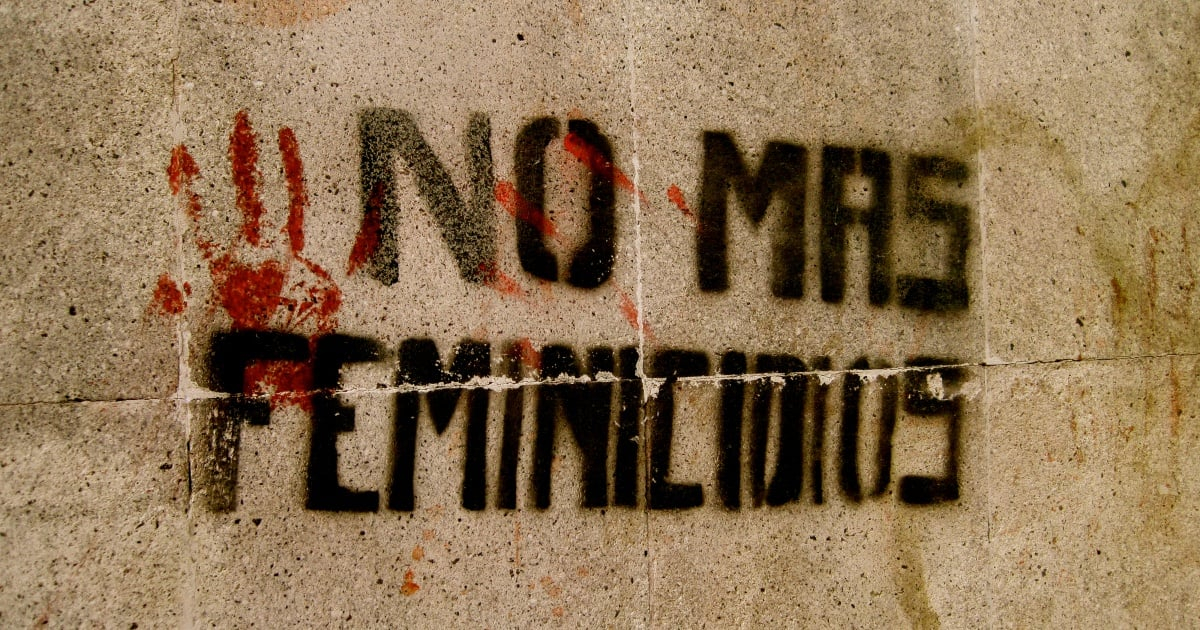
Feminicide: a word that power fears
The use of the term "femicide" in Cubadebate is, without a doubt, a milestone. But it is also evidence of the regime's hypocrisy: while it celebrates an "advanced" Family Code, it denies the most basic acknowledgment: that in Cuba, women are killed simply for being women.
The official silence is not neutral. It kills twice: the victim and their memory.
Naming feminicide is the first step to combat it. That it has finally been done by a state media is not a sign of progress from the regime, but rather a victory for independent feminist activism and civil society that resists being forgotten.
Frequently Asked Questions About the Recognition of Femicide in Cuba
What does the recognition of the term "femicide" by the Cuban state media mean?
The acknowledgment of the term "feminicide" in a pro-government Cuban media outlet marks a milestone, as the government has historically denied the existence of such crimes on the island. This recognition comes amid a backdrop of social pressure and independent activism aiming to raise awareness of gender-based violence in Cuba.
How has the Cuban government responded to criticism regarding gender-based violence?
The Cuban government has been criticized for its reluctance to officially acknowledge femicides and for its lack of transparency in publishing statistics on gender-based violence. Although it has implemented a computerized registry of femicides, it is not public, limiting the possibility for citizen oversight and independent auditing.
What is the current situation of femicides in Cuba according to independent platforms?
The independent platforms Yo Sí Te Creo en Cuba and Alas Tensas have recorded a total of 19 femicides so far in 2025. These organizations have taken on the role of documenting these crimes due to the lack of official recognition and transparency from the Cuban government.
Why is the term "feminicide" important in the Cuban context?
The term "femicide" is crucial as it implies the recognition of systematic and structural violence against women for gender-related reasons. Naming these crimes is the first step in combating them and demanding justice and effective public policies that protect women.
Filed under: