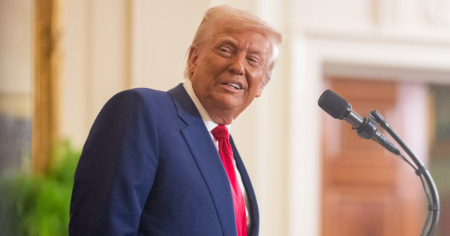
The President of the United States, Donald Trump, has launched a new tariff offensive that affects more than 90 countries and territories around the world.
In a series of decrees signed on July 31, the White House announced a plan that imposes tariffs on imports ranging from 10% to 41%, in what Trump has described as an attempt to "restore the economic sovereignty of the United States."
The plan will come into effect on August 7, except for Canada, where the new tariffs began to be applied as of August 1.
This new scheme partially replaces the "Liberation Day" package announced on April 2, reducing the initially planned tariffs in several cases, but also increasing others for political or commercial reasons.
Canada: The Most Critical Case
One of the countries most affected by this new trade policy is Canada. Trump signed an independent executive order that raises tariffs on Canadian products not covered by the USMCA (United States-Mexico-Canada Agreement) from 25% to 35%.
The measure was justified as a response to Ottawa's lack of cooperation in curbing the trafficking of fentanyl and other drugs.
"Canada has not cooperated to stop the constant flow of fentanyl and other illicit drugs, and has retaliated against the United States for the president's actions to address this unusual and extraordinary threat," the White House stated.
Additionally, a 40% tax was imposed on products that are transshipped through third countries to evade the new tariffs.
The Canadian Prime Minister, Mark Carney, reacted firmly: "I am disappointed. The sectors most affected by this U.S. decision will be those of wood, steel, aluminum, and automotive."
Canada has announced it will take steps to protect its domestic industry, although it has not yet formalized any specific countermeasures.
Structure of the new tariff plan
The new system is structured as follows:
-10% Tariffs: For countries with which the U.S. has a trade surplus. This is the "universal" tariff, applicable to partners such as the United Kingdom and Australia.
-15% Tariffs: Minimum applicable to about 40 countries with which there is a trade deficit.
-Tariffs of more than 15%: For countries without agreements, with large deficits, or that have been subject to political retaliation.
"Trump is restoring the economic sovereignty of the United States by reducing our dependence on foreign countries," stated Karoline Leavitt, White House spokesperson.
The president justified the measure as a response to decades of trade imbalances.
"The only price that has risen is that of the hundreds of billions of dollars flowing in," Trump said in an interview.
The case of Brazil: support for Bolsonaro and a 50% tariff
Brazil will receive particularly harsh treatment: in addition to the universal 10%, an additional tariff of 40% is imposed, reaching a total of 50%.
The decision is a response to the trial that former president Jair Bolsonaro is facing.
"You don't have to do business with the United States, and that seems fine to me," commented the leader regarding Brazilian President Lula da Silva's position.
China, Mexico, and the European Union: Exceptions and Agreements
China: reached a temporary agreement that reduces tariffs from 145% to 30%, while Beijing lowered them from 125% to 10%. Negotiations will continue until August 12.
Mexico: received a 90-day extension to continue negotiations before the implementation of a 30% tariff. The 25% tariff on products outside of the USMCA remains in effect.
European Union, Japan and South Korea: they agreed on a 15% tariff after direct negotiations.
Changes regarding the April plan
The new order partially replaces the tariff package announced on April 2. In most cases, tariffs have been reduced.
Angola: 32% → 15%
Bangladesh: 37% → 20%
Bosnia-Herzegovina: 35% → 30%
Botswana: 37% → 15%
Brunei: 24% → 25%
Cambodia: 49% → 19%
Cameroon: 11% → 15%
Chad: 13% → 15%
South Korea: 25% → 15%
Ivory Coast: 21% → 15%
Equatorial Guinea: 13% → 15%
Philippines: 17% → 19%
Fiji: 32% → 15%
Guyana: 38% → 15%
India: 26% → 25%
Indonesia: 32% → 19%
Iraq: 39% → 35%
Falkland Islands: 41% → 10%
Israel: 17% → 15%
Japan: 24% → 15%
Jordan: 20% → 15%
Kazakhstan: 27% → 25%
Laos: 48% → 40%
Lesotho: 50% → 15%
Libya: 31% → 30%
Liechtenstein: 37% → 15%
Madagascar: 47% → 15%
Malawi: 17% → 15%
Malaysia: 24% → 19%
Mauricio: 40% → 15%
Moldavia: 31% → 25%
Mozambique: 16% → 15%
Myanmar: 44% → 40%
Namibia: 21% → 15%
Nauru: 30% → 15%
Nigeria: 14% → 15%
North Macedonia: 33% → 15%
Pakistan: 29% → 19%
Democratic Republic of the Congo: 11% → 15%
Serbia: 37% → 35%
Sri Lanka: 44% → 20%
Switzerland: 31% → 39%
Taiwan: 32% → 20%
Thailand: 36% → 19%
Tunisia: 28% → 25%
European Union: 20% → 15%
Vanuatu: 22% → 15%
Vietnam: 46% → 20%
Zambia: 17% → 15%
Zimbabwe: 18% → 15%
International reactions and economic effects
-The announcement caused widespread declines in the stock markets:
Europe: Frankfurt, Paris, and Ibex 35 down by 2% to 3%.
-Wall Street: negative opening.
-Asia: declines in Hong Kong and Tokyo.
The euro also weakened, falling to 1.14 dollars per unit, marking its worst week since 2022.
With this new wave of measures, Donald Trump is doubling down on his protectionist stance with a strategy that blends commercial and geopolitical motives.
While some countries are trying to finalize agreements before August 7th, others are preparing to respond with reprisals.
The medium-term impact, both economically and diplomatically, will become clearer in the coming months, but for now, the global trade landscape is becoming more uncertain.
"Trump's tariffs will mark the beginning of a new era in global trade next week, and no one can predict with certainty how these barriers will function," warned Jochen Stanzl, an analyst at CMC Markets.
Filed under: