
Related videos:
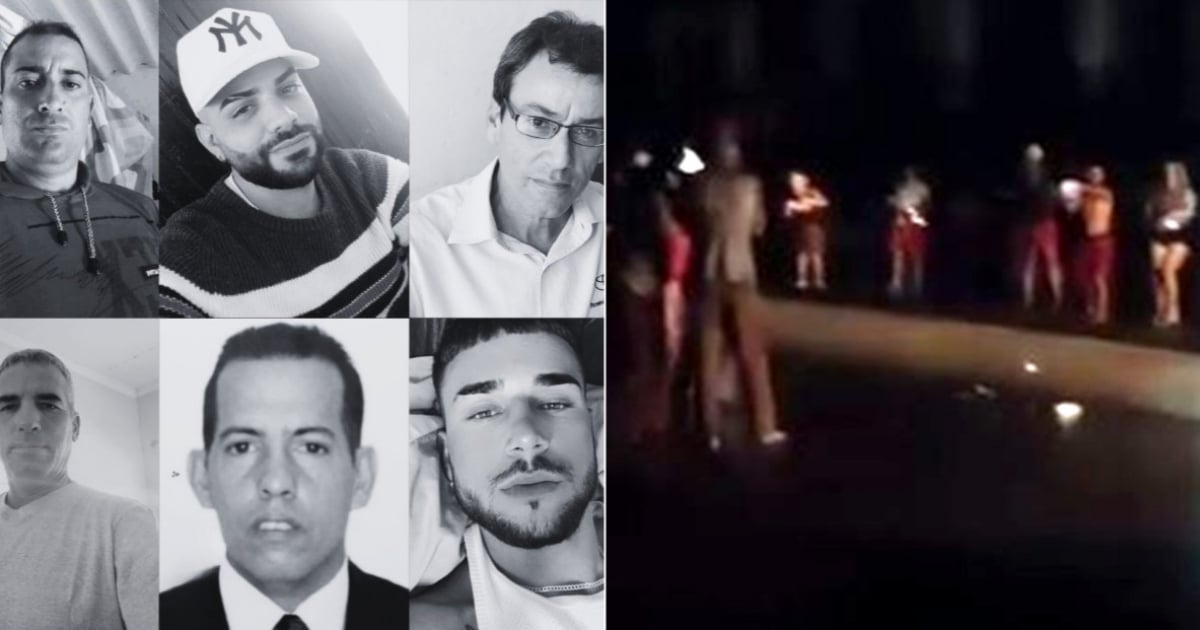
The Cuban regime has requested sentences of up to nine years in prison for several citizens who participated in the peaceful protests against power outages in the municipality of Encrucijada, Villa Clara, as reported this Friday by the human rights organization Cubalex.
The provisional conclusions of the Prosecutor's Office, signed by prosecutor Ayrebi Miranda Pérez and accessed by Cubalex, accuse the demonstrators of "taking advantage of the lack of electricity caused by the energy crisis to disrupt public peace" with pots and slogans.
The six individuals charged with the crime of "public disorder" participated on November 7, 2024, in a peaceful protest against the prolonged blackouts.
The prosecutor is requesting nine years in prison for Yandri Torres Quintana and Rafael Javier Camacho Herrera.
On his part, he requests six years for José Gabriel Barrenechea Chávez, as well as five years for Rodel Bárbaro Rodríguez Espinosa, four years for Yuniesky Lorences Domínguez, and five years of limitation of freedom for Marcos Daniel Díaz Rodríguez.
During the protests, the defendants performed drumming on pots and shouted phrases such as “Turn on the power!” and “We want power!” in demand of the restoration of the electric service.
Although no acts of vandalism, physical violence, or damage to property were reported, authorities present these actions as evidence of a massive attempt to disrupt public order.
In the case of the Cuban writer José Grabiel Barrenechea Chávez, the accusation is based on the assertion that he "urged people not to leave the place" and on personal assessments such as his "relationship with morally questionable individuals," "behavior on social media," and "complete disregard for the norms of coexistence."
Other notable cases include Andy Pérez Medero and Rasiel Cárdenas Pérez, detained in the community of El Purio after similar protests.
Both remain imprisoned without any pending prosecution against them.
Moreover, the activist Alejandro Morales Pereira was arrested months after the events, after calling for the release of the protesters.
According to Cubalex, their situation is critical and their life is in danger in prison.
"Where is the crime? Demanding a dignified life is not a crime," Cubalex stated in its public denunciation. The organization insists that the supposed evidence does not demonstrate violence, but rather the legitimate exercise of the right to protest.
In its statement, the entity warns that the Fiscalía document reflects a deliberate attempt to criminalize social discontent with disproportionate sanctions.
"It is a blatant violation of human rights," emphasizes the organization.
Cubalex demands the immediate release of all individuals detained for exercising their fundamental rights and alerts to the increasing pattern of judicial repression against peaceful protest in Cuba.
The sentences requested by the Prosecutor's Office add to a long list of cases where civic protest is penalized as if it were a common crime, in the context of a profound energy and social crisis on the island.
Frequently Asked Questions about Repression in Cuba and Peaceful Protests
Why does the Cuban regime seek prison sentences for peaceful protesters in Encrucijada?
The Cuban regime is requesting sentences of up to nine years in prison for several citizens who participated in peaceful protests against blackouts in Encrucijada, Villa Clara. Authorities accuse the protesters of "taking advantage of the lack of electricity to disturb public order," despite the fact that no acts of vandalism or physical violence were reported. This measure reflects an attempt to criminalize and suppress social discontent on the island.
What is the case of the Cuban writer José Gabriel Barrenechea Chávez?
José Gabriel Barrenechea Chávez, a writer and journalist, is facing a public disorder accusation after participating in a peaceful protest in Encrucijada. The prosecution argues that he urged people not to leave the area and accuses him of having "relationships with individuals of immoral character." Additionally, his 85-year-old mother, who is seriously ill, has requested to see him one last time. The authorities have refused to grant him humanitarian permission, which has been regarded as an act of psychological terror.
What is the stance of human rights organizations regarding these arrests in Cuba?
Organizations like Cubalex have reported that the accusations and prison sentences being sought are a blatant violation of human rights. They believe that the Cuban regime uses the judicial system to repress and silence social discontent, criminalizing peaceful protest and the exercise of fundamental rights. These actions are seen as part of a growing pattern of judicial repression in the country.
What other similar cases of repression have been reported in Cuba recently?
In Cuba, several cases of repression against peaceful protesters and critics of the regime have been reported. For example, Alexander Mario Fábregas Milanez was sentenced to seven years in prison for criticizing the government on social media, and Alexander Verdecia Rodríguez is facing a request for ten years in prison for expressing opinions contrary to the government. These cases reflect a systematic use of the Cuban judicial system to punish political dissent and freedom of expression.
Filed under: