
Related videos:
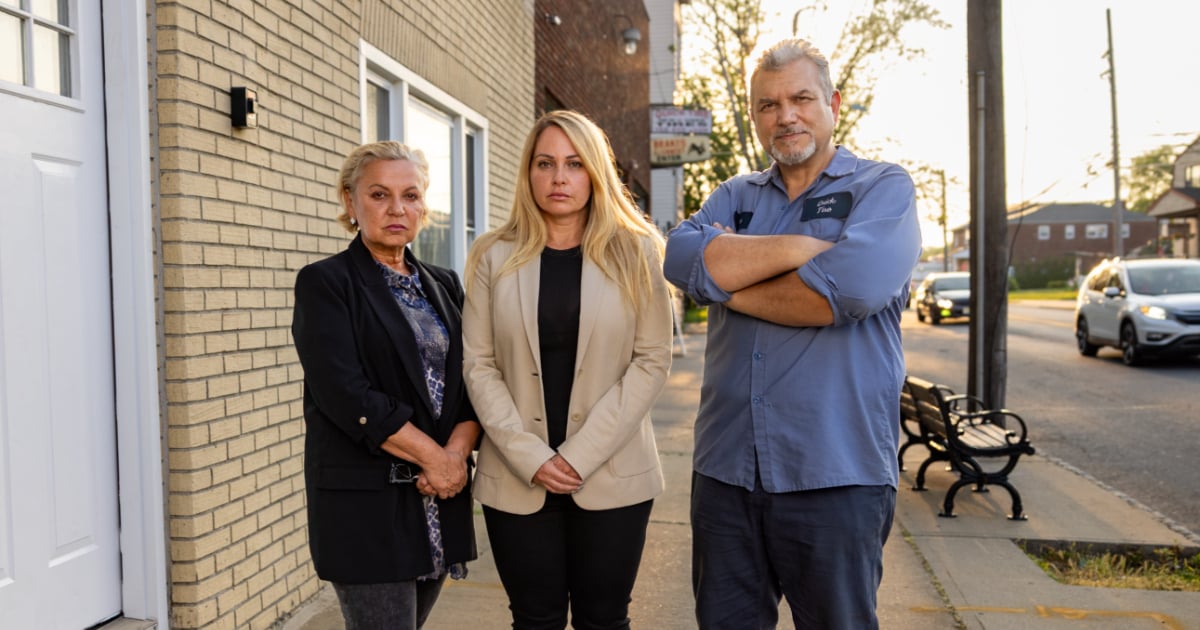
Honey Meerzon and Luis Romero, residents of Perth Amboy (New Jersey), are in a legal dispute with the city, which seeks to acquire their properties through the use of 'eminent domain'. They both claim that their families emigrated from the USSR and Cuba to escape communist regimes.
Honey Meerzon, daughter of a family that left the Soviet Union in the seventies, purchased a multi-family home in 2016 where four families reside. “My family came to this country for a better life. I went to university, I have a master's degree. I tried to make progress with this property and now they are taking it away from me to give it to someone with connections,” she told Townhall.
Luis Romero is the owner of Quick Tire & Auto, a workshop that has been in operation since 1976. He recounted that his father emigrated from Cuba after Fidel Castro came to power, concerned about the possibility of being drafted for the war in Angola. "Here I am, in the United States, and I have been grateful because this is my country. I never thought that this could happen to me here… that they would come and legally take away your property," he stated.
According to Romero, a decade ago a promoter warned him: “If you don’t sell, it’s going to be bad for you because the city will take it away. You won’t receive anything.”
The city council of Perth Amboy classified the properties as "blighted" to include them in a 44-acre urban development plan. According to the lawsuit filed by the Institute for Justice (IJ), the report supporting this decision cites as evidence "two pieces of cardboard at the entrance" and "the presence of a stray cat." Romero added that it was also claimed that his workshop is "too close to the sidewalk," something he considers common in the area.
The owners stated that they have no citations for urban code violations and that they offered to modify their buildings to meet the project's requirements, a proposal they claim was rejected. In public hearings, they said, between 80 and 100 neighbors participated in opposition to the measure, which was approved by the municipal council with one vote against it.
The Institute for Justice (IJ), representing the plaintiffs, argues that the properties do not meet the state law's criteria for blight. In a post on X, the organization stated: "They have worked hard to create successful businesses and hope to leave a legacy for future generations. Now the city of Perth Amboy, New Jersey, wants to take their properties by labeling them as 'blighted', citing nothing more than small amounts of trash and a stray cat. If Honey and Luis's properties are not safe from #EminentDomain, then no one's property is."
The 'eminent domain' in the United States allows the government to acquire private properties for public use and with fair compensation, according to the Fifth Amendment.
A diferencia de las expropiaciones en regímenes comunistas, en Estados Unidos la Constitución prohíbe confiscaciones sin compensación y establece que Every acquisition must be justified for a public purpose y ofrecer pago justo, con derecho a apelación.
However, following the ruling Kelo v. City of New London (2005), local governments may use this framework for private projects if it is argued that they serve a "public purpose."
New Jersey amended its regulations following that ruling, but still retains the option to expropriate in areas designated as "blighted," a definition that, according to lawyer Bobbi Taylor (IJ), "has expanded so much that it can mean anything."
Filed under: