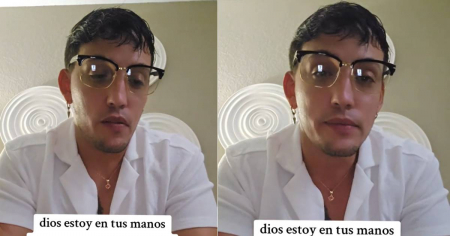
A Cuban woman residing in the United States responded on TikTok to a comment questioning her decision to become a mother without yet having legal status in the country. The woman, identified as @susaily, explained that her story is marked by years of waiting and sacrifice.
"I usually don't respond to this type of comments because I prefer to reply to positive ones to continue helping people, but once in a while, it's necessary to set people straight." said at the beginning of the video.
In her response, she quoted the comment she received: “But my God, why do they start having babies without legal status yet?” and replied: “How do you know me? […] I waited 15 years to have my baby, which I couldn't have in my country, and I also had to flee like everyone else, like every Cuban […] my child is a result of in-vitro fertilization that I was able to do here in this country, thank God […] I didn’t enter with parole, I didn’t come in through the front door, like many did, and I faced the misfortune of having an I-220A, but just like so many other mothers did.”
The mother defended her decision: “Do you think everyone is going to wait to have legal status before having a child? […] The important thing is to have your child and to have him in the land of freedom, because yes, I may not have legal status, but at least I have achieved my goal, being able to have my child and he is an American citizen.”
He also revealed that he had a family petition pending for seven years: “I was indeed going to enter this country legally, but I had to come before that, and once I was in this country, the petition came through for me [...] all of that is in my political asylum.” And he concluded with a piece of advice: “Don't spread poison in people's profiles, speak kindly, comment nicely, as God will reward you for that.”
The video generated hundreds of comments, mostly in support. “I’m in the same situation and the best response you could give […] we want to give our babies the opportunity to not go through what we went through,” wrote one user. Another commented: “Life must go on, with or without legal status, we need to fulfill dreams that we couldn’t achieve in our countries.”
Many women shared similar stories: “I didn't have legal status and now I have my residency and at the same time my baby […] positive mindset and everything will turn out well,” “Legal status does not define a person, and much less does it prevent one from being a mother,” were some of the responses.
A few weeks ago, the same woman posted a message warning about the vulnerability of those with the I-220A form, following the arrest of a young Cuban by ICE in Florida. In that video, she stated: “I am I-220A, my husband is too. He has a court date. We have a baby. And what they are going through, we can also go through.” You can see more details in the note where she alerted about the risk of deportation of a young Cuban.
The issue gains traction amid the legal battle over whether children of immigrants retain automatic citizenship at birth. In January, President Donald Trump signed an executive order to eliminate this right for children of individuals without legal status, which triggered multiple lawsuits and injunctions.
Weeks later, a federal appeals court ruled that the order was unconstitutional, in a decision that marked a legal setback for the government. Nevertheless, the Citizenship and Immigration Services (USCIS) developed an operational plan to implement the measure if the courts allow it.
For now, the 14th Amendment remains in effect and guarantees that "all persons born or naturalized in the United States and subject to its jurisdiction are citizens of the United States and of the State in which they reside."
Frequently Asked Questions about I-220A Immigration Status in the United States
What is the I-220A status and what does it imply for Cuban immigrants in the U.S.?
The I-220A is a immigration document known as " parole ", which allows certain immigrants to remain temporarily in the United States while awaiting a judicial resolution regarding their case. It does not guarantee a defined immigration status, but allows beneficiaries to live legally in the country during the process. This status has been granted to thousands of Cubans who have arrived in the country in recent years, creating uncertainty and anxiety due to the lack of clarity about their legal future.
Why do some immigrants choose to have children in the U.S. without legal status?
Many immigrants, like the Cuban @susaily, argue that life must go on and dreams must be fulfilled, even without legal status. Having a child in the United States gives parents hope for a better future for their offspring. Furthermore, the child automatically gains U.S. citizenship at birth, which represents an opportunity for stability and security. Immigrants face lengthy waiting processes to regularize their status, and many believe that delaying family life is not a viable option.
What are the risks of living in the U.S. with an I-220A status?
Living under the I-220A status carries a state of legal uncertainty and potential risk of deportation. Although it allows for temporary residency, it does not guarantee protection against deportation or a clear path to permanent residency. Ongoing judicial decisions and ever-changing immigration policies heighten anxiety among beneficiaries, who must regularly report to immigration authorities and await hearings to resolve their situation.
How does the debate on birthright citizenship affect the children of immigrants?
The debate over birthright citizenship centers on whether the children of immigrants without legal status retain the right to be U.S. citizens at birth. Although an executive order from former President Trump attempted to eliminate this right, it was deemed unconstitutional by a federal appeals court. Currently, the 14th Amendment of the Constitution continues to guarantee citizenship to all persons born in the United States, but the issue raises concerns among immigrants due to potential future legal changes.
Filed under: