A new caravan made up of hundreds of migrants, including many Cubans, departed this Wednesday from Tapachula, in the Mexican state of Chiapas, heading north in search of resettlement or legal pathways to migrate.
According to a report by CNN, the group, consisting of around 300 people, is made up of migrants from at least 12 nationalities, including Cuba, Venezuela, Nicaragua, and Honduras.
Many of these individuals spent months stranded at the southern Mexican border, trying to regularize their status without success.
The return of Donald Trump to the White House and the have forced many to change their plans.
Now, migrants are targeting cities like Monterrey or Mexico City, where they hope to present themselves to diplomatic representations of countries such as Canada, Germany, Australia, or Switzerland that offer work visas.
“We do not have a destination of the United States; our goal is to reach Monterrey because most of us have destinations in Canada, Germany, Australia, and Switzerland, which are offering visas to work abroad,” stated Mayda Bárbara Jordan Contreras, a Cuban migrant, reported El País.
Another Cuban, Maydali Barajo, who is traveling with her grandson, stated to EFE that they are seeking "to reach Monterrey because the embassies of Canada and Germany are issuing visas for us to work and to move to their cities."
The group, escorted at certain points by agents from the National Migration Institute, has ignored warnings from Mexican authorities, who have urged them to reconsider due to the risks of the journey.
Despite this, the caravan moves along roads guarded by state officials and Civil Protection personnel, as reported by AFP in a report published by El Economista.
Migrants also report long delays and bureaucratic hurdles in the asylum process with the Mexican Commission for Refugee Aid (COMAR).
“Four months ago I went to the COMAR and I haven't received any email, I haven't received anything. Everything involves a lawyer, and you have to pay for it,” said another migrant quoted by CNN.
According to El País, many migrants have had to resort to expensive legal services, with no guarantee of success.
"They have denied us everything, absolutely everything. It's heartbreaking because one leaves their homeland to pursue other dreams," added the Cuban Jordan.
The caravan, the second one to depart from Tapachula this year, was nearly canceled following the arrest of activist Luis García Villagrán, who was accused of human trafficking, as reported by AFP.
The President of Mexico, Claudia Sheinbaum, assured that her government maintains a "humanitarian" migration policy, although she acknowledged that asylum applications are overwhelmed due to the increase in demand following the policy change in the U.S.
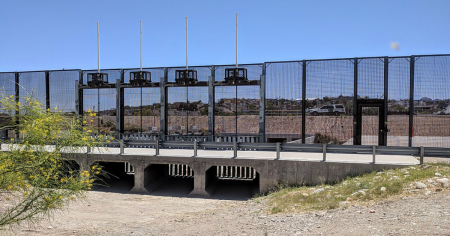
This new caravan of migrants comes just a few months after the U.S. Customs and Border Protection Service (CBP) announced that March marked a historic milestone in border security, with the lowest number of illegal crossings ever recorded at the country's southwest border.
According to the official statement, approximately 7,180 crossings were recorded in that area in March, a drastic drop compared to the monthly average of 155,000 recorded over the past four years.
Frequently Asked Questions about the Cuban Migrant Caravan in Mexico
Why are Cuban migrants choosing to stay in Mexico instead of going to the United States?
The tightening of immigration policies in the United States under the administration of Donald Trump has led many Cubans to consider Mexico as a final destination. The cancellation of the CBP One program and the inability to cross the northern border legally have made Mexico a viable alternative, with the possibility of settling and working, despite the economic and social challenges they face there.
What are the challenges that Cubans face when applying for asylum in Mexico?
Cuban migrants face significant bureaucratic and economic obstacles when applying for asylum in Mexico. They report long delays at the Mexican Commission for Refugee Assistance (COMAR), high costs for legal services, and a lack of transparency in the process. These barriers make asylum practically inaccessible for those without sufficient financial resources.
What alternatives are Cuban migrants seeking to settle outside of the United States?
Many Cuban migrants are seeking work visas in countries like Canada, Germany, Australia, and Switzerland. Diplomatic missions in cities such as Monterrey and Mexico City have been identified as key points for submitting these applications. Migrants are pursuing these options due to the saturation of the asylum system in Mexico and the inability to reach the United States.
How are Cubans in Mexico managing to survive while they await the resolution of their immigration status?
Cubans in Mexico often turn to informal and low-paying jobs to survive while they await their immigration status. Many work in cleaning, construction, or fumigation programs, often earning less than the minimum wage and without social benefits. Despite these conditions, many prefer this over returning to Cuba, where the situation is seen as even more critical.
Filed under: