The United States Embassy in Cuba accused the island's government on Sunday of inconsistency and failure in its monetary policy, noting that despite years of criticism of the U.S. dollar, Cuban authorities have adopted it as a common currency out of economic necessity.
In a message posted on its official X account, the Embassy stated that the regime "spent years harshly criticizing the dollar, only to adopt it out of economic necessity."
"Unable to manage their own currency, they now depend on the same system they tried to ban," he pointed out.
He added that the decision of the Cuban government represents "a public admission of a failed economic policy" and has resulted in "greater inequality for Cubans", by creating a segmented market between those who have access to foreign currency and those who only earn income in Cuban pesos.
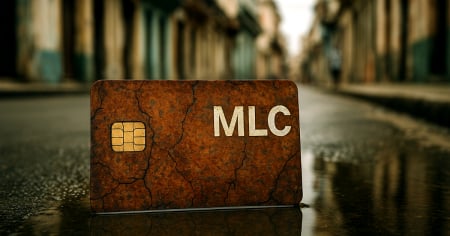
In recent years, Cuba has implemented stores in Convertible Foreign Currency (MLC) that operate exclusively in foreign currencies, a measure that, according to independent economists, has widened the social gap and weakened the purchasing power of the Cuban peso, whose depreciation continues.
The use of the dollar in retail trade was restricted in 2004, when the government imposed a tax on its circulation.
However, the economic crisis, exacerbated by the pandemic and the decline in tourism, forced the regime to reauthorize it in 2020 to attract foreign currency, a decision that was justified as "temporary" but continues to this day.
In December 2024, the regime approved a document regulating the "partial dollarization of the economy," a measure that reflected the growing influence of the U.S. dollar in the country and was presented by officials as vital for boosting key sectors of the economy.
Now the dollarization of the economy in Cuba is progressing steadily, while the Cuban peso (CUP) and the Freely Convertible Currency (MLC) continue to lose ground against the United States dollar.
Daily, new establishments are adopting the exclusive USD sales model, and the MLC is being relegated in the very stores where it was once the primary currency.
Washington's criticism arrives at a time when the Cuban economy is facing persistent inflation, shortages of basic goods, and an informal foreign exchange market where the dollar is trading well above the official rate.
Frequently Asked Questions about Dollarization and the Economy in Cuba
Why has the use of the dollar in Cuba been criticized?
The use of the dollar in Cuba has been criticized for representing a public admission of failed economic policies and for increasing inequality among citizens. While the Cuban regime criticized the US dollar for years, it has ultimately adopted it due to economic necessity. The partial dollarization has created a segmented market, where those with access to foreign currency have more opportunities than those who only earn in Cuban pesos.
What is the Freely Convertible Currency (MLC) and why is it losing value?
The freely convertible currency (MLC) is a virtual currency used in Cuban state-run stores to attract foreign currency. However, it is losing value due to its lack of real physical backing, the inorganic expansion of the money supply, and the growing gap between official and informal exchange rates. The depreciation of the MLC reflects the failure of exchange rate policies, and its decline in the informal market evidences a loss of confidence in it as a store of value and medium of exchange.
What has been the impact of partial dollarization on the Cuban economy?
Partial dollarization has deepened economic inequality in Cuba, allowing only those with access to dollars to acquire essential goods and services. This has resulted in greater market segmentation and made it harder for those who only earn in Cuban pesos to access basic products. Exclusive dollar stores and restrictive economic policies have exacerbated the crisis, leaving a large part of the population in a precarious economic situation.
What do economists think about the economic policies of the Cuban regime?
Economists have harshly criticized the economic policies of the Cuban regime, pointing out that the expansion of trade in foreign currency only reinforces the economic distortions in the country. Selling products in dollars, a currency in which salaries or pensions are not paid, is seen as an economic policy mistake that creates inequality and limits access to goods for most Cubans.
Filed under: