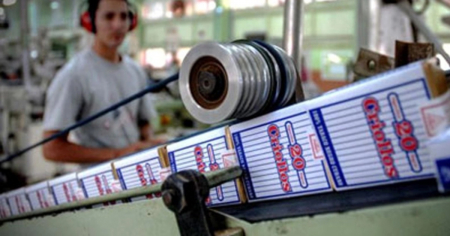
The Cuban production of cigars intended for export exceeded six million units in the first half of the year, a figure higher than that recorded in the same period of 2024, according to the Ministry of Agriculture.
Growth was achieved despite the limitations imposed by the U.S. embargo, which restricts the marketing of one of the island's most emblematic sectors; a phrase that is always present in the discourse of the communist regime.
Deliveries and recovery of production
In statements to the official newspaper Granma, Odelbis Carrazana Lorenzo, director of Logistics and Industry of the Cuban Tobacco Business Group (Tabacuba), noted that tobacco deliveries to Habanos S.A. have reached 90% of what was planned.
Regarding cigarette manufacturing, he explained that, although production was affected at the beginning of the year due to issues at the BrasCuba plant in the Special Development Zone of Mariel, the situation has reversed and today the industry is operating at full capacity.
The executive specified that deliveries to the domestic market were met and even exceeded: out of 192 million packs agreed upon, 201 million were produced, which corresponds to 103.4% of the plan.
Reconstruction and agricultural progress
Carrazana emphasized that the recovery of the healthcare facilities in Pinar del Río, which were severely damaged by Hurricane Ian in September 2022, is ongoing. He also noted that agricultural production is showing growth compared to the same period last year, which improves the availability of raw materials.
As always, the regime rushes to showcase its alleged achievements, but silences and hides its failures and the deficiencies that affect the population.
Situation of mechanized tobacco
Regarding mechanized tobacco, the official reminded that production largely depends on imported parts, which caused significant disruptions at the end of 2024 and the beginning of 2025. However, he stated that the industry has navigated these difficulties and is now operating at 80% of its planned capacity, with expectations to recover the backlog during the last two months of the year.
It is worth noting that last June, specialists from the Integrated Tobacco Company in the municipality of Consolación del Sur, in the province of Pinar del Río, reported that more than 385 hectares of tobacco were lost in the recent campaign due to the energy crisis the country is facing.
The prolonged absence of electricity hindered timely irrigation, which affected all cultivated varieties, with a greater impact on the second crop fields of the Sol ensartado variety and in the areas of the Virginia variety, reported the provincial newspaper Guerrillero.
Frequently Asked Questions about Tobacco Production in Cuba and Its Economic Context
How has the U.S. embargo affected tobacco production in Cuba?
Despite the U.S. embargo, Cuba has managed to increase its production of handmade tobacco for export, surpassing six million units in the first half of 2025. This demonstrates that, despite economic and commercial restrictions, the tobacco industry has been able to navigate some of the challenges and maintain its production at competitive levels internationally.
What are the recent achievements of the Cuban tobacco industry?
The Cuban tobacco industry has reached 90% of its planned deliveries to the Habanos S.A. Corporation. Additionally, cigarette production targets for domestic trade were surpassed, achieving 103.4% of the plan. These accomplishments occur in a context of general economic constraints on the island, highlighting the positive performance of this specific sector.
What is the situation of the tobacco curing houses in Pinar del Río?
The curing houses in Pinar del Río are still in the process of recovery following the damage caused by Hurricane Ian in 2022. This effort is part of a broader strategy to ensure the availability of raw materials for tobacco production, despite the climatic adversities that have impacted the region.
How does the overall economic situation in Cuba compare to the performance of its tobacco industry?
While the tobacco industry shows signs of growth, other sectors of the Cuban economy are facing severe crises. Food production and the sugar harvest, for example, have recorded significant declines, with failures to meet production targets and an increasing dependence on imports. This highlights a disparity in the performance of different sectors of the Cuban economy.
Filed under: