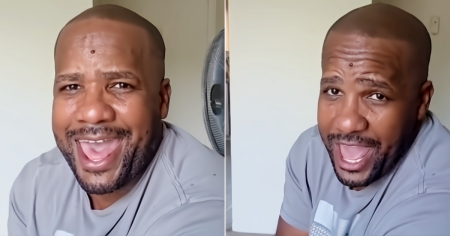
A young Cuban had a curious moment at a wax museum in the United States when he jokingly approached the figure of former President Donald Trump to ask him, amid laughter, about residency for holders of the I-220A.
In a video shared on TikTok by the user @racielrivero995, the Cuban approaches the statue of Trump—dressed in a blue suit, red tie, and situated in front of an American flag—and says: “How long is this going to last? Aren't you going to grant residency to the I-220A? How much longer? You’re leaving me high and dry, man. A lot of talk but you just gave residency to the I-220A.”
The I-220A is a document issued by the Immigration and Customs Enforcement (ICE) that allows for the release on parole of migrants while they continue their legal processes in the United States.
However, holding this status does not guarantee permanent legal status or a direct path to residency, which has generated concern and frustration among many Cubans who arrived in the country under this status.
The video has generated mixed reactions on social media: some took it humorously, while others seized the opportunity to discuss the immigration situation and the lack of clear solutions for the beneficiaries of the I-220A.
Frequently Asked Questions about I-220A Immigration Status and U.S. Residency.
What is the I-220A document and what does it mean for Cuban migrants?
The I-220A is a document issued by the Immigration and Customs Enforcement (ICE) that allows the release on parole of migrants while they continue their legal processes in the United States. However, this document does not guarantee permanent legal status or a direct path to residency, creating uncertainty for many Cubans who have entered the country under this status.
How long can the process take to obtain residency while holding the I-220A?
The process of obtaining residency can take several years, as evidenced by cases of Cubans who have waited up to four years or more. The duration varies depending on each case, as there is no standardized procedure or legal guarantee for all beneficiaries of the I-220A.
How do Cuban migrants react when they receive their residency in the U.S.?
Cuban migrants often react with great emotion and relief upon receiving their permanent residency in the U.S. These moments are frequently shared on social media, generating a wave of hope and support within the Cuban community, which views each approval as a personal and collective triumph.
What challenges do migrants with I-220A status face in the U.S.?
Migrants with I-220A status face challenges such as legal uncertainty, the absence of permanent status, and the difficulty of accessing stable employment. Additionally, they face the risk of deportation and the complications associated with changing immigration policies in the United States.
Filed under: