
Related videos:
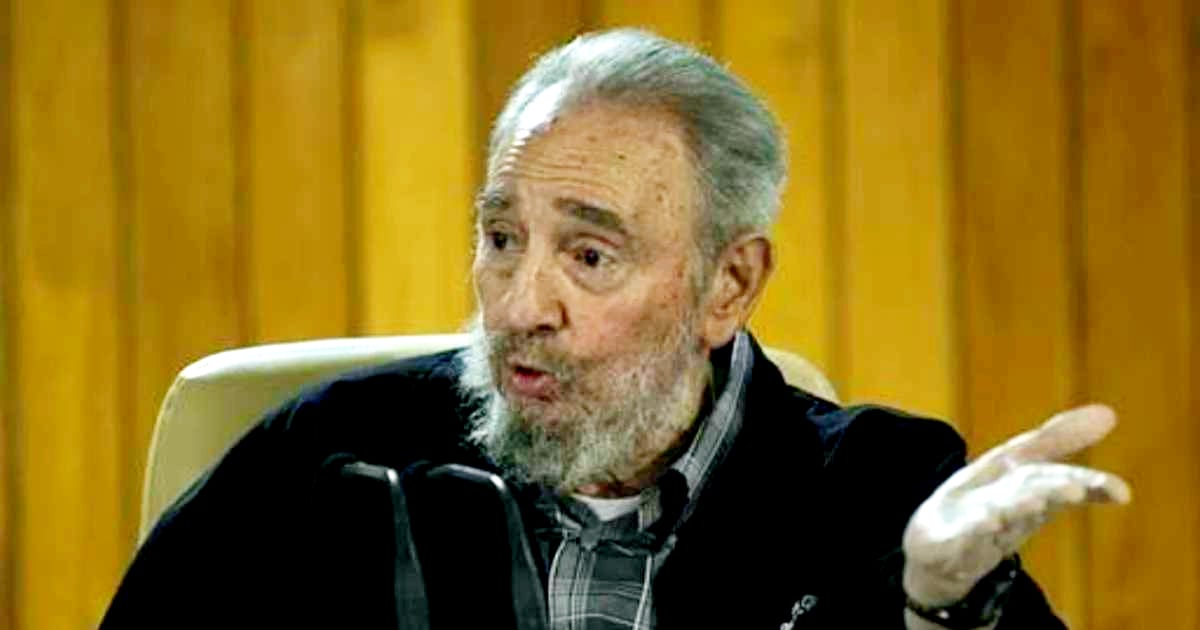
The Camagüey priest Alberto Reyes shared a poignant reflection this Saturday on Fidel Castro's political legacy, blaming him for turning Cuba into a country subjected to the control of a single party, one ideology, and the unquestionable voice of a leader.
In his text published on Facebook, Reyes recalled that “truth can be ignored, attacked, or replaced with lies, but ultimately, it always emerges,” quoting St. Teresa of Jesus to emphasize that, despite the exaltation of Castro's figure, the facts present a history “more accusatory than exonerating.”
The priest pointed out that under the dictator's leadership, there was absolute centralization in the hands of the State: all private businesses were confiscated without compensation, unions were reduced to organs of surveillance, and both education and health were placed under government monopoly, eliminating any space for independent initiative.
It also reported that the press, radio, television, and cultural expressions were placed under official control, while artists, writers, and critical thinkers were persecuted.
“Free press has ceased to exist,” Reyes asserted in this second analysis that he dedicates to dismantling the myth created around the figure of Castro, one of the greatest dictators the continent has ever seen.
The father asserted that Castro ruled surrounded only by loyalists, incapable of dissent or questioning, which led to the progressive deterioration of agriculture, livestock, the sugar industry, tobacco, coffee, mining, and fishing.
According to what he wrote, nothing and no one could contradict the "Commander" because he never had real collaborators, only obedient ones.
In his reflection, the priest described Cuba as a country that was once prosperous and diverse, but that has been reduced under the control of a state identified with a single party.
“A state and a party that had only one point of reference, one leader, one owner, one unquestionable voice: his,” he stated.
The text is part of the series "I've Been Thinking," where the priest has repeatedly addressed the consequences of the model imposed on the island, taking a critical stance towards the figure of Fidel Castro and his policies, as well as the ills stemming from the authoritarian system that prevails in the country.
Frequently Asked Questions about the Criticism of the Cuban Regime by Priest Alberto Reyes Pías
What critique does the priest Alberto Reyes Pías make of Fidel Castro's regime?
The priest Alberto Reyes Pías criticizes that Fidel Castro imposed a regime in Cuba characterized by a lack of freedoms, the centralization of power, and absolute control over the daily lives of Cubans. Reyes holds Castro responsible for turning Cuba into a country subjected to the control of a single party, with no room for dissent or independent initiative. According to Reyes, under this regime, press freedoms, education, and critics of the government were persecuted.
How does Priest Reyes describe the current situation in Cuba?
Reyes Pías describes Cuba as a country in decline, comparing it to a concentration camp due to the lack of freedoms, political repression, and the precarious conditions in which citizens live. The priest points out that the Cuban system is characterized by hopelessness and the feeling that the regime is unmovable. Furthermore, he criticizes the emotional manipulation by the Cuban government that keeps the people subjugated through unfulfilled promises.
What does Father Reyes propose to change the situation in Cuba?
Reyes Pías advocates for a radical change based on citizen action and the rejection of passivity. He proposes that Cubans must stop waiting passively for changes that will never come from the authorities and take on the responsibility of seeking their own freedom. He urges the population to practice forgiveness, dialogue, and respect, and to actively engage in the construction of a more free and just society.
What role does the Church play in the critique of the Cuban regime according to Reyes?
According to Alberto Reyes, the Church plays a crucial role as a critical and hopeful voice within Cuban civil society. Reyes emphasizes the importance of faith and spirituality as tools of resistance against repression. He also highlights the need for the Church to serve as a space for ethical and social reflection that inspires Cubans to question the current situation and work towards change.
Filed under: