
Related videos:
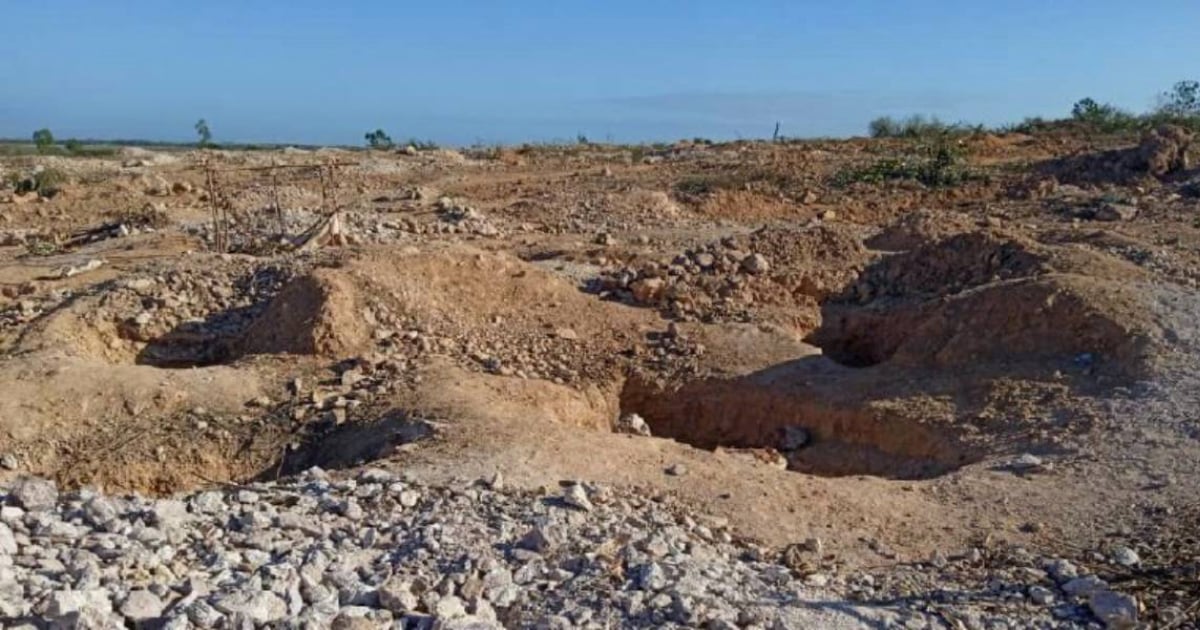
A farmer was caught on his farm in the El 45 neighborhood, in the municipality of Jobabo, Las Tunas, while operating a “tromber,” a handmade mill used to extract gold from soil originating from illegal mining.
The incident was reported by the official profile Claridad Tunera, which indicated that the individual was in the midst of milling when the authorities intervened.
The publication noted that the processed land had arrived at the farm "as if by magic," referring to its illicit origin.
The operation is part of the actions taken in Las Tunas against illegal mining, a practice that causes severe environmental damage and has garnered increasing attention from local authorities in recent months.
What the official profile does not mention is that, amid the worsening economic crisis in Cuba, which the regime has failed to resolve, people are resorting to any means to secure some financial resources.
Although details about the identity of the detainee were not revealed, it was reported that the case will now be handed over to the authorities.
According to the spokesperson's profile of the regime, what happened is merely "one link" in a broader chain of irregularities related to the extraction and trade of minerals in the province.
Illegal mining has been identified as a recurring problem in the eastern region of Cuba, where it not only impacts the natural environment but is also associated with clandestine economic circuits that affect state control over resources and, consequently, the regime's finances.
Just a few months ago, Cuban authorities arrested eight individuals in the municipality of Jobabo for allegedly engaging in the illegal extraction and trafficking of gold dust.
The Provincial Government of the People's Power of Las Tunas reported on Facebook that the operation was carried out by investigative forces and internal security, following prior complaints from the population and checks conducted by government authorities and the Party.
In March, the police of Santa Clara dismantled an illegal mining camp located at kilometer 7 on the Maleza highway, which demonstrates that this issue exists in several provinces of the country.
According to the official spokesperson Henry Omar Pérez, the operation led to the arrest of two individuals and the seizure of tools and equipment used in the extraction of gold and other minerals, including a mill.
A year earlier, around thirty individuals were tried in Camagüey in nine cases of illegal mining, as reported by Cubadebate, citing the Presidency of the Provincial People's Court of that region as the source.
On the other hand, the Customs of Cuba thwarted in March an attempt to illegally export two kilograms of gold in four bars concealed within luggage, during a check at José Martí International Airport in Havana.
Frequently Asked Questions about Illegal Mining in Cuba
What happened in Las Tunas regarding illegal mining?
A farmer was caught on his farm in Jobabo, Las Tunas, operating a handmade mill to extract gold from soil derived from illegal mining. This case is part of a series of operations against illegal mining in the region, which has drawn the attention of authorities due to environmental damage and the impact on state control over resources.
What is the impact of illegal mining in Cuba?
Illegal mining in Cuba causes serious environmental damage and is linked to clandestine economic circuits. This practice not only affects the natural environment but also negatively impacts the regime's finances, as it cannot control the extraction and trade of minerals.
Why does illegal mining persist in Cuba?
The persistence of illegal mining in Cuba is driven by the economic crisis and the lack of job opportunities. Despite government efforts, these activities continue to be a source of income for many, reflecting the regime's inability to address underlying economic issues.
Filed under: