
Related videos:
The tragedy that occurred in the La Maya community, in the municipality of Songo-La Maya, Santiago de Cuba, has once again highlighted the crisis in the Cuban healthcare system.
A five-year-old boy passed away after ingesting 500 mg of foreign-produced Paracetamol, which had expired in 2020, while another 11-year-old from the same family was intoxicated but managed to survive after receiving intensive care at the Juan de la Cruz Martínez Maceira Children's Hospital.
The official statement issued by the Provincial Health Directorate referred to an "exogenous poisoning" caused by an " uncertified medication," and assured that an investigation is underway to "clarify the circumstances" and "enhance health education in the communities."
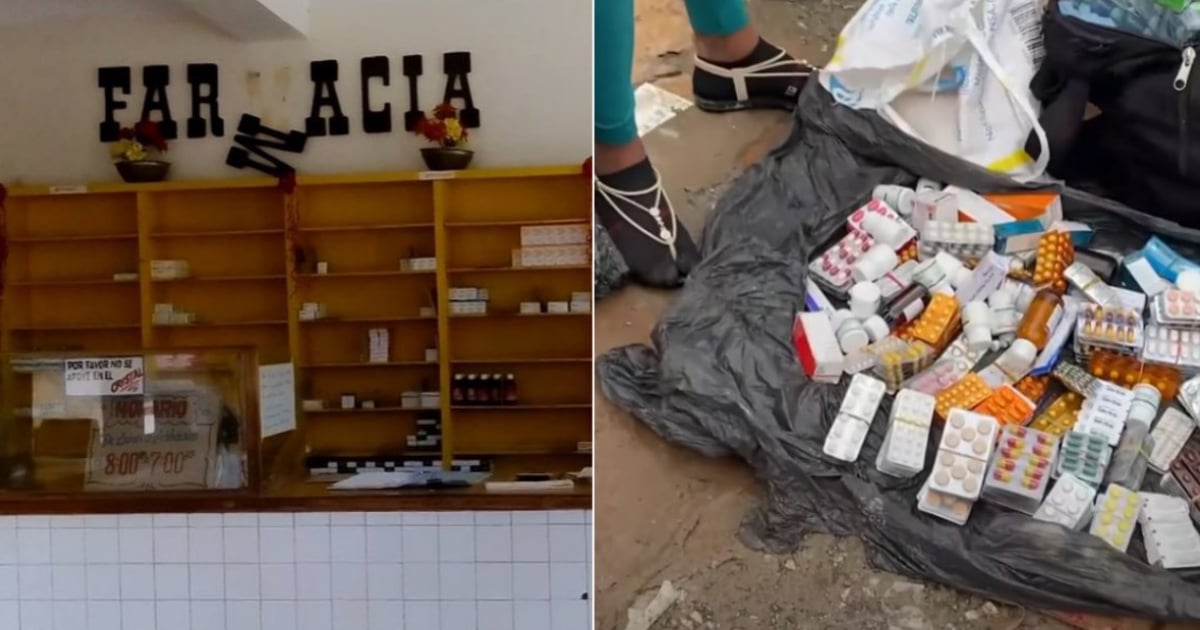
However, the institutional version sparked public outrage: for most Cubans, the true culprit is the Government, whose inability to guarantee medication in pharmacies forces families to turn to the informal market.
"There is nothing in the pharmacies."
The comments on the post from the institution on are a reflection of the general discontent.
"If there were medications in the pharmacies of this country, there would be no need to buy them on the streets without knowing where they come from," lamented a user.
Another was harsher: "I knew it was going to happen at some point, but there would be many more deaths if people couldn’t access those medications that are being sold on the black market. Because there is nothing."
The tone of indignation grew in dozens of testimonies that pointed directly to state responsibility: "Promoting safe access to medicines says the note. What a lack of respect, with empty pharmacies and endless lines! A completely abandoned and failed healthcare system, the result of a government’s indifference that builds hotels but cannot guarantee even an aspirin for a sick child."
Blaming families, the official strategy
The official statement emphasized the "importance of health education" to prevent similar tragedies, an argument that for many citizens equates to blaming the parents, who are the true victims of an under-resourced system.
"What’s most sad about this is that this mother will likely carry the guilt for life, when it should be others ensuring the medications. But none of those truly responsible will bear that guilt," wrote a woman from Santiago.
The Cuban Constitution was even cited, which recognizes health as a fundamental right and assigns the State the responsibility of ensuring care and medication. "It is the Government's responsibility to supply the pharmacies. They are responsible for every human loss due to the lack of medications," emphasized a user.
A father living in Havana also condemned the lack of a mechanism to certify the sale of imported medications in properly legalized private businesses, as is the case in any other country. "The height of shamelessness," he said.
A crisis acknowledged by the authorities
It is not the first time that the lack of medication has taken lives in Cuba.
In July, the Minister of Public Health, José Ángel Portal Miranda, himself admitted before the National Assembly that the country only has 30% of the basic medication supply, which means that seven out of ten common medicines are missing from pharmacies.
This is compounded by the alert issued in 2024 by the State Control Center for Medicines (CECMED) regarding the circulation of counterfeit drugs in the region.
But on the Island, where scarcity is extreme, the warning turns into a tragic dilemma: self-medicating with whatever is available or not treating the illness at all.
Health as a mirror of the system's collapse
What happened in La Maya is much more than an isolated incident: it represents the fracture of a healthcare system that was presented for decades as the "pride of the Revolution."
Today, amid deteriorated hospitals, shortages of basic supplies, unmotivated professionals, and empty pharmacies, citizens face the daily risk of losing their lives due to lack of access to essential medications.
In the words of a mother who commented on the official note: "This incident is very regrettable, but it is even more regrettable how mothers have to resort to any option to alleviate our children's illnesses. It pains me to see what Cuba has become; it is a shame."
Frequently Asked Questions about the Health System Crisis in Cuba
What was the cause of death of the child in Santiago de Cuba?
The five-year-old boy passed away after ingesting a 500 mg Paracetamol that had expired in 2020, which was not certified and was purchased in the informal market due to the shortage of medications in Cuban pharmacies.
Why do Cubans hold the government responsible for this tragedy?
Cubans blame the government due to the system's inability to ensure access to essential medications in pharmacies, forcing families to turn to the black market and putting the health of citizens at risk.
What measures has the Cuban government taken in response to the medication crisis?
The Cuban government has emphasized the need to strengthen health education in communities; however, citizens criticize that this strategy amounts to blaming families instead of addressing the root of the problem: chronic shortages.
How has the shortage of medications affected the Cuban population?
The scarcity of medications in Cuba has forced many families to self-medicate with products obtained informally, which can pose serious health risks due to the lack of assurance regarding the authenticity and safety of these drugs.
What actions has the government promised to address the health crisis in Cuba?
So far, government statements have focused on investigations to clarify specific incidents and on strengthening health education, but there is no concrete plan to address the lack of basic medications in the country.
Filed under: