
Related videos:
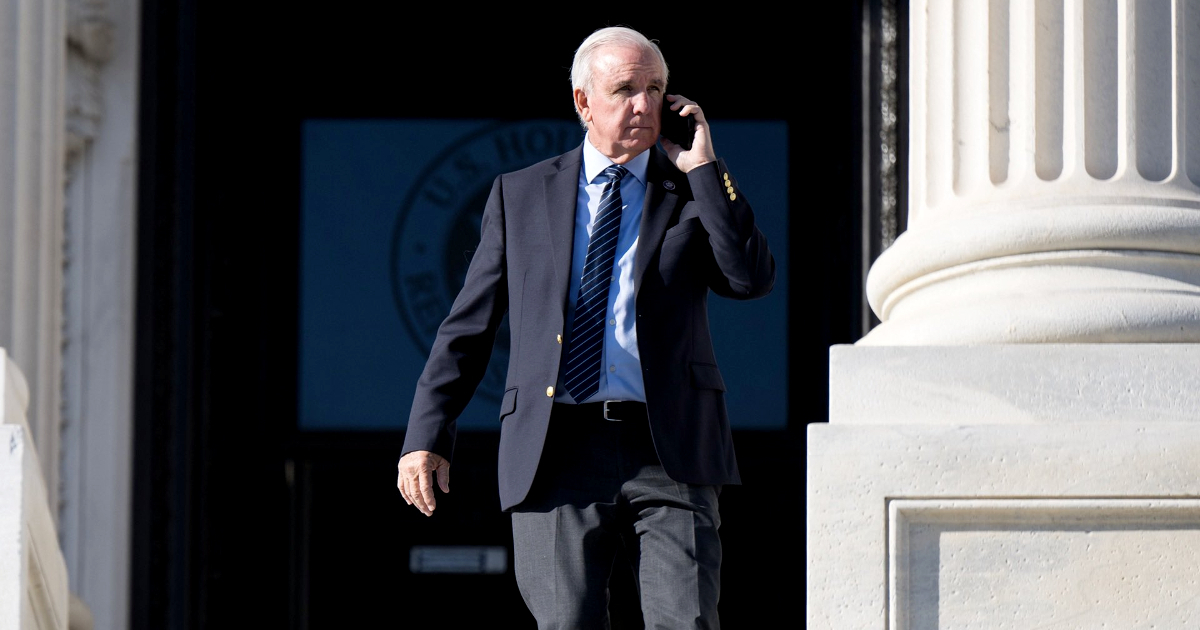
The Cuban-American congressman Carlos Giménez intensified his rhetoric against chavismo on Monday by calling for the complete elimination of the regime of Nicolás Maduro, whom he accused of being a direct enemy of the United States.
In a message posted on the social network X, Giménez stated: "The dictator Nicolás Maduro has declared war on the American people. His terrorist drug regime must be crushed and eliminated once and for all."
Caracas responds with "people in arms"
The legislator's statements coincide with an escalation of tension in the Caribbean. The number two of the Chavista dictatorship, Diosdado Cabello, called this Monday to “prepare on all fronts” and move towards a “transition to the people in arms” to defend Venezuela against the increasing U.S. naval presence.
In his usual weekly press conference of the PSUV, held in La Guaira, Cabello stated: "We are not calling for war of any kind, nor do we have a war, nor do we want war with anyone, but our people must be prepared and alert in all instances, on all fronts, in all ways and forms."
The leader insisted that the message is clear: "To doubt is to betray," and announced that the plenary session of the PSUV Congress, scheduled for September 11 and 12, will focus on security, defense, and the preparation of popular militias.
Naval operations and international pressure
Meanwhile, the Pentagon has increased its presence in the Caribbean Sea under the pretext of anti-drug operations. The Secretary of War, Pete Hegseth, boarded the amphibious assault ship USS Iwo Jima this Monday, which is deployed in regional waters as part of a contingent that includes at least seven warships, submarines, destroyers, surveillance aircraft, and more than 4,500 sailors and marines.
Washington claims that these maneuvers aim to cut off drug trafficking routes allegedly operated from Venezuela by the so-called Cartel of the Suns, while Caracas denies having illicit crops and reports a "serious threat" to regional peace to the UN.
Regional and global reactions
The geopolitical tension has sparked responses on various fronts: Cuba has rallied in support of the Maduro government; France increased its military presence in Guadeloupe under the same anti-drug rationale, and Trinidad and Tobago positioned itself as a deterrent against a potential clash over Esequibo.
Amid the tensions, opposition leader María Corina Machado stated that Maduro's imminent departure will not only pave the way to freedom in her country but will also mark the beginning of the end for the Cuban regime.
President Donald Trump, when asked on Sunday if he considers a direct attack on the cartels within Venezuela, responded with a terse but troubling: “You’ll find out.”
The president himself announced last week that U.S. military forces carried out a lethal attack in the Caribbean against a drug-laden ship that had set sail from Venezuela.
Maximum pressure scenario
With the exchange of statements between Washington and Caracas, the increase of military operations in the Caribbean, and the radicalization of the PSUV's rhetoric, the region is experiencing an atmosphere of extreme pressure.
For Giménez, the only way out is the complete elimination of Maduro's regime, while Cabello insists that Venezuela must prepare to withstand any external offensive.
Frequently Asked Questions about the Tension between the United States and Venezuela
Why does Carlos Giménez call for the elimination of the Maduro regime?
The Cuban-American congressman Carlos Giménez believes that the regime of Nicolás Maduro is a direct threat to the United States due to its ties to drug trafficking and terrorism. Giménez argues that Maduro's regime must be eliminated to protect American interests and ensure regional security.
How has Venezuela responded to the U.S. military deployment in the Caribbean?
In response to the increase in American military presence, Diosdado Cabello has called on Venezuelans to prepare "on all fronts", emphasizing the need for a "transition to the people in arms." The Maduro government has mobilized its military and civilian apparatus as a defensive measure against what it perceives as a threat of intervention by the United States.
What is the purpose of the U.S. naval deployment near Venezuela?
The United States has deployed warships in the Caribbean with the argument of combating drug trafficking, specifically to disrupt the routes allegedly operated by the Cartel of the Suns in Venezuela. However, the Venezuelan government and its allies believe that this deployment is a tactic to exert political and military pressure on Maduro's regime.
How has the international community reacted to the tensions between the United States and Venezuela?
The tension has generated various reactions internationally. Cuba has expressed its full support for Venezuela, while France has reinforced its military presence in Guadeloupe. Trinidad and Tobago has adopted a deterrent stance in the face of a potential conflict. The international community is closely monitoring the developments due to the possible escalation of tensions in the region.
Filed under: