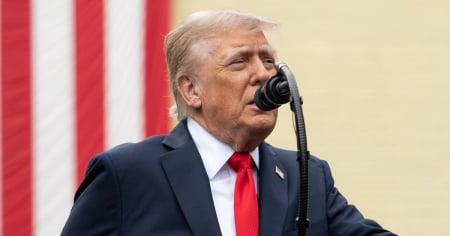
President Donald Trump presented the "Gold Card" this Friday, an accelerated pathway for wealthy foreigners to obtain residency and work permits in the United States in exchange for 1 million dollars, according to the official announcement.
The White House did not clarify whether the card replaces the EB-5 investment program (historically $800,000) or if it creates a new category.
The government had been promoting the initiative and opened in June a waiting list for those interested.
The Secretary of Commerce, Howard Lutnick, tasked with the implementation, accompanied Trump in the Oval Office and defended the program as a tool to increase revenue and attract capital, with the goal of raising $100 billion; the president suggested allocating those funds to tax cuts and debt reduction.
"We will only accept extraordinary individuals from the highest echelons," said Lutnick while comparing the Gold Card to the current system, which he claimed accepted profiles from the "lower quartile." The official argued that the program does not aim to take jobs away from Americans, but rather to raise the threshold for talent and investment.
In parallel, the official government website mentions another possible route, the "Trump Platinum Card," costing 5 million dollars and allowing a stay of up to 270 days without paying taxes on non-U.S. income; Trump did not mention it in his announcement this Friday.
The launch takes place in a context of tightened immigration policies: in addition to reinforcing actions against irregular migration, the administration has restricted legal pathways such as TPS and humanitarian parole.
This very Friday, he also announced a fee of $100,000 for the H-1B visa, with the stated aim of reducing its use.
In February, Trump explained that the "Golden Card" will offer privileges equivalent to those of a "Green Card," including a pathway to U.S. citizenship.
However, he emphasized that, although this permit facilitates permanent residency, it does not imply the direct purchase of citizenship.
This new scheme would replace the current EB-5 program, which granted "Green Cards" to foreigners who invested between $800,000 and $1.8 million in projects that generated at least ten jobs in the United States.
This initiative contrasts with the strict immigration policy developed by the Trump administration.
Frequently Asked Questions about the Trump Gold Card and Immigration Policies
What is the Trump Gold Card and how much does it cost?
The Trump Gold Card is a new permanent residency scheme in the United States for wealthy foreigners willing to invest five million dollars in the country. This program aims to attract individuals who can make significant contributions to the U.S. economy.
How does the Trump Gold Card differ from the EB-5 program?
The EB-5 program traditionally allowed foreign nationals to obtain a "Green Card" by investing between 800,000 and 1.8 million dollars in projects that created at least ten jobs in the U.S. The Trump Gold Card requires a higher investment of five million dollars, and offers privileges similar to those of a "Green Card," including a pathway to U.S. citizenship.
What obstacles does the implementation of the Trump Gold Card face?
The Trump Gold Card faces legal, tax, and political challenges that may affect its viability. The necessary modifications to the tax code to offer tax exemptions require Congressional approval, and there are concerns about the impact on the U.S. tax system.
What is Trump's "Project Return Home"?
The "Return Home Project" is an initiative that allows undocumented migrants to voluntarily leave the U.S. in exchange for financial support from the government. Those who choose this option will receive a free flight and a departure bonus of 1,000 dollars. The measure aims to reduce the tax burden on taxpayers and manage irregular migration.
Filed under: