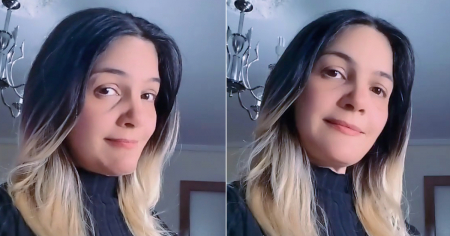
A young Cuban woman in Spain has sparked a wide debate on social media after sharing a video in which she describes aspects of daily life in Europe that she finds unimaginable in Cuba.
TikTok user @irene.morell.gonz posted a video just over two minutes long, where she shares what has surprised her the most since her arrival in Madrid. Titled “This is normal in Spain!!!! Not in Cuba!!!!”, the creator describes three aspects of her experience as a Cuban migrant.
"The first thing is that it is drinkable tap water," he notes in his testimony. "Yes, many Spaniards may find that normal, but for Cubans, it is not normal to come home and have water; that doesn't exist in Cuba. Having water is impossible; in fact, it comes two or three times a week at most."
The young woman explains that in her home country, citizens often rely on alternative water storage systems: “Cubans have water storage; we fill that storage, and that’s what we have for water, but it doesn’t come from the tap, it comes from a bucket.”
Another difference she mentions is the presence of supermarkets open late. “Here in Spain... for those people who work and arrive home late, they can do their shopping... also that they are full,” she says. In contrast, she adds, “In Cuba, there is no food, the supermarkets are very empty, and getting food is a bit difficult, and the prices of food compared to salaries in Cuba make it completely impossible.”
The third difference that has impacted him the most is public transportation: “The buses have a mobile app that tells you the time, which bus is coming, and they don’t break those rules; they always arrive on time... Similarly, in the subway there is a screen... that shows you the time it will arrive.”
It criticizes the collapse of the transportation system on the island: “In Cuba, if I know three provinces of my country, that's a lot, because transportation is impossible... I would arrive really late to work because even if I got up really early, the transport would mess everything up... sometimes it would pass by and wouldn't even stop because it was full of people.”
The Cuban concludes the video by inviting her followers to see more details on her YouTube channel. On her account Morelilla, she posted a video titled From Cuba to Spain: 5 things that shocked me, where she expands on her experience with two new aspects (security and bureaucracy). The video, published on September 7th, is part of a series of content in which she also discusses how she obtained Spanish citizenship and how her life has changed in the country.
On TikTok, her post has garnered thousands of views and more than a hundred comments. While many users praised her testimony and shared similar experiences, others criticized her, denied her claims, or politicized the content.
Some comments expressed support: "I'm glad you were able to get out. You'll move forward and help your family," to which the creator replied, "Thank you very much."
Other users made ideological statements such as, "That is not a cultural clash; it is what socialism brings to communism, the decay and decline of a country." In another exchange, when asked about her political preference, the creator responded, "Vox without a doubt."
Disagreements also arose regarding the availability of drinking water in Cuba, to which the young woman replied: "No, I'm not from Oriente, haha, I'm from Havana. Don't you notice my accent? Because people from Oriente speak differently."
In response to another comment about the possibility of confronting the Cuban system, he wrote: "Yes, we rose up on July 11, 2021, but it didn't work out; we are a people without weapons and we suffer from hunger, while they are well-equipped."
The testimony of @irene.morell.gonz adds to a growing wave of content on social media where Cubans newly arrived abroad document their first experiences outside the island.
In a recent post, a young Cuban shared her excitement about visiting a fast food chain for the first time and trying fruits like kiwi.
Another creator, celebrated the start of the school year for her children in Madrid without having to worry about shoes or insufficient food at school.
In a more critical testimony, a Cuban woman stated that she decided to emigrate because in Cuba she had neither hope nor freedom to speak.
Other videos have addressed topics such as bureaucracy and language barriers upon arriving in Spain, or the differences between Spain and the United States experienced by Cuban migrants.
There have also been reports of discrimination, such as the case of a Cuban woman who responded to xenophobic comments for sharing her opinions on TikTok.
In other cases, some migrants have placed a higher value on the quality of life in Europe compared to the earnings in the United States, prioritizing time with family and access to basic services.
Frequently asked questions about the cultural shock of Cubans emigrating to Spain
What aspects of daily life in Spain surprise Cubans the most?
Cubans who emigrate to Spain are often surprised by the availability of drinking water straight from the tap, the presence of well-stocked supermarkets open until late, and the punctuality and reliability of public transport. These basic services, which are considered normal in Spain, stand in stark contrast to the reality in Cuba, where scarcity is common.
How is the public transportation system in Spain compared to that in Cuba?
In Spain, public transportation is punctual and efficient, with mobile applications that provide information on bus and metro schedules. In Cuba, on the other hand, public transportation is overwhelmed, unreliable, and complicated to use, which limits the mobility of its citizens.
How does Cuban socialism affect daily life on the island?
The socialist regime in Cuba has led to a situation of scarcity and precariousness in everyday life. Cubans face difficulties in accessing basic services such as drinking water, food, and transportation, creating a significant contrast with the experiences of those who emigrate to countries with market economies.
What challenges do Cubans face when adapting to life in Spain?
Cubans who move to Spain face challenges such as cultural shock, especially in language and customs. They must also adapt to the bureaucracy to legalize their status and establish themselves economically. Despite these challenges, many highlight the improvement in their quality of life and the freedom they experience compared to the situation in Cuba.
Filed under: