
Related videos:
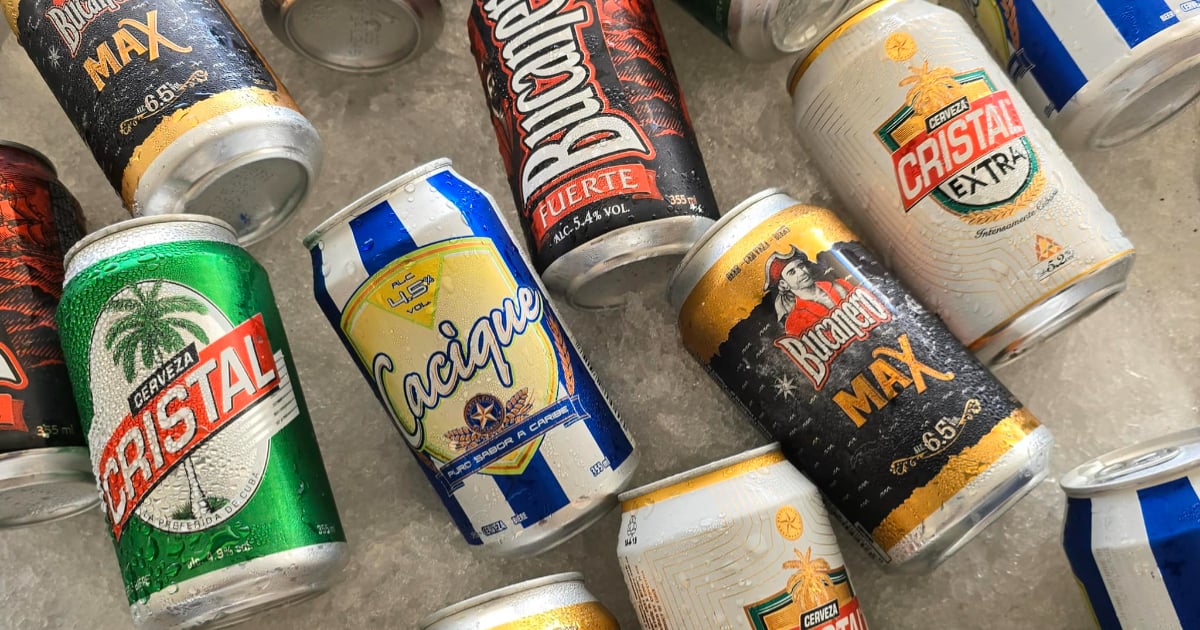
Cerveza Bucanero S.A., located in Holguín, is developing new production capacities with the aim of expanding its reach in the domestic market and consolidating its international presence, according to statements made by the Operations Deputy Director, Ediel Hechavarría, to the Cuban News Agency (ACN).
The company, which produces brands like Cristal, Mayabe, Cacique, and malts like Perla Negra, aims to reach its maximum potential of two million hectoliters annually, supported by investments in machinery, young talent, and new technologies focused on automation and energy efficiency. Currently, its production exceeds one million hectoliters, and in 2024, it managed to surpass its plan by 100,000 hectoliters.
Among the implemented measures are new designs for 473 ml cans, the expansion of the dispenser network, investments in brand image, and systems to reduce water, energy, and CO₂ consumption. Generators have also been installed, and infrastructure for solar panels is being developed to mitigate the impact of the national electrical system.
In addition to supplying the retail and tourism sectors, Bucanero S.A. exports its products to markets such as Spain, Mexico, Panama, Venezuela, and Brazil, and leads the barrel market in the Caribbean and Central America with premium products like Bucanero Max and Cristal Extra.
A late effort amid years of scarcity
Although the current push is presented as a solution to the rising demand, the shortage of national beer has been a constant issue in Cuba for years. Back in 2019, citizens of Holguín reported that during the holidays they couldn't find a single bottle of Cristal or Bucanero, while stores exclusively offered imported brands.
The official criticism then focused on the prices in the private sector, ignoring the fact that self-employed workers did not have wholesale access and that national production did not meet the growing demand. At the same time, in provinces like Sancti Spíritus, the sale of national beer in private businesses was even prohibited to prevent diversion.
In 2020, the then Minister of Food Industry, Manuel Sobrino Martínez, publicly acknowledged that beer was a “fundamental concern” for the population. Despite that admission, the crisis of food and basic product shortages continued to worsen.
Four years later, in July 2025, his successor, Alberto López Díaz, reported to the National Assembly that, during a semester characterized by the widespread collapse of the food industry, beer production was the only sector that managed to exceed its plan, reaching 107% thanks to companies like Bucanero and Parranda.
Production for whom?
The expansion projected by Bucanero S.A. stands in stark contrast to a context where most food sectors—dairy, meat, canned goods, coffee, and milling—report failures, million-dollar losses, and an increasing reliance on non-state actors to minimally sustain supply. Beer thus emerges as an exception in an economy that struggles to guarantee basic products such as milk, oil, or flour.
This contrast reopens the debate about productive and distributive priorities. In an island where queues for essential products are commonplace, the expansion of brewing capacity—although positive in terms of export and revenue generation—raises questions about the equitable distribution of what is produced and the actual access the population has to these goods.
Despite the official rhetoric of reorganization, the data show that the state food industry still lacks the capacity to meet the basic needs of the country. In this context, beer once again becomes the focal point of discussion: not only as a popular beverage but also as a symbol of the structural imbalances affecting the Cuban economy.
Frequently Asked Questions about Bucanero Brewery and the Food Crisis in Cuba
What are the expansion plans of Cervecería Bucanero in Cuba?
Bucanero Brewery S.A. plans to develop new production capabilities to expand its presence in the domestic market and consolidate its international presence. The company aims to achieve a maximum potential of two million hectoliters annually through investments in machinery, young talent, and advanced technologies, focusing on automation and energy efficiency.
How does the expansion of Cervecería Bucanero impact food production in Cuba?
While beer production has surpassed its goals, the rest of the Cuban food industry is facing shortfalls and million-dollar losses. The expansion of brewing capacity highlights the debate over productive priorities in a country where there is a shortage of basic products, such as milk and flour. In this context, the brewery expansion raises questions about the equitable distribution of goods and the population's actual access to essential products.
What impact does the food crisis in Cuba have on the population?
The food crisis in Cuba has become a structural and prolonged situation. The population is facing shortages of basic products, high prices, and increasing food insecurity. Despite efforts to reorganize the food industry, production plans are not being met, and there is a growing dependence on non-state actors to minimally sustain the supply.
Filed under: