
Related videos:
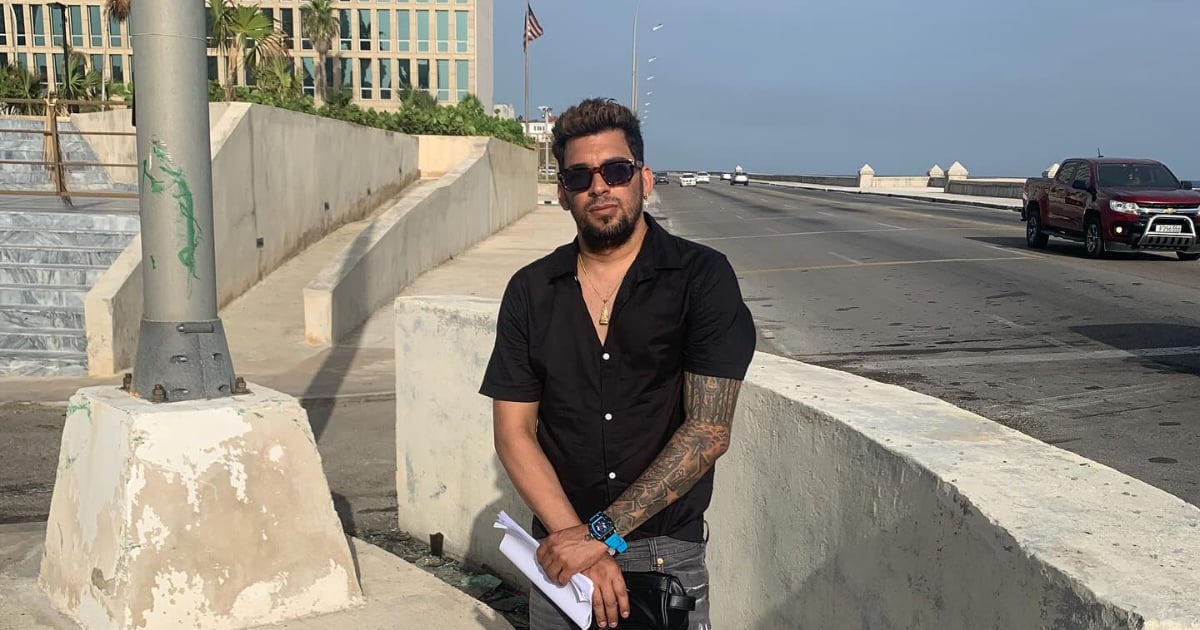
Leonardo Peña de la Cruz, the Cuban in the United States who had his green card stolen in Cuba and was extorted for money to get it back, recounted how he was able to finally return to the country where he lives without major complications.
His testimony reflects not only the increasing insecurity on the Island but also the rise of an increasingly common practice: the blackmail of Cubans traveling from abroad, from whom passports or other essential documents are taken.
His advice to other compatriots in the same situation was clear: "Don’t pay extortion, don’t pay money, because that has become a trend in Cuba."
In an interview with Univisión 23, he insisted that the first step is to report the theft to the Police, although even that process can be delayed if the station does not have electricity at the time.
Afterward, you need to go to the United States Embassy in Havana. According to their experience, the appointment "doesn't take long, only about three days," and the consular staff provides immediate assistance.
Peña mentioned that the U.S. Embassy facilitated the entire process for him, and in less than 24 hours, he had already received the necessary documentation to return.
Upon arriving at an airport in the United States, he was taken to the so-called "little room" of Immigration to answer some questions, but soon the agents welcomed him, and he was able to resume his normal life.
The events took place in August during a visit to Guantánamo, his hometown, when unknown individuals broke the window of his car while he was making a stop to eat and stole his belongings, including his residence card.
Shortly after, the photo of the document was posted in a buy and sell group on Facebook, with the registration number concealed and a contact provided to "negotiate" its return.
In the midst of desperation, he even offered a reward of 500 dollars, but the criminals raised the demand to 4,000 dollars, a sum he deemed absurd.
That's outrageous, crazy. No one is going to pay that amount, he declared then.
The case has raised concerns because it is not an isolated incident.
According to previous reports, thefts of documents from Cuban travelers in the United States are becoming increasingly common, which paves the way for extortions in a context of serious economic crisis and insecurity.
Immigration lawyer Ismael Labrador explained that in these situations, it is advisable to file a police report in Cuba and keep evidence of the extortion.
With that documentation, the affected person can return to the United States, even without their physical card, by requesting a waiver I-193 upon arrival, a process that may be free or cost up to 685 dollars.
Subsequently, the green card can be replaced with form I-90.
Although he managed to overcome the incident, Peña described the experience as "bitter" and issued a warning to Cubans traveling to the Island: "Don't leave anything in sight inside the cars, not even a hat. The situation is very bad, and people are on edge."
Frequently Asked Questions about Extortion and Document Theft in Cuba
What did Leonardo Peña de la Cruz do when his green card was stolen in Cuba?
Leonardo Peña de la Cruz reported the theft to the Cuban police and went to the United States Embassy in Havana, where he received assistance to obtain the necessary documentation to return to the U.S. without his green card.
What is the modus operandi of extortion involving documents in Cuba?
The modus operandi involved stealing important documents such as green cards and then posting images on social media demanding large sums of money for their return, as in the case of Leonardo Peña, where they demanded $4,000.
What recommendations does the U.S. Embassy in Havana make to avoid document theft?
The U.S. Embassy recommends not carrying unnecessary travel documents, storing them in secure locations, and making digital copies of them. It also advises reporting any incidents to local authorities and the embassy.
How can a permanent resident return to the U.S. without their green card?
A permanent resident can return to the U.S. without their green card by applying for a waiver I-193 upon arrival at the airport, a process that can be free or cost up to 685 dollars. They can then replace the green card using form I-90.
Why is there a growing concern about thefts and extortions in Cuba?
Concern is growing due to the deterioration of economic conditions in Cuba, leading to an increase in travel document thefts and extortions, such as the case of Leonardo Peña. The U.S. Embassy has issued alerts regarding this issue.
Filed under: