
Related videos:
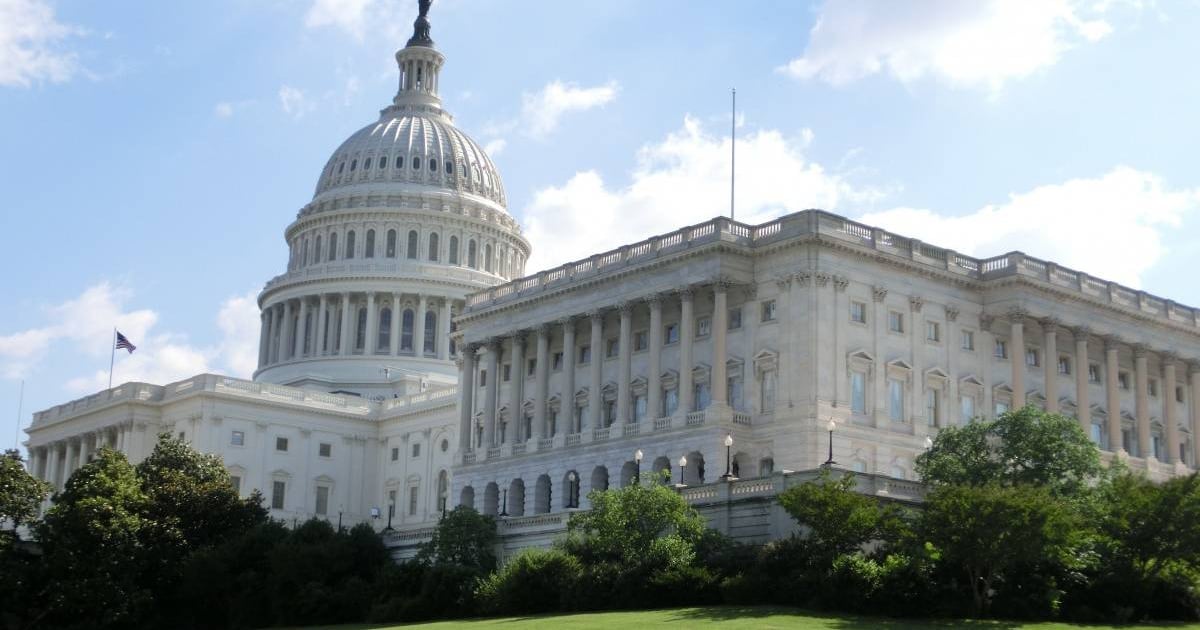
The partial shutdown of the United States Government continues without a clear resolution, after the Senate rejected two budget proposals—one from the Democrats and another from the Republicans—on Wednesday in another unsuccessful attempt to restore the full operation of the federal administration.
The Democrats' proposal was defeated by a vote of 53 to 47, while the Republican measure received 55 votes in favor and 45 against, five votes short of the 60 necessary for its approval, reported the agency EFE.
It is the first legislative attempt since non-essential government functions were suspended at midnight on Tuesday.
Democratic senators John Fetterman (Pennsylvania) and Catherine Cortez Masto (Nevada) broke with their party and, just like the previous day, voted in favor of the Republican package, which has received the most support so far.
Democrats have conditioned their support on the renewal of the health program subsidies Obamacare, which expire this year, and on reversing the health cuts included in the major tax reform pushed by President Donald Trump.
For their part, the Republicans have rejected those conditions, accusing the opposition of wanting to provide healthcare coverage to undocumented immigrants.
Vice President JD Vance reiterated on Wednesday that the Democrats are responsible for the shutdown and downplayed the likelihood that the crisis will last for a long time.
From the Democratic wing, Senate Minority Leader Chuck Schumer warned that his party "will not yield," even if the shutdown extends for weeks.
"They have tried twice to get us to vote in favor of their bill, which does not protect American healthcare at all," Schumer said in an interview with NBC.
President Donald Trump has also spoken out, accusing Democrats without evidence of seeking public funding for healthcare for immigrants without legal status, a claim rejected by the opposition.
While negotiations are stalled in Congress, the practical consequences of the government shutdown are increasing. Although essential services such as the armed forces, social security, airports, and other key agencies will continue to operate, their employees will not receive pay until a new budget is approved.
Meanwhile, thousands of workers deemed "non-essential" are being suspended without pay, and the White House warned that layoffs could begin in the coming days.
"We believe that layoffs are imminent. Unfortunately, they are a consequence of the government's paralysis," declared Karoline Leavitt, White House spokesperson, who blamed the Democrats for hindering the approval of the budget.
The director of the Office of Management and Budget, Russell Vought, indicated that the initial measures could be activated in "two days," in line with the Donald Trump administration's goal of reducing the size of the federal bureaucracy. The agency has already instructed federal agencies to identify programs deemed non-essential in order to proceed with cuts.
For now, uncertainty reigns in Washington as public pressure mounts on lawmakers from both parties to reach an agreement to reactivate the federal government.
Filed under: