
Related videos:
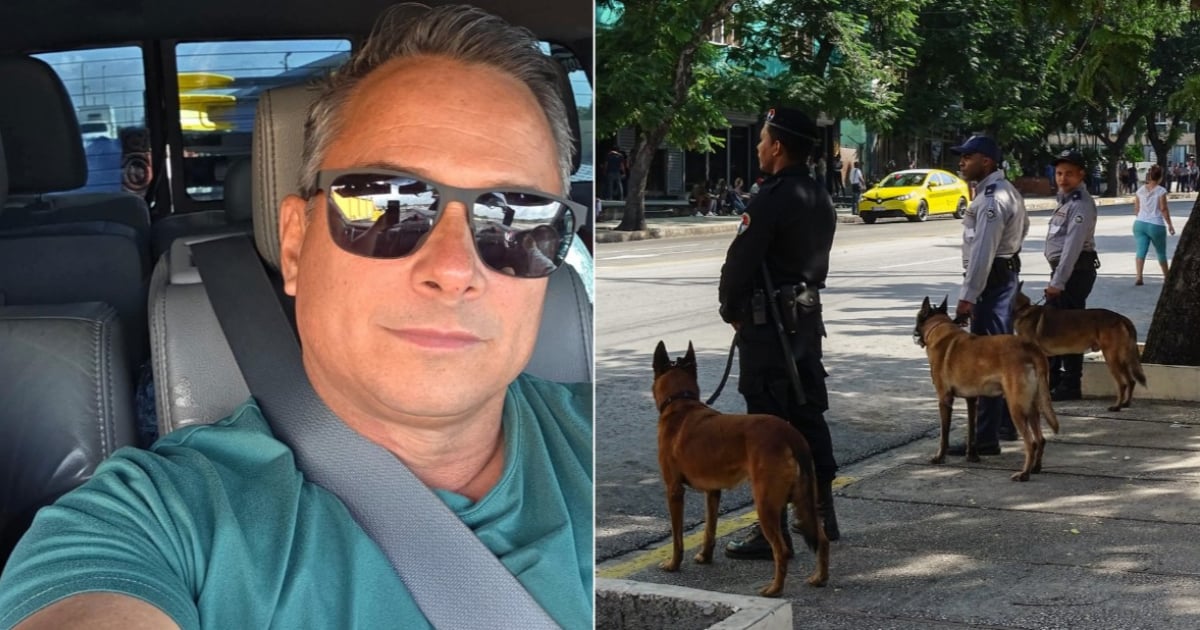
The words of Cuban poet Alex Alex have gone viral on social media after he published a reflection on what it means to live far from Cuba and why, he claims, he cannot miss a country that has become —in his view— a “prison disguised as a homeland.”
Someone asked me if I miss Cuba... And the truth is that I don't. How could I miss a system where people are hungry, where there is no food, no water, no electricity? How could I miss a place where words are forbidden, where speaking your mind can cost you your freedom?, wrote the author on his Facebook account, in a post that was quickly shared thousands of times and generated reactions both inside and outside the island.
In his publication, the writer expresses a sentiment shared by many Cuban émigrés: the contradiction between love for their homeland and rejection of the political system that governs it.
"There is no nostalgia for the imposed silence, nor the daily fear, nor the injustice. One cannot yearn for a land where thinking differently is punished, where truth comes at the cost of pain," he added.
The text concludes with a widely quoted phrase by users: “What I miss is not Cuba, what hurts is my son, my mother who has passed, my friends from the neighborhood, those fragments of love that I left amidst the disaster. But the dictatorship, no. That is not missed, it is overcome. It is carried like a scar, not as nostalgia.”
After the message went viral, the poet shared a second text in which he responded to those who insulted him or accused him of being a "traitor" and "sellout."
Many have written to insult me. But no, no one pays me. No empire pays me, nor does any enemy dictate to me. I speak because I am free, because my voice can no longer be silenced, he stated.
In his post, Alex Alex emphasized that his love for Cuba is not for the current system, but for its people and its history.
"I don't miss Cuba. I miss my son, my friends from the neighborhood, the genuine laughter of those who grew up with me. But Cuba, that Cuba that exists today, I do not miss. Because you cannot miss a prison disguised as a homeland," he emphasized.
The poet harshly criticizes the government of the island: “I don't miss a country where demanding your rights is considered ‘counter-revolutionary,’ where the truth is punished and power serves an elite surrounded by luxury while the people suffer from hunger.”
It also questions the official narrative that blames the U.S. embargo for the crisis: “I do not miss a system that blames a blockade for what they themselves destroyed, while those who shout about it travel, spend, celebrate, and eat what the people cannot even look at.”
At the end of his message, he stated, “I do not renounce my land. I am a hundred percent Cuban. I love my colors, my flag, my noble and hardworking people. I love free Cuba, not oppressed Cuba. That is why I speak out when many remain silent. Because to love is not to lie. And anyone who loves their country cannot applaud its misery.”
The post has been shared thousands of times on social media, with messages of support from other Cubans both on and off the island who resonate with its words.
In less than 24 hours, the text surpassed half a million reactions and hundreds of comments that express gratitude for its "courage" in stating what many fear to express.
Frequently asked questions about the critical situation in Cuba and the voice of the exiles
Why does Alex Alex describe Cuba as a "prison disguised as a homeland"?
Alex Alex uses this metaphor to illustrate the lack of freedoms and the repression that Cubans suffer under the current regime. In his reflection, the Cuban poet mentions the scarcity of food, the prohibition of free expression, and the constant fear as reasons why Cuba feels more like a prison than a home. His words have resonated widely, reflecting the sentiments of many Cubans in exile who love their homeland but reject its political system.
What reactions has Alex Alex's publication about Cuba generated?
Alex Alex's post has gone viral on social media, generating both support and criticism both inside and outside of Cuba. His message has been shared thousands of times and has received insults from those who consider him a "traitor," as well as words of gratitude for his bravery. Many Cubans have identified with his feelings, expressing their own rejection of the regime while holding a deep love for their homeland and their people.
How does the Cuban government respond to criticisms regarding the lack of freedoms on the island?
The Cuban government often justifies the lack of freedoms by blaming the U.S. embargo and defending its system as a form of resistance and social justice. However, this narrative is criticized by many who point to political repression, censorship, and the economic crisis as evidence of the authoritarian nature of the regime. Statements from official figures, such as those from Díaz-Canel, who claim that Cuba is more democratic than other countries, are met with skepticism and mockery by a large portion of the population.
What role do Cuban public figures play in denouncing the regime?
Public figures such as Alex Alex, Descemer Bueno, and Arturo Sandoval have used their platforms to denounce the conditions in Cuba and raise their voices against the regime. These artists and personalities have been instrumental in highlighting the repression and lack of rights on the island, often facing criticism and threats from government supporters. Their bravery has inspired other Cubans both inside and outside the island to express their own feelings of frustration and desire for change.
Filed under: