
Related videos:
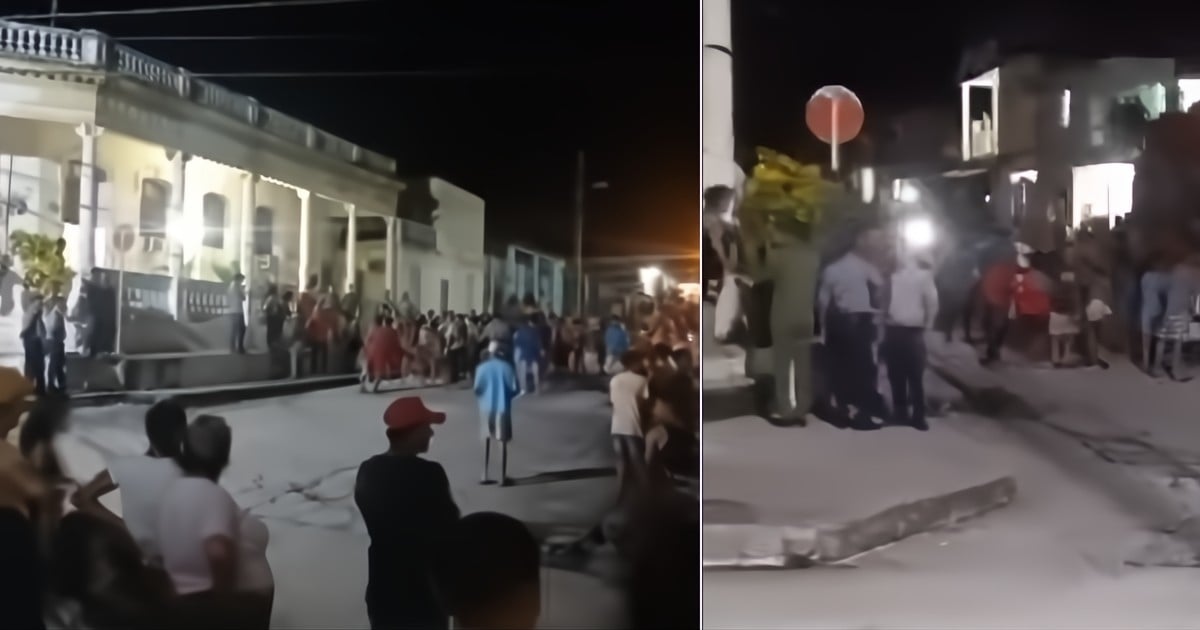
A Cuban court imposed sentences of up to six years in prison on six individuals for participating in a peaceful protest involving "the banging of pots and other metal objects" in front of the municipal government headquarters in Manicaragua, where they were demanding electricity during a blackout.
According to the Cuban Observatory of Human Rights (OCDH), Sentence C725 from the Provincial Court of Villa Clara, dated October 20, 2024, classifies the acts as crimes against public order and, in one case, as propaganda against the constitutional order, according to documentation accessed by the OCDH.
Six years in prison were imposed on José Águila Ruiz (for propaganda against the constitutional order), Raymond Martínez Colina and Carlos Hurtado Rodríguez (both for public disorder).
Five years in prison were imposed on Osvaldo Agüero Gutiérrez, Narbiel Torres López (18 years) and Yoan Pérez Gómez, also for public disorder.
Accessory sanctions were added, including the deprivation of political rights and a prohibition on leaving the country.
On the night of October 20, 2024, more than 100 people gathered in front of the Municipal Assembly of People's Power in Manicaragua to demand the restoration of electricity, banging pots and shouting "we want power."
Once the power was restored, the concentration dissolved without any serious incidents, as acknowledged by the ruling itself.
The ruling, according to the OCDH, states that the accused "disturbed public peace" by occupying the street and disrupting traffic.
Narbiel Torres is attributed with using a horn to incite noise, Raymond Martínez with striking a metal object attached to his waist, and Carlos Hurtado with producing similar sounds; other individuals involved allegedly shouted and made gestures that "prevented" the leaders from explaining the energy situation.
José Águila Ruiz, who was also condemned, is accused of filming and broadcasting the protest in real-time with the intention of “discrediting the Cuban social system.”
The Cuban Observatory of Human Rights described the resolution as a “fraud” aimed at criminalizing civic protest, in a context of increasing repression.
He pointed out violations of due process, poor legal techniques, and a lack of objective evidence that substantiates a properly defined crime; therefore, in his opinion, an acquittal and immediate release should have been ordered.
He also questioned the "indistinct" identification of the accused in a crowd, the overreliance on testimonies from MININT and local officials, and the use of politically biased language that undermines judicial impartiality.
The Room for Crimes Against State Security was composed of Justo Gustavo Faife Hernández (rapporteur), Noraimis Blanco Echarte, and Ricardo Hernández Domínguez; the acting prosecutor was Yoenys Montero Tamayo.
Defenses can appeal the decision, although the OCDH warns that the ruling “is intended to limit freedoms of expression and assembly” and “nullifies constitutional rights to complain and petition.”
The case of Manicaragua illustrates the penalization of everyday dissent—protests against blackouts and basic services—with high sentences and additional restrictions that go beyond the main penalty.
Human rights organizations argue that decisions like this escalate the cost of peaceful protest and discourage new citizen demands regarding supply shortages and public management failures.
Filed under: