
Related videos:
The hurricane Melissa, which is still battering the eastern region of Cuba with torrential rains, strong winds, and landslides, continues to move northeast, and according to the latest forecasts, it could exit into the sea near Cayo Saetía, between the municipalities of Mayarí and Banes, in the province of Holguín.
The latest report from the National Hurricane Center (NHC), issued at 8:00 a.m. (Miami time), places the center of the system at 20.6°N and 75.7°W, approximately 70 kilometers northwest of Guantánamo and moving at 22 km/h in a north-northeast direction.
This trajectory positions the launch corridor between Moa, Mayarí, and Banes, with Cayo Saetía —at the entrance of Nipe Bay— as a likely point of re-entry into the western Caribbean Sea.
Melissa is maintaining maximum sustained winds of 165 km/h and a central pressure of 968 millibars, keeping it at a category 2 hurricane on the Saffir-Simpson scale. The NHC warns that the system could maintain this strength while crossing the southeastern Bahamas in the coming hours.
The accumulated rainfall has exceeded 300 millimeters in areas of Santiago de Cuba and the Sierra Cristal, while the winds have caused landslides, power outages, and river flooding in the east.
Meteorologists warn that cyclone swells could raise sea levels by up to 2.4 meters along the northern coast of Holguín, especially in the areas of Antilla and Cayo Saetía, where large waves and dangerous rip currents are expected throughout the day.
Tourist infrastructures and GAESA properties at risk due to the passage of Melissa
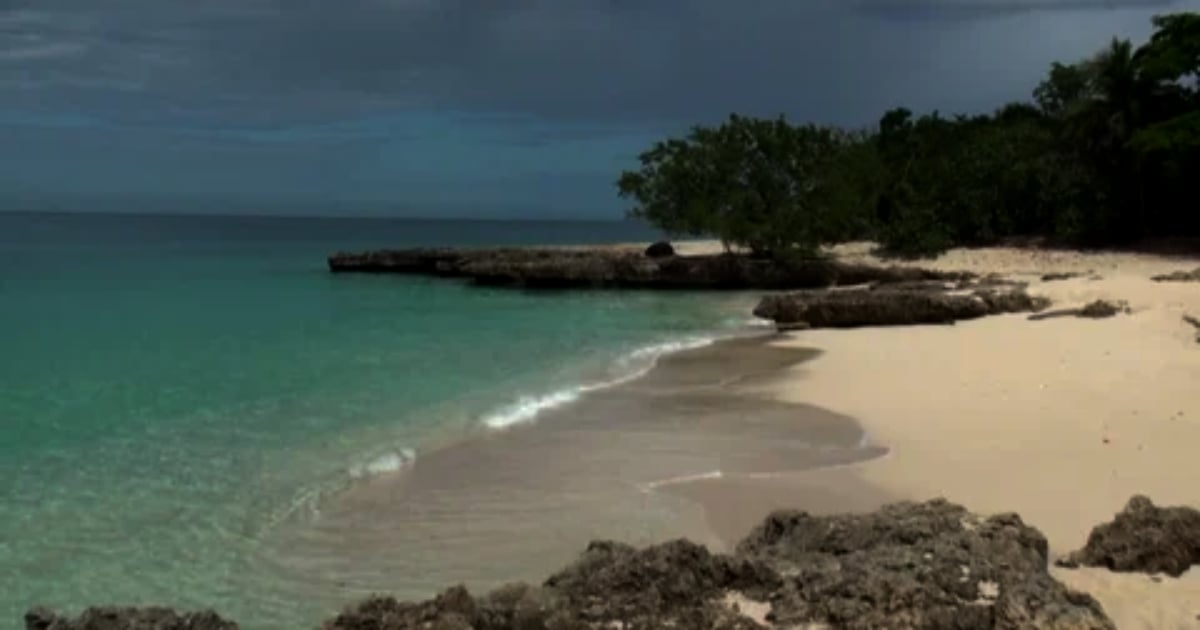
The advance of Melissa towards the northeast of Cuba poses a direct threat to Cayo Saetía, a 42-square-kilometer islet in Nipe Bay, converted into a tourist destination controlled by GAESA, the military conglomerate that manages a significant portion of the Cuban economy.
Since 2021, various reports have documented the gradual eviction of local residents, who have been relocated to Antilla and Mayarí, to make way for new hotel projects by the Gaviota Group, the tourism subsidiary of GAESA.
These complexes include Villa Cayo Saetía, a retreat with just a dozen rooms, where luxury safaris and services are offered in an environment filled with exotic wildlife —antelopes, zebras, buffalo, and ostriches— brought from Africa and Asia.
The area has also been the subject of reports regarding an alleged vacation residence of General Raúl Castro, which has led to it being regarded for years as a restricted access zone, especially in the northern and eastern sectors of the cayo.
With Melissa approaching its exit to sea precisely at this point, the tourist infrastructures, internal roads, and military docks could suffer significant damage from the waves exceeding 2 meters and the gusts of over 160 km/h expected for the region.
In addition to the physical impact, the phenomenon highlights the forced transformation of the territory, once inhabited by local families and now turned into an exclusive tourist enclave for foreign visitors and high-ranking officials of the regime, with a significant impact from the construction of tourist infrastructure.
Local authorities have not yet released reports on possible damages, but satellite images and the NHC bulletin indicate that Cayo Saetía is within the most likely exit corridor of the hurricane, making it one of the highest-risk areas in eastern Cuba at this stage of the event.
Filed under: