
Related videos:
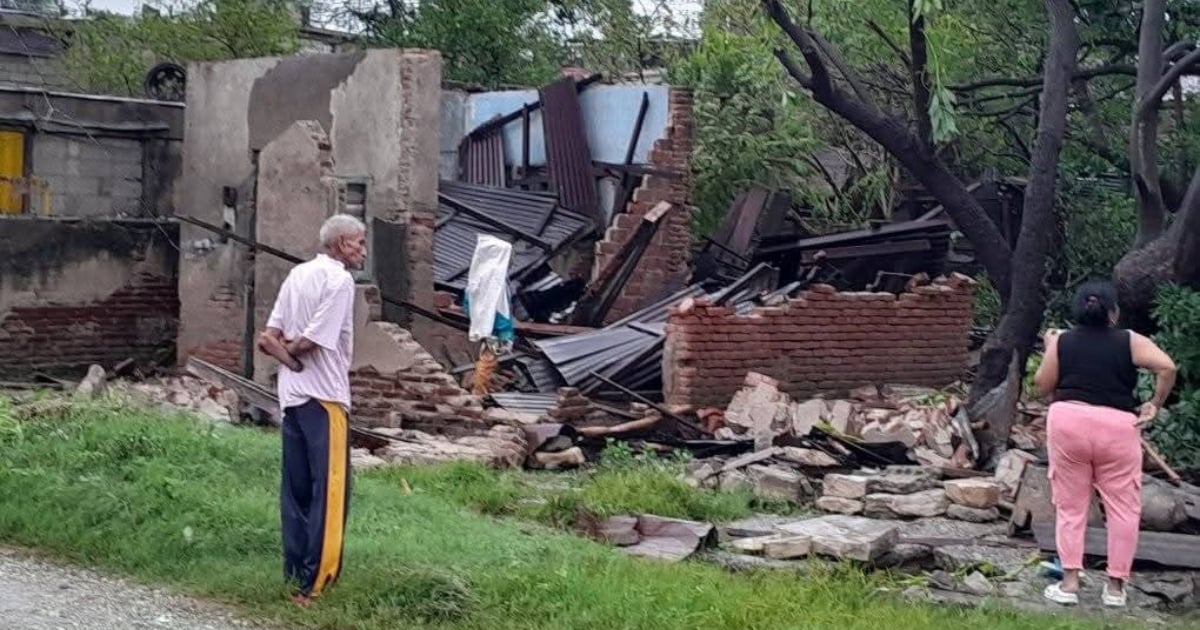
The Cuban regime reported this Monday that the number of homes affected by Hurricane Melissa in the eastern part of the country exceeds 45,000 cases.
"Preliminarily, there are 45,282 reported damages to homes, mostly to roofs. The delivery of tiles has already begun," stated the official account of the Presidency of Cuba on the social network X.
They did not specify how many houses were completely destroyed or the expected timelines for recovery.
The government also acknowledged damages in 1,552 schools, of which “about 200 have already been restored.” More than 14,000 people remain evacuated in state facilities, while another 120,000 Cubans continue in protection centers or in the homes of relatives.
The Minister of Education, Nayma Trujillo Barreto, stated that the return to classes will depend on the conditions in each province. "More than a hundred schools are currently evacuation centers," she affirmed.
The agricultural damage is also significant. Authorities admitted that 78,700 hectares of crops were affected, with more than half dedicated to bananas, a staple in the diet of Cubans.
From the province of Granma, Governor Yanetsy Terry acknowledged that the greatest tensions are concentrated in the municipality of Río Cauto, although the water level "begins to recede." In the town of Guamo, around 3,000 people were relocated to Las Tunas.
For his part, the leader Miguel Díaz-Canel stated in a meeting of the National Defense Council that "progress is being made in the restoration of electricity and the supply of water, although there is still much work to be done."
"Resources have begun to be allocated for the damaged homes, with a preliminary total of 45,282 damages reported. Donations from nations, organizations, institutions, small and medium-sized enterprises, and the solidarity movement of our entire people are being received and distributed," Díaz-Canel wrote on X.
Despite the official optimistic rhetoric, the situation in the hardest-hit areas remains critical. Numerous families have reported a lack of construction materials and that the State is selling these essential resources.
There is a delay in the delivery of aid and prolonged power outages amid an emergency that exacerbates the already precarious economic situation of the country.
The provinces most affected by Hurricane Melissa were Granma, Las Tunas, Holguín, and Santiago de Cuba, where severe flooding and damage to roads, power lines, and crops were reported.
The government has not yet reported the total number of affected individuals or the estimated cost of the losses, while Cubans continue to await concrete solutions following the powerful cyclone that struck the eastern region at the end of October.
Filed under: