
Related videos:
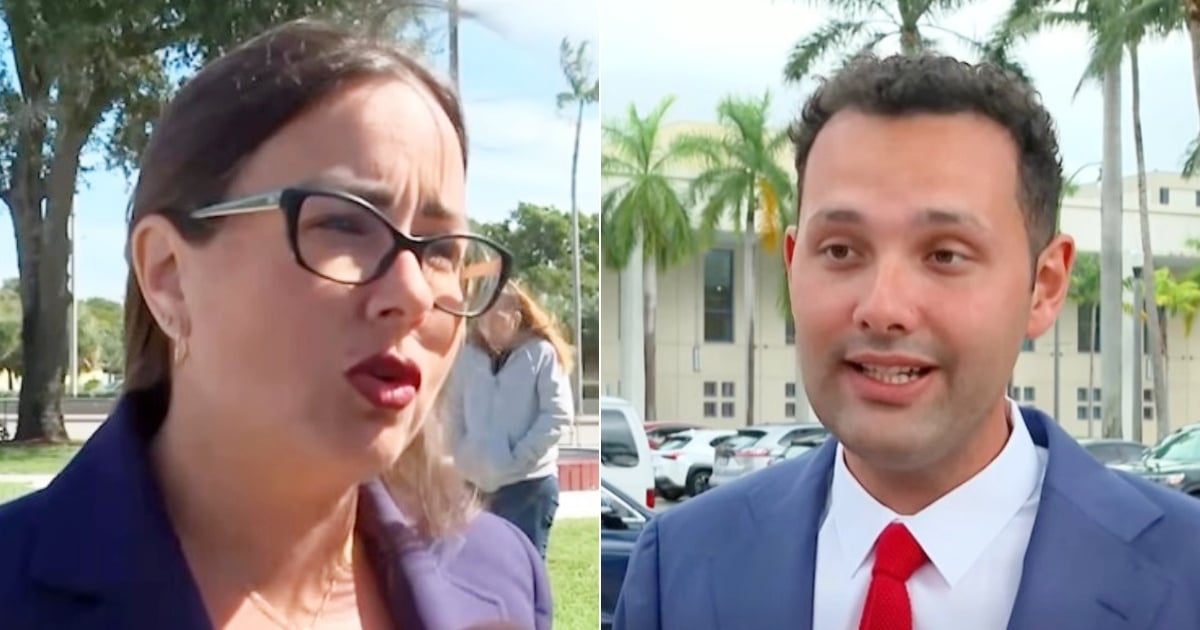
A week before the municipal elections, the interim mayor of Hialeah, Jacqueline García-Roves, has sparked an institutional storm by sending a memorandum that prohibits municipal employees and directors from establishing direct contact with the elected mayor, Bryan Calvo, without her express authorization.
The decision, interpreted by many as an attempt to block access for the incoming administration, has reignited political divisions and raised concerns about the direction of local government during the transition period.
An order with immediate effect and disciplinary consequences
On the Monday following the elections, García-Roves sent an email addressed to department heads, deputy directors, unionized employees, administrative staff, municipal personnel, firefighters, and police officers.
In the message, it was ordered: “Restrict communication with the elected mayor effective immediately.”
And he added categorically:
"None of the employees, directors, or staff members are authorized to meet with the elected mayor or their representatives, provide them with information, or communicate with them regarding any matter, operation, or municipal topic related to the city of Hialeah without my explicit written authorization."
The memorandum -quoted by El Nuevo Herald- warns that any non-compliance “will be regarded as a violation of the administrative procedure and appropriate measures will be taken.”
The measure, which took employees and local observers by surprise, has put the outgoing administration's role and its willingness to facilitate the institutional transition in the city under scrutiny.
The explanation of García-Roves
In light of the media and political uproar, the interim mayor tried to justify the order by stating that it aims to preserve administrative order.
"My priority is to ensure a smooth and professional transition", stated García-Roves.
"Until January 12, my administration will continue to be responsible for all city matters, and all communication with the elected mayor will be routed through my office to maintain order and transparency," she added.
However, this explanation has been fiercely challenged by the elected mayor himself and by citizen sectors who view the measure as a political reaction to a decisive defeat.
Calvo's response: “Voters deserve respect, not obstruction.”
Bryan Calvo, who won decisively in the elections on November 4 by obtaining 52.9% of the votes, firmly responded to García-Roves' directive:
"No outgoing mayor should attempt to silence employees or obstruct communication with the new administration," he stated. "Voters chose new leadership, and that decision deserves respect, not obstruction."
Calvo, 32 years old, won outright against councilman Jesus Tundidor (20.7%) and García-Roves, who came in third with 19%.
The outcome confirmed a desire for change in the leadership of the municipal government.
An unprecedented transition with no clear protocols
This confrontation takes place within the context of the first extended transition process in the recent history of Hialeah.
In 2022, during the tenure of then-mayor Esteban Bovo Jr., voters approved an amendment that extended the transition period to 12 weeks between the election and the inauguration of the new mayor.
At the time, Bovo justified the measure as a way to professionalize the transition.
"I believe we can achieve greater efficiency with a structured transition... to create a more seamless governing process," he said before the City Council in April 2022.
However, their administration did not leave any guidelines or formal protocols on how this new model should be implemented.
In fact, Bovo resigned from his position eight months before the elections to focus on lobbying activities, leaving García-Roves as the interim mayor.
A legal measure or a political maneuver?
Although the interim mayor insists that her decision is due to organizational reasons, critics and political observers suggest that it is a calculated action to limit Calvo's ability to adequately prepare for her term.
"The lack of transparency in the transition raises doubts about institutional respect for the popular mandate," said a local analyst who spoke on the condition of anonymity.
The tension has also been felt among municipal employees who now find themselves caught between two conflicting orders: the duty to prepare the ground for a new mayor and the threat of sanctions if they communicate with him.
A city waiting for January 12th
Meanwhile, Hialeah remains in a sort of administrative limbo.
Calvo's swearing-in ceremony is scheduled for January 12, 2026, on which date he will officially become the youngest mayor in the city's history.
Until then, the political landscape is characterized by distrust, a lack of institutional coordination, and the struggle for control of the public narrative.
What should have been an exercise in democratic maturity and cooperation has turned into a power struggle that threatens to leave scars on the city's governance.
Filed under: