
Related videos:
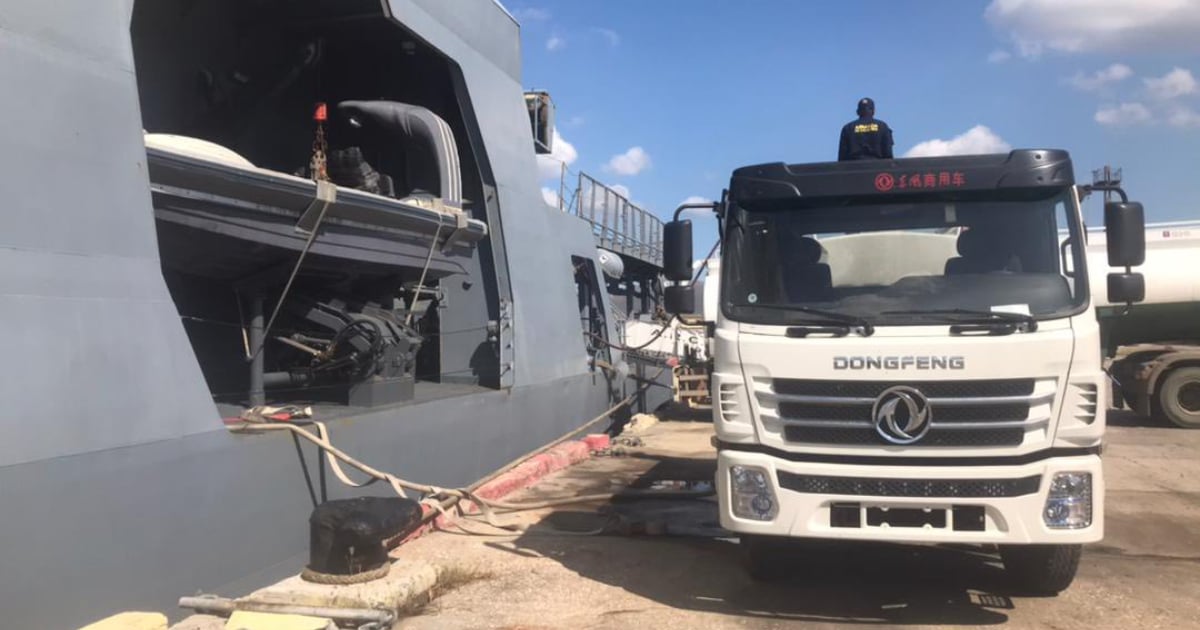
The ship ARC Victoria of the Colombian Navy discharged 95 cubic meters of water at the port of Santiago de Cuba as part of the humanitarian aid sent following the passage of Hurricane Melissa, according to reports from the Empresa de Acueducto y Alcantarillado Aguas Santiago and the Aduana de Cuba on their official social media.
According to Aguas Santiago, the shipment is part of "the aid that Santiago de Cuba receives following the passage of Hurricane Melissa, from our brother towns," while Customs reminded that Colombia donated 246 tons of humanitarian aid intended for those affected, including the shipments of drinking water transported by the Colombian ship.
The shared images show Cuban tanker trucks loading the liquid from the vessel docked at the Santiago port.
Outrage and skepticism among Cubans
The reactions of citizens on social media quickly emerged, reflecting a mix of indignation, disbelief, and distrust towards Cuban institutions regarding water management. Many users criticized the fact that Cuba receives donated water from another country while eastern provinces continue to face supply issues.
“Cuba doesn't even have water,” wrote an internet user. Others pointed out that in Santiago there are neighborhoods that have gone more than two months without receiving supplies and questioned whether help will truly reach the communities in need. “Even water has to be donated here,” lamented another, while several claimed that “everything is sold in the dollar stores.”
In the Customs publication, the comments echoed the same frustration: “What a shame, we don’t even have water,” “How can they bring water from another country?” and “Then they say Cuba is not a failed state.” However, some defended the gesture of solidarity, recalling that heavy rains and floods can contaminate local sources and lead to diseases.
International aid and the water crisis
The water shipment is part of the humanitarian cargo of 244 tons that arrived in Cuba on November 6 from Cartagena, Colombia. The operation was coordinated by the National Unit for Disaster Risk Management (UNGRD) and the Colombian Foreign Ministry, and included food, drinking water, blankets, and fuel intended for the victims in eastern Cuba.
Part of that assistance has already begun to be distributed in Guantánamo, where delegations from the Navy and the UNGRD delivered food, hygiene, and bottled water kits to communities affected by Hurricane Melissa, which caused severe damage to homes and infrastructure in eastern Cuba.
In the province of Granma, the authorities recently reported the arrest of two water vendors for illegal water sales in Bayamo, amid public discontent over the scarcity and irregularities in the distribution of the resource.
A donation that highlights precarity
Although Cuban authorities have highlighted the solidarity aspect of international aid, the arrival of a ship with drinking water from another country has been perceived by many as a symbol of the profound hydraulic infrastructure crisis that the island is experiencing.
In Santiago de Cuba, many communities are reporting that they continue to lack running water, despite the rains and the supposed restoration of service in several municipalities. This episode has reignited the debate over the inefficiency of the state water supply system, the lack of maintenance in networks and pipelines, and the unequal distribution of an essential resource that, according to local testimonies, does not always reach those who need it most.
Filed under: