
Related videos:
The Federal Aviation Administration (FAA) of the United States has issued a alert directed at civil aircraft flying over Venezuela, warning of a “potentially dangerous situation” due to the “increased military activity” in the airspace of the South American country.
Amid a growing escalation of tensions between Washington and Caracas, this measure adds to a series of military maneuvers and cross statements that have raised alarms in the Caribbean region.
Warning to airlines: Caution at all altitudes
The warning issued by the FAA urges airlines to act "with caution" when operating over Venezuelan territory, citing a "deterioration of the security situation" that affects both in-transit flights and parked aircraft.
Although the document does not specify concrete threats, it indicates that there could be “potential risks to aircraft at all altitudes”, even those that are on the ground.
Unlike a formal flight ban, this alert does not prohibit flights over Venezuelan airspace, but it requires airlines to notify the FAA of their itineraries at least 72 hours in advance.
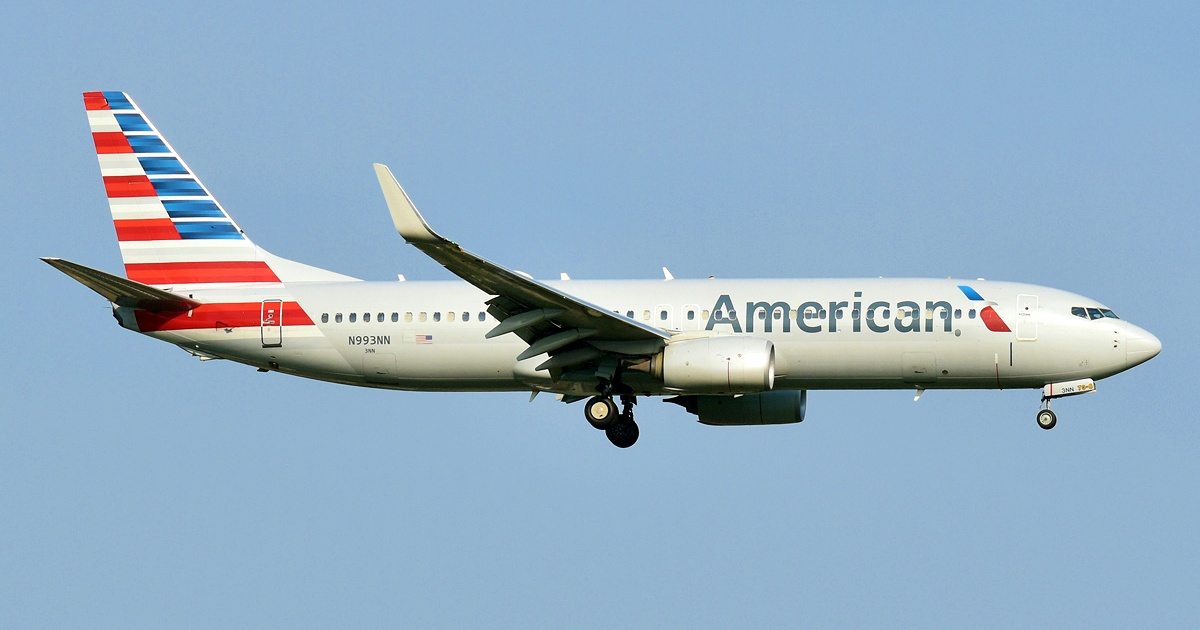
Some companies such as American Airlines and United Airlines have already confirmed to Reuters that they have ceased operating flights that cross Venezuelan airspace, anticipating potential operational risks. The FAA's concern is directly linked to the development of Operation "Lanza del Sur", a military maneuver initiated by the Pentagon that involves an unprecedented naval deployment in the Caribbean, near Venezuela.
According to Washington, the goal is to reduce the threats posed by drug trafficking, although Caracas interprets these actions as an attempt at destabilization and military pressure.
An unprecedented military deployment
The operation includes the mobilization of the USS Gerald R. Ford, the largest aircraft carrier in the world, along with destroyers and other warships operating in nearby waters.
U.S. forces have participated in attacks against 21 vessels allegedly involved in drug trafficking, resulting in the deaths of more than 80 individuals whom the U.S. government labels as “narcoterrorists,” although no public evidence has been presented to support these claims.
In this context, Mary Schiavo, former inspector of the Department of Transportation, explained to the AP agency that such alerts are routinely issued in areas of armed conflict.
“I wouldn't take it as an imminent threat because I've seen it issued many times before. But as a pilot, I would definitely keep it in mind,” she stated.
Increase in maneuvers and military exercises
The FAA alert also mentions that "Venezuela has conducted multiple military exercises and directed the massive mobilization of thousands of military and reserve forces."
However, the statement clarifies that so far, the Venezuelan Air Force has not demonstrated any intentions to attack civilian aircraft.
At the same time, the United States Southern Command (AFSOUTH) confirmed on November 21 that it had conducted a "bomber strike demonstration" as part of the air component of the operation.
Images of the combat planes were shared on the social network X, showing B-52 strategic bombers and F-35 fighter jets conducting exercises in Puerto Rico, specifically at the José Aponte de la Torre Airport in Ceiba.
On the same day, U.S. Secretary of Defense Pete Hegseth announced that the imminent designation of the Cartel de los Soles as a foreign terrorist organization -scheduled for November 24- "brings a lot of new options to the United States."
According to Washington, this cartel is allegedly led by Nicolás Maduro himself, although the accusations have been repeatedly denied by the Venezuelan president, who denies any connection to drug trafficking activities.
Caracas denounces "aggression" and "deliberate threat."
Defense Minister Vladimir Padrino López described the joint maneuvers between the United States and Trinidad and Tobago as an "aggression."
These operations took place between November 16 and 21 on the territory of the Caribbean island, located just 11 kilometers from the Venezuelan coast.
"It is sad that the Government of Trinidad and Tobago lends its territory, degrades its territory, its sovereignty so that instruments for mass death and destruction can be stationed there," Padrino declared in a video shared on social media.
He also denounced that the military actions are part of a “deliberate plan to threaten Venezuela,” in coordination with the United States.
Trinidad and Tobago, for its part, has defended its participation in the exercises, which are part of a “deep and lasting security partnership” with Washington, formalized through the Status of Forces Agreement (SOFA) in 2024, as confirmed by Prime Minister Kamla Persad-Bissessar.
The tensions are not only military but also political. The Trump administration has ramped up its rhetoric against Nicolás Maduro, whom it does not recognize as the legitimate president following the 2024 elections.
The Venezuelan opposition has presented documents that, according to their claims, would prove the victory of former diplomat Edmundo González Urrutia.
For Caracas, this entire hostile environment serves a political purpose: the forced removal of Maduro from power. The leader has denounced that anti-drug operations in the Caribbean are an "excuse" to hide the true intent of expelling him through military pressure and regional destabilization.
Filed under: