
Related videos:
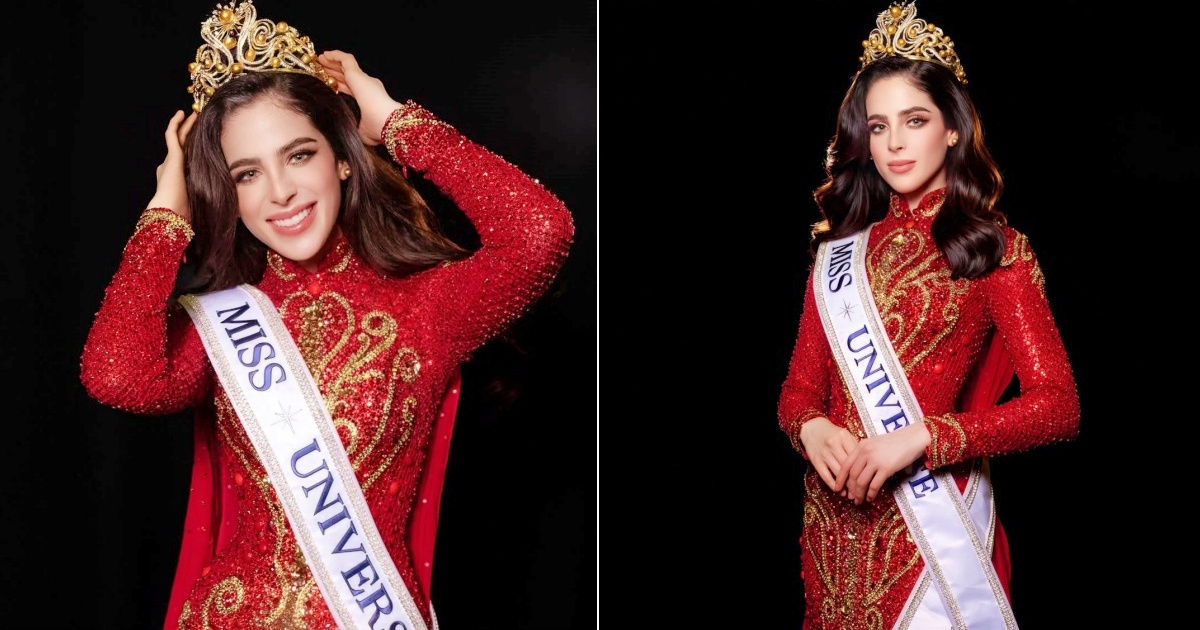
The crowning of Fátima Bosch as Miss Universe 2025 has sparked a storm of reactions, boos, allegations of fraud, internal tensions, and complaints from resigning judges.
What was supposed to be a night of celebration at the Impact Arena in Pak Kret, Thailand, ended up becoming one of the most controversial chapters in the history of the most recognized international beauty pageant.
A victory amid boos
Fátima Bosch, representative of Mexico and now the fourth beauty queen from that country to win the universal title, was announced as the winner amid a mix of applause, boos, and incredulous faces.
Her coronation surprised a large part of the audience, especially the local spectators, who were expecting to see their favorite, the Thai Veena Praveenar Singh, crowned.
The videos shared on TikTok show how discontent spread even outside the venue. What was supposed to be the culmination of weeks of competition was overshadowed by a tense atmosphere.
On stage, while Bosch received the golden crown embedded with diamonds and pearls, the whistles and shouts of disapproval highlighted the rift between the organization, the jury, and the audience.
Fraud accusations: The internal fracture
Warnings about a possible rigging in the election of the winner began to emerge days before the gala. The Franco-Lebanese pianist Omar Harfouch, one of the guest judges, announced his resignation from the contest, citing serious irregularities.
“There was a secret vote to select the 30 qualifiers without the jury's intervention,” he assured.
He described the process as "opaque, corrupt" and suggested conflicts of interest between the president of MUO and Bosch's father, Bernarno Bosch, a businessman connected to Pemex.
"It was not a transparent election. The organization had already decided who would win," she stated on Instagram, asserting that she was considering legal action for abuse of power, corruption, and conflict of interest. She called Bosch "a fake Miss Universe," she added.
Some of the Mexican press has not hesitated to provide details of what they consider a completely rigged victory.
Other members of the original jury also withdrew from the event without a clear explanation.
The former French footballer Claude Makélélé announced that he would not participate in future editions.
The Brazilian artist Romero Britto, who was also announced as a judge, did not attend the gala. The absences, compounded by rumors, fueled distrust.
The silence of the organization and the censorship of the press
Far from calming tensions, the Miss Universe organization chose to shield the new queen from the press.
In her first press conference as Miss Universe, uncomfortable questions were prohibited: journalists had to submit their questionnaires in advance, and no inquiries about the allegations were allowed.
This act of censorship generated more suspicion.
At the same time, the organization announced legal action against Harfouch, but did not issue any official comment regarding the fraud allegations, the mentioned business ties, or the validity of the voting system.
Divided reactions: National pride vs. global outrage
On platforms like X and TikTok, opinions were divided. Many international users described Bosch's selection as a "robbery," "fraud," or "sham," and questioned the legitimacy of the contest.
"Nothing will be the same anymore", published the specialized site Real Pageanthology.
"The MUO selects the winner regardless of anything else," she declared.
However, on the Mexican and Latin American side, expressions of pride, passionate defense, and emotion emerged.
"Whenever Mexico wins, they say it's fraud," was read in multiple comments.
Others highlighted their preparation, charisma, and authenticity.
"The joy of Tabasco, Mexico, and many Latin Americans can no longer be taken from us. And neither can the crown for Fátima Bosch," wrote a user.
The altercation that sparked the fuse
The controversy didn't erupt out of nowhere.
The name of Fátima Bosch had already gained prominence weeks earlier due to an incident during the sash presentation ceremony.
There, the director of the organizing committee for Miss Universe Thailand and president of Miss Grand International, Nawat Itsaragrisil, publicly reprimanded the Mexican contestant for “not posting enough content” on her social media to promote the event.
In a humiliating tone and in front of live cameras, he called her "stupid" and ordered her to be removed from the room.
Fátima, far from remaining silent, stood up and demanded respect. That gesture triggered a wave of solidarity.
Other contestants left the venue in a show of support, and figures like Miss USA 2023, Noelia Voigt, condemned the treatment received by the Mexican.
Even the Mexican president Claudia Sheinbaum praised her as a symbol of female resistance: “An example of women who must raise their voices and set boundaries.”
Nawat's public apologies—one of them in tears—did not manage to contain the media impact.
The businessman Raúl Rocha, president of the Miss Universe Organization (MUO), intervened in defense of Bosch, warning of possible legal actions against Nawat.
Although the two later met in Bangkok and claimed to have "smoothed things over," it was never publicly clarified whether the lawsuits would continue.
A Chaotic Edition: Beyond the Crown
Miss Universe 2025 will not only be remembered for Bosch's controversial victory but also for the series of unfortunate events that characterized it from the very beginning.
From the fall on stage of Miss Jamaica to the scandal on social media when Miss Chile pretended to snort cocaine on TikTok, along with accusations of racism and derogatory statements towards the Thai director, the pageant unfolded more like a reality show than a competition of elegance and purpose.
The conflict between the two heads of the contest, Raúl Rocha and Nawat Itsaragrisil, symbolizes the tensions between two strategic visions: the transformation of Miss Universe into a product for social media and e-commerce, versus the declining traditional television format.
Following the acquisition of the pageant by transgender entrepreneur Anne Jakrajutatip in 2022 and its opening to married women, those with children, and without age limits, Miss Universe is undergoing a phase of redefinition, but also a crisis of credibility.
Epilogue: And now what?
Fátima Bosch, in her speech as crowned queen, sought to unite in the face of adversity: “I know that this crown represents not only the title of a beautiful woman but also serves to accomplish something with it.”
In another intervention, he insisted: "Never allow anyone to make you doubt your work... your voice must be heard."
But the queen's words have not managed to silence the doubts surrounding her victory.
Amid a fractured contest, filled with resignations, accusations, and silences, the central question remains unanswered: Was Fátima Bosch truly the rightful winner? Or, as several have suggested, was it a predetermined coronation, serving conflicting interests?
The story of Miss Universe 2025, far from concluding with a crown, is just beginning. Along with it comes a debate about the future, ethics, and the legitimacy of one of the world's most influential competitions.
Filed under: