
Related videos:
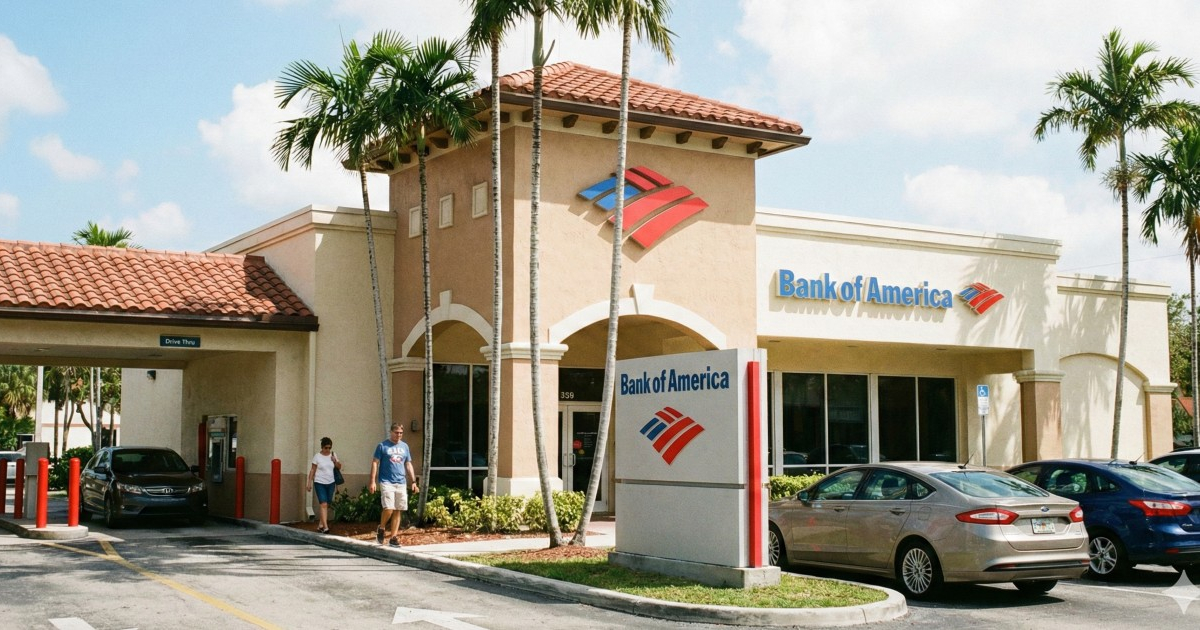
In recent days, many Cubans living in the United States have started receiving messages and letters from their banks, particularly from large institutions, warning that their accounts could be frozen or even closed if they do not update their immigration status. This has caused panic and a lot of confusion: why is this happening and what is behind these alerts?
First, it is essential to understand the legal context: Cuba remains under a regime of U.S. sanctions, which forces banks to implement very strict controls when it comes to individuals of Cuban nationality or operations that may have any link to the island. Additionally, the second Trump administration has aggressively tightened the entire immigration policy, casting widespread suspicion on large groups of immigrants, including Cubans.
In simple terms, banks are afraid of violating sanctions and also of being poorly positioned in front of a government that has made immigration a central objective of control and punishment. That’s why they are in a phase of “cleaning” or internal review, what is referred to in the sector as “de-risking”: they prefer to close accounts they deem risky rather than face problems with the Treasury Department or immigration authorities.
What are they reviewing exactly?
Mainly three things:
- If the client is a citizen or resident of Cuba.
- If you are currently legally present in the United States.
- If there is any possible connection with Cuban entities restricted by the U.S. government.
This is where the cases of parole and I-220A come into play. Under Biden, hundreds of thousands of people from Cuba, Haiti, Nicaragua, and Venezuela entered through humanitarian parole programs, granting them temporary status and work permits. The second Trump administration decided to massively revoke these protections: the termination of the CHNV program was announced, along with the early cancellation of parole for more than half a million people, with the Supreme Court's endorsement to proceed while litigation is ongoing. At the moment parole is canceled, that person is no longer clearly "legally present" and enters a state of limbo or becomes directly deportable.
For banks, this is dynamite: a customer who yesterday showed up in the system with valid parole and work permit can today appear without a clear status. Compliance algorithms and risk teams are starting to flag these accounts as problematic, precisely in a political context where the White House is urging a tougher stance on immigrants. This is where many of the mass messages requesting status updates come from, as well as the preventive account freezes until the customer demonstrates that they have another form of protection or an ongoing process.
The issue of the I-220A is another source of uncertainty. Tens or hundreds of thousands of Cubans entered through the border and received this document of “supervised release,” which is not a classic parole but is not a completely irregular stay either. For years, they have been in limbo: not detained, but without stable status. In 2025, judicial decisions have begun to recognize that many with I-220A can be treated more like a parole for immigration purposes, which opens the door to options like the Cuban Adjustment; however, at the same time, the Trump administration itself has intensified detentions of Cubans with I-220A during ICE checks and has begun to target them as a priority in its campaign against immigration.
From a banking perspective, a client with I-220A represents a case of extremely high regulatory noise: it is unclear how long they can stay, whether they can be detained or deported at any moment, and if their situation falls under the category of "legally present," which the financial regulations require to allow for unrestricted use of accounts. Given this ambiguity, many banks choose to protect themselves: they block accounts, request additional paperwork, or simply close relationships with clients whose status depends on circumstances like canceled parole or the I-220A.
What combined effects does all this produce?
- More Cubans in fragile status (canceled parole, I‑220A, uncertain processes).
- A government that turns immigration into a political and operational priority.
- Banks pressured by sanctions, fines, and a political climate that prefer to cut risks rather than defend an individual customer.
What can a victim do?
- Do not ignore the bank messages.
- Gather and submit copies of all current immigration documents: work permit, asylum notification, Cuban Adjustment receipts, parole extension, etc
- Always request that the bank provide a written explanation for the possible closure, which often appears under the topics of "risk" or "regulatory compliance."
- And if the situation is serious, consult with an immigration lawyer or a sanctions and banking specialist to assess whether it is worth challenging the decision or moving to another financial institution
The visible result is the alerts, blocks, and account closures that so many Cubans are experiencing today. For those caught in this hurricane, the only real defenses are: not ignoring bank communications, providing all possible evidence of a valid immigration status or process (asylum, Cuban Adjustment, residency, submitted renewals), documenting each bank decision in writing, and, when necessary, seeking legal advice both on immigration and financial matters.
In a scenario where Trump's second administration has intensified immigration persecution and undermined the security of paroles, demonstrating that one is on the path to residency or that one already has it is the best way to reduce the likelihood of being seen as a "risk" in the eyes of the banking system.
Filed under: