
Related videos:
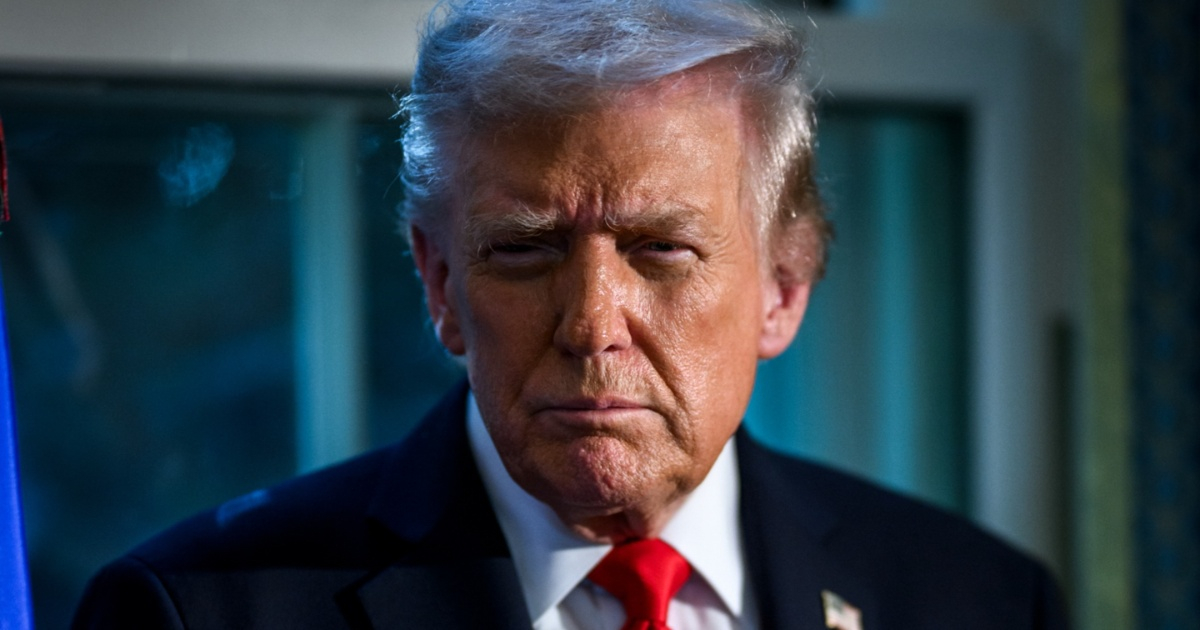
The President of the United States, Donald Trump, was identified by POLITICO as the most powerful (or influential) figure in Europe this year.
According to POLITICO, the selection is based on an annual assessment created from the opinions of its leading journalists and influential Europeans, and which —as the publication itself clarifies— is not intended to be an award or an endorsement, but rather an “objective recognition” of the political reality on the continent.
The choice is primarily explained by the fact that the Trump administration has positioned itself as the “indispensable mediator” between Russian President Vladimir Putin and Ukrainian President Volodymyr Zelenskyy in an attempt to end the war that started after the Russian invasion of Ukraine in February 2022.
The media underscores, however, that influencing the process does not equate to influencing the outcome.
In a 45-minute interview at the White House on Monday with POLITICO's White House bureau chief, Dasha Burns, Trump—according to the transcript—downplayed the designation but stated that he agreed to talk with a media outlet he sometimes views skeptically because their assessment aligned with his own perspective: that "the most important European politician" is no longer European and that, increasingly, he "doesn't even like that place very much."
During the conversation, Trump launched a series of criticisms of Europe focused —according to POLITICO— on immigration, crime, “meaningless conversations” and “weakness,” in what the media describes as a constant flow of “criticisms, insults, and warnings” presented by the president as advice to prevent decline.
Burns asked him if it was about “tough love” or contempt; Trump did not respond precisely, but stated: “I think they are weak... Europe doesn’t know what to do.”
POLITICO adds that, when Trump mentions "Europe," he distinguishes between regions: Western Europe would be the main target of his criticisms, with references to cities like Paris and London, as well as direct critiques of London Mayor Sadiq Khan.
In contrast, the text indicates that the president was more generous with several Eastern European countries, once again praising Hungarian Prime Minister Viktor Orbán and his anti-immigrant stance, and stating that he works well with Turkish President Recep Tayyip Erdoğan; he also had kind words for Poland for limiting immigration, according to the media report.
Regarding the war in Ukraine, the article notes that Trump acknowledged that what he had presented as easily resolvable during the 2024 campaign has not been the case.
"This is difficult," he said, attributing it to the "level of hatred" between Putin and Zelenskyy. He also held his two predecessors, Barack Obama and Joe Biden, responsible for the conflict, claiming that if he had not won a second term, the scenario "could have evolved into World War III," according to the text.
The publication places the interview at a moment deemed unstable for the alliance between the United States and Europe “for nearly eight decades” since World War II, and mentions an internal debate within its editorial team regarding how much the new National Security Strategy released by the White House the previous week reflected Trump, although it asserts that in ideological and cultural fundamentals, he would be its “main author.”
Filed under: