
Related videos:
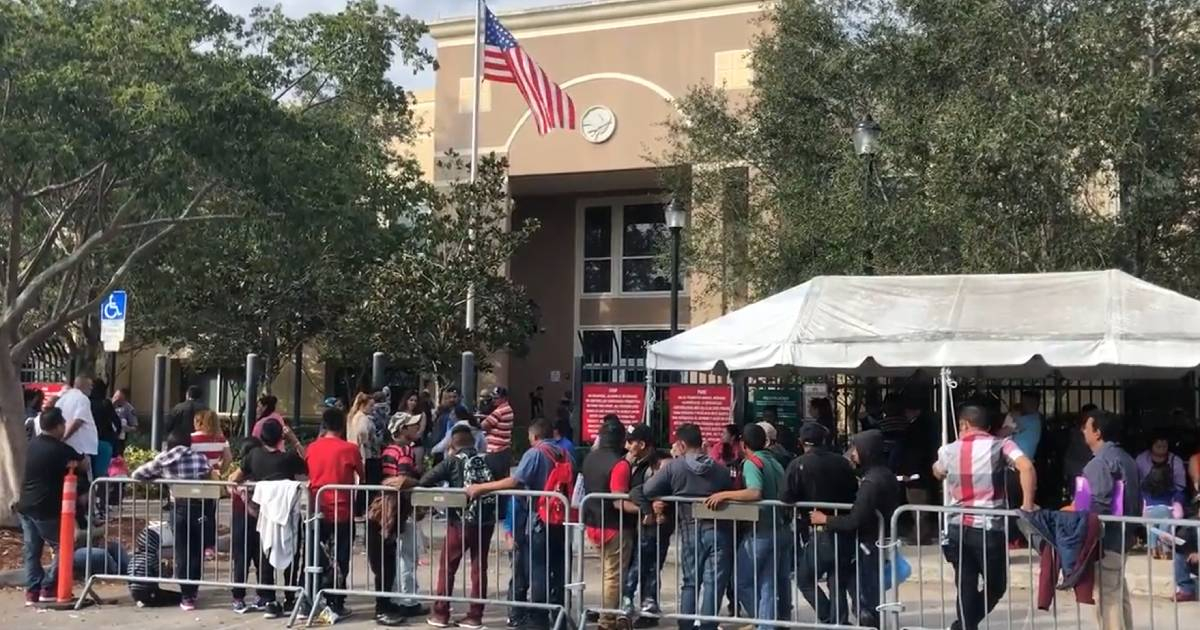
Dozens of Cubans, many of them accompanied by small children, gathered this week in front of the Immigration and Customs Enforcement (ICE) office in Orlando with a question that weighs more than any immigration process: whether they will be able to spend Christmas with their families in the United States or if they will leave the appointment in detention.
The scene, marked by cold, silence, and anxiety, was described by the Orlando Sentinel in a report that depicts how that office has become a place of fear for asylum seekers who meet every legal requirement but still fear they may not return home. More than a hundred immigrants lined up from dawn, some having traveled for several hours, uncertain about their immediate fate.
Among them was the Cuban Pedro Yusbel González Guerra, 34 years old, who arrived in the United States after a perilous journey on a makeshift boat from Cuba. Three days at sea, dehydration, children on board, and scenes he still recalls with distress marked that trip, which almost cost the life of a girl in the group.
Today, he lives in Florida with his wife and their two children, one of whom was born on American soil. He works in construction and solar energy while awaiting a final response to his asylum application.
Before entering the ICE office, González Guerra could only ask that "everything goes well." "It’s impossible to live in Cuba, which is why we are here seeking refuge," he told the local media. Hours after his admission, his family remained without news.
The Orlando Sentinel notes that the number of people attending mandatory check-ins at the ICE office in Orlando has tripled since April, while arrests and the fear of family separations are also on the rise. Immigrant advocates warn that many individuals go to their appointments unaware of whether they will be released or sent to a detention center.
On the sidewalk, volunteers and religious leaders are trying to ease the tension with prayers, hot coffee, and words of encouragement. Pastor Sócrates Pérez, from the coalition "Immigrants Are Welcome Here," explained to the Orlando Sentinel that the fear is not unfounded, as many migrants have seen friends or family members detained while attending their immigration appointments.
Some, however, managed to leave with a temporary relief. The Cuban Zureli Escalona, who came with her husband and her four-year-old son, received a one-year extension and broke down in tears as she left the office. “They gave me one more year,” she said through tears, kneeling on the sidewalk.
Stories like these are repeated in various cities across the United States and are part of a reality that particularly concerns the Cuban community, marked by migratory uncertainty and the constant fear of family separation.
For many, Christmas approaches not as a celebration, but as a deadline that could mark a turning point in their lives.
Filed under: