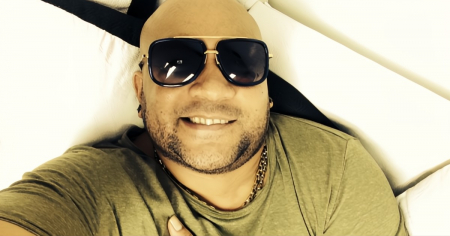
Alain García Artola, artistically known as Alay, a pioneering figure of Cuban rap and originally from Santiago de Cuba, is going through one of the most challenging moments of his life.
Alayo is today fighting alone from the streets of Boston, Massachusetts against a chronic illness, extreme poverty, and neglect.
An artist in crisis: Health as a breaking point
Alayo has been suffering from sickle cell disease since childhood, a hereditary condition that affects the shape of red blood cells and can lead to serious complications. Over time, this condition has resulted in severe deterioration of his kidney function.
“One of his two kidneys is already failing”, warns his friend José Casavielles in an emotional Facebook post from Brussels, Belgium.
Doctors in the United States are trying to halt the progression of the disease with treatments that prevent the need for dialysis or a kidney transplant. However, the latter option is not covered by health insurance, and the cost of self-funding it is "extremely high," according to the source mentioned.
The lack of access to a comprehensive medical solution has placed Alayo in a state of constant risk.
From hospitalization to the streets
On Saturday, December 13, after being hospitalized for 17 days, Alayo was discharged without being offered any accommodation alternatives.
“He had to return to the situation of homeless, having no options or assistance,” his friend reported.
Currently, the rapper is living in shelters in Boston, sleeping in precarious conditions, exposed to the northeastern winter, and without the possibility of a dignified recovery.
“He urgently needs to buy a sleeping bag or blanket and an inflatable mattress to sleep in the shelters,” insists Casavielles, who has sent financial assistance whenever possible, but admits that he can no longer sustain that effort alone.
"I have two young children to feed, and I alone cannot fulfill the goal of saving brother Alayo," he stated.
Loneliness, silence, and a five-year-old child
Beyond physical health and the economic situation, the emotional dimension of this crisis also carries weight.
"Alayo confesses to me that he has felt an enormous loneliness, to the point of depression, but because of his outlook on life, his faith, and his 5-year-old son… he doesn't let himself fall," explains the friend.
The rapper does not live with his son, but his biggest motivation is to be in good health to support him and be by his side.
"The greatest battle or mission for Alayo is to be in shape so he can take care of his son and be by his side."
For years, he avoided publicly sharing his situation out of shame, not wanting to "bother his acquaintances or friends," and because he "is not very happy or proud of his current situation."
According to Casavielles, “Alayo is not the kind of person who tries to evoke sympathy from others to receive help when it suits them.”
An urgent call to the Cuban cultural community
José Casavielles, who shared the stage with Alayo in Cuba and has maintained friendships since those years, made an open call to those who knew and respected him, as well as to anyone who wishes to help.
"If several friends of Alayo come together and contribute what we can, we will save a life, a brother, a friend."
The urgent needs are clear: vital medications for treatment, food, warm clothing, and basic items for resting in shelters. But they also need something less tangible and more powerful: human support.
"I believe I am the only person currently helping Alayo, but I know there are many others who are not aware of his very complex living situation," she assures.
Its publication, in addition to informing, aims to awaken collective awareness and open a concrete channel of solidarity.
How to help?
While an official fundraising campaign is being organized, those who can contribute are invited to contact Alayo directly via Messenger (Facebook) or WhatsApp at the number +1 (617) 602-6102. He will be able to explain how to receive immediate assistance.
"I have helped Alayo a few times by sending him some money through Western Union, but... I alone cannot do it," his friend reiterates.
What is being requested is not charity, but an act of justice for someone who was a fundamental part of a cultural generation and is now facing a critical situation.
Alayo's case is not isolated. It represents the extreme situation that Cuban artists who have emigrated can face, even in first-world countries: chronic illnesses without full coverage, uprooting, poverty, and loneliness.
In his case, the winter in Boston has become just another threat in a life that perseveres from the trenches of rap, dignity, and fatherhood.
Casavielles closes his message with hope: “And for you, Alain García, when you see this post, remember that we are not alone, we are together… We are going to help you because you deserve it.”
Filed under: