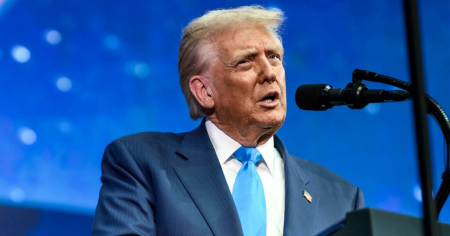
President Donald Trump signed on Thursday an executive order that marks a significant shift in federal marijuana policy in the United States, promoting its reclassification as a less dangerous drug, aimed at facilitating medical research and recognizing its potential therapeutic use, without legalizing recreational consumption.
According to the agency Associated Press (AP), the measure removes cannabis from Schedule I, which includes drugs like heroin and LSD, and places it in Schedule III, alongside substances such as ketamine and certain anabolic steroids.
The change does not decriminalize marijuana at the federal level, but it could modify its regulation and alleviate the heavy tax burden faced by the industry in states where it is legal for medical or recreational purposes.
During the signing event, Trump defended the decision by referencing the experiences of close friends who have faced serious illnesses. “When you see friends who are really, really sick, dealing with cancer or other ailments, and they find that this makes them feel better without all the side effects of certain medications that leave you completely out of commission, it’s something you can’t ignore,” he stated. He also noted that surveys show that up to 82% of Americans support this kind of change.
The president emphasized several times that the executive order does not equate to legalization. "I want to stress that the order I am about to sign does not legalize marijuana in any shape, size, or form, and does not sanction its use as a recreational drug," he said. He compared cannabis to prescribed painkillers that can have legitimate uses but can also cause serious harm if abused, and he specifically warned about the risks for young people. "I always told my children: don’t use drugs, don’t drink, don’t smoke, stay away from them,” he recounted.
According to AP, the reclassification had previously been proposed by the Department of Justice during Joe Biden's administration, but the process remained unfinished and faced resistance, even within the Republican Party.
Trump signed the order while the Drug Enforcement Administration (DEA) was still reviewing the case, which could expedite a process that typically involves a lengthy public comment period.
From the White House, one of the emphases was on research. Trump defended that the change will allow for a more rigorous study of the benefits and risks of cannabis. “Now there will be a much larger sample, and we will be able to see if it is as good as many people say. Some claim it is better than good, and now we will be able to verify that,” he stated. He also mentioned its potential use as a less dangerous alternative to opioid painkillers, which are responsible for a crisis of addiction and deaths in the country.
Currently, around 40 states and several territories of the United States recognize the use of marijuana for medicinal purposes, but federal legislation has remained stricter, leaving many patients and providers in a legal limbo. For millions of migrants, including Cubans living in the U.S., this issue is significant: immigration status, criminal records, and federal laws continue to weigh heavily, even in states where cannabis is legal.
Trump's order does not change that landscape overnight, but it opens a new chapter in the debate over a substance that, for decades, has been viewed solely as a criminal threat and is now beginning to be recognized, at least partially, for its medical potential.
Filed under: