
Related videos:
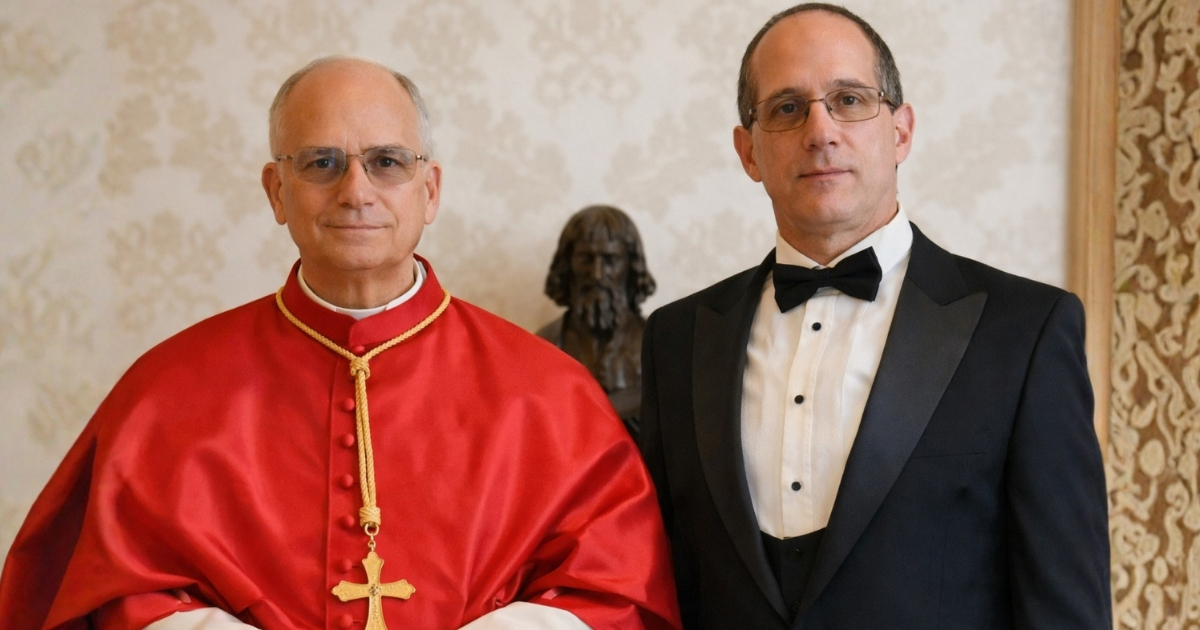
Pope Leo XIV received in audience the new ambassador of the Cuban regime to the Holy See, Leyde Ernesto Rodríguez Hernández, to present his credentials, as reported by the Vatican Press Office.
According to the official statement, the audience took place on the morning of December 20 and was held within the usual protocol for the accreditation of new diplomatic representatives to the Vatican.
After the ceremony, Rodríguez Hernández officially took over as head of the Cuban mission to the Holy See.
The Vatican also published an official biography of the diplomat.
According to that information, Rodríguez Hernández was born on January 5, 1969, in Sancti Spíritus, is married, and has three children.
He holds a degree in International Political Relations from the "Raúl Roa García" Higher Institute of International Relations (ISRI), where he also obtained a master's degree in History and International Relations and a PhD in Historical Sciences.
He is listed as a tenured professor at ISRI, affiliated with the University of Havana.
The summary of his professional career, released by the Holy See, highlights a trajectory closely linked to the political, academic, and diplomatic structures of the Cuban regime.
Among other positions, he served as an official of the National Committee of the Union of Young Communists, was a journalist in the international desk of the official newspaper Juventud Rebelde from 1995 to 1999, and held an academic leadership role at ISRI.
In the diplomatic arena, he served as Chargé d'Affaires ad interim and second secretary at the embassies of Cuba in the Democratic Republic of the Congo and the Republic of the Congo, as well as counselor and second in command of the mission in France. More recently, he was the ambassador of Cuba in Serbia and Montenegro from 2022 to 2025.
According to information published by Cubanet, Rodríguez Hernández takes over from René Mujica, who has led the Cuban mission to the Holy See since 2021, although the Cuban regime has not widely disseminated official information about the change.
During his time in Serbia, the public activities of the now ambassador to the Vatican were characterized by the traditional agenda of Cuban diplomacy, focused on campaigns against the U.S. embargo, the pursuit of political support, and the promotion of solidarity networks aligned with the Government of Havana.
Rodríguez Hernández's accreditation to the Holy See occurs against a backdrop of severe economic and social crisis in Cuba, and it strengthens the diplomatic presence of the regime before the Vatican, an institution that Havana has historically viewed as significant in its international strategy.
Filed under: