
Related videos:
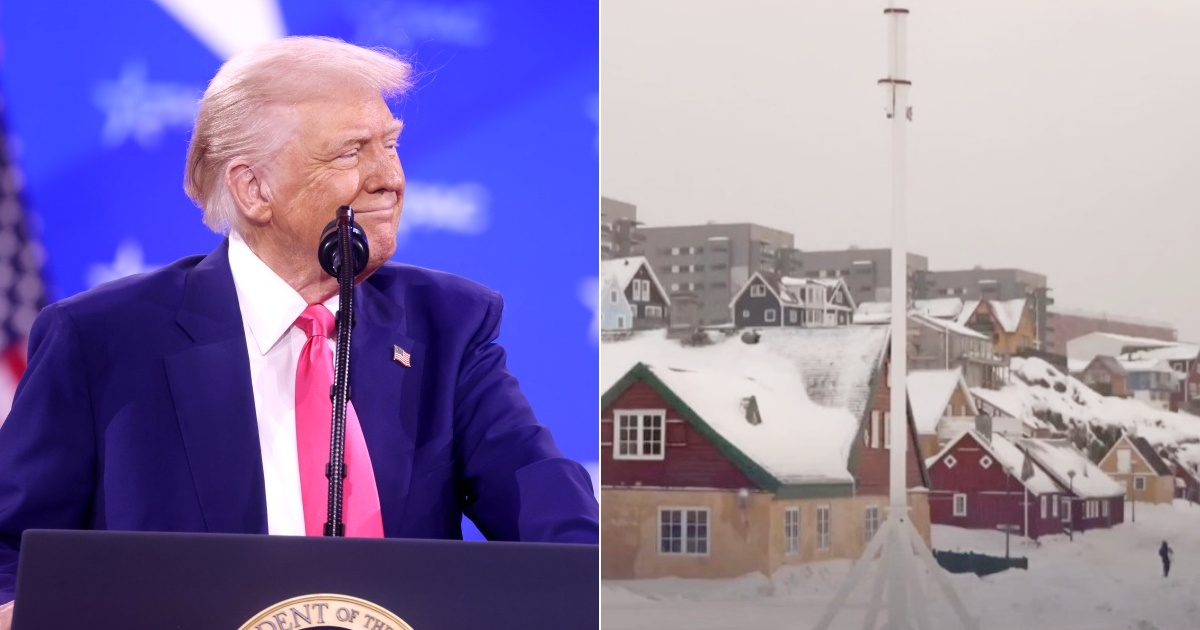
The Republican Congressman Randy Fine, representing the state of Florida, introduced a controversial bill in the United States House of Representatives this Monday: the “Greenland Annexation and Statehood Act,” an initiative aimed at allowing the annexation and subsequent conversion of Greenland into the country's 51st state.
The proposal, described by its promoter as "historic," has raised alarms both inside and outside the United States due to its geopolitical and strategic implications.
“Greenland is not a remote outpost that we can ignore; it is a vital asset for national security”, Fine stated in a statement published on his website.
For the legislator, controlling the island would ensure that the United States leads security in the Arctic, in the face of the advances of powers like China and Russia.
Strategic and geopolitical arguments
In his argument, Fine claims that the project aims to "secure the strategic national security interests of the United States in the Arctic" and counter the growing threats from Moscow and Beijing.
“Whoever controls Greenland controls key shipping routes in the Arctic and the security architecture that protects the United States,” the congressman stated.
Additionally, he blamed President Joe Biden's "weak" policies for undermining the United States' position in the region, while praising the vision of President Donald Trump and Secretary of State Marco Rubio regarding the importance of the Arctic as a stage for global competition.
"For too long, American leadership remained on the sidelines while our adversaries undermined our geopolitical dominance."
"My bill will protect our homeland, ensure our economic future, and guarantee that the United States, not China or Russia, sets the rules in the Arctic. This is how American leadership and strength are demonstrated," Fine stated.
What does the "Law of Annexation and Statehood of Greenland" entail?
The registered document authorizes the President of the United States to "take the necessary measures to annex or acquire Greenland as territory of the United States," which includes the possibility of opening formal negotiations with the government of Denmark.
It also requires the submission of a report to Congress detailing the legislative changes needed for the island to become an official state.
The proposal is also framed within a rhetoric of confrontation with other global powers.
"The United States cannot leave that future in the hands of regimes that disdain our values and seek to undermine our security," Fine warned, clearly referring to China and Russia.
Reactions in Greenland and Europe
The announcement provoked a swift response from Nuuk. The Greenlandic Prime Minister, Jens-Frederik Nielsen, was emphatic in rejecting any attempt at annexation: “We do not want to be Americans, we do not want to be Danes, we want to be Greenlanders.”
The positioning was supported by the leaders of the main political parties on the island, who issued a joint statement defending the Greenlandic people's right to decide their future.
The local leader also recalled that Greenland is a semi-autonomous territory that is part of the Kingdom of Denmark, and that its cooperation with NATO is the legitimate framework for ensuring security in the region. “We are committed to defending the island alongside our allies,” he stated.
In Europe, the initiative has been met with concern.
The diplomatic tensions with Denmark over the unilateral tone of the U.S. proposal were exacerbated by a statement from the Russian ambassador in Copenhagen, Vladimir Barbin, who not only supported Greenland's independence but also emphasized that the island "does not want to be part of the United States, nor of Denmark."
In recent days, President Donald Trump insisted that "he would like to reach an agreement to acquire Greenland in the easiest way," warning that if the United States does not have it, then Russia or China will.
Fine's initiative seems to align with that vision, and although it has not been officially endorsed by the former president, its spirit is a direct heir to that Trump-era intention of purchasing Greenland, which was categorically dismissed by the Danish government with a firm "it's not for sale."
Filed under: