
Related videos:
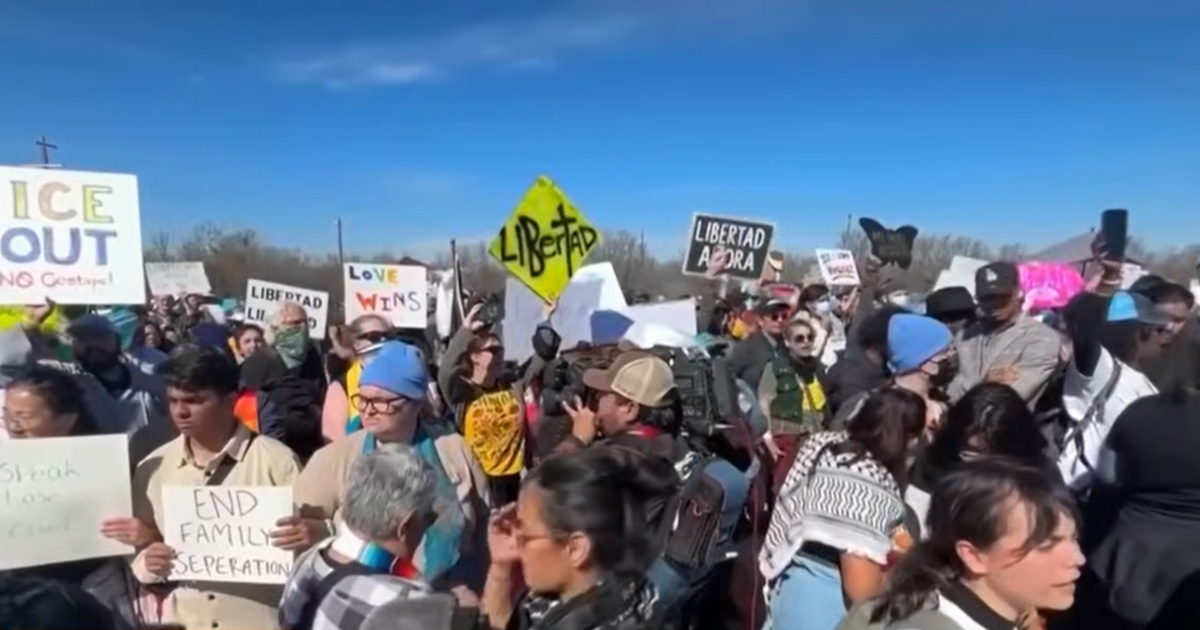
Student groups in the United States have called for a "national blackout" as a form of protest against the Immigration and Customs Enforcement (ICE), explicitly urging people not to work, not to attend classes, and not to spend money throughout the day.
For this Saturday, demonstrations and vigils have been announced in all 50 states and Washington D.C., according to an explanation given to Telemundo 51 by activist Raquel Terán from the Progreso Project in Arizona, interviewed in the context of the mobilizations.
The call arises —according to what was stated in that interview— after the death of at least eight people linked to ICE actions since the beginning of the year, a fact that is presented as the catalyst for the increase in protests nationwide.
Activist Raquel Terán noted that there was significant participation from students in her state, including high school young people, who left classes as part of the action.
Terán described the movement as a demonstration of support "for their families" and "for their communities."
In parallel, he said that there were businesses that closed their doors, while others remained open but allocated contributions —a portion of what was raised that day— to organizations that assist immigrant communities.
Terán emphasized that the protest is not seen as an isolated event lasting 24 hours, but rather as part of a sustained mobilization.
In response to the question of whether there is fear among the demonstrators, Terán acknowledged a climate of uncertainty, which he attributed to what he called “abuse of power” by ICE, along with reports of deaths and excesses during operations.
In that context, he stated that the social response lies in unity and collective participation.
The activist also compared what she sees "at a national level" with what she experienced in Arizona under the then-county sheriff Joe Arpaio (mentioning the years 2006 and 2007), and referred to raids "similar to what is being seen in Minnesota," alluding to operations that, according to her account, have defined the current moment of tension.
Since the end of 2025, protests against the Immigration and Customs Enforcement (ICE) have intensified in the United States, particularly in Florida and Minnesota.
In November 2025, a protest in front of the Krome Detention Center in Miami-Dade ended with more than 30 arrests after activists blocked access to the facility to demand its closure and denounce the deaths of immigrants in federal custody.
The protesters accused ICE of acting as a "criminal organization" that "terrorizes ordinary people in the name of fascist millionaires."
Weeks later, in December, an immigration raid on the outskirts of Chicago resulted in a chaos with pepper spray, arrests, and confrontations between residents and agents.
According to human rights organizations, the operation affected migrants without criminal records. The tense scenes reflected an atmosphere of growing repression and fear among Latino communities.
Filed under: