
Related videos:
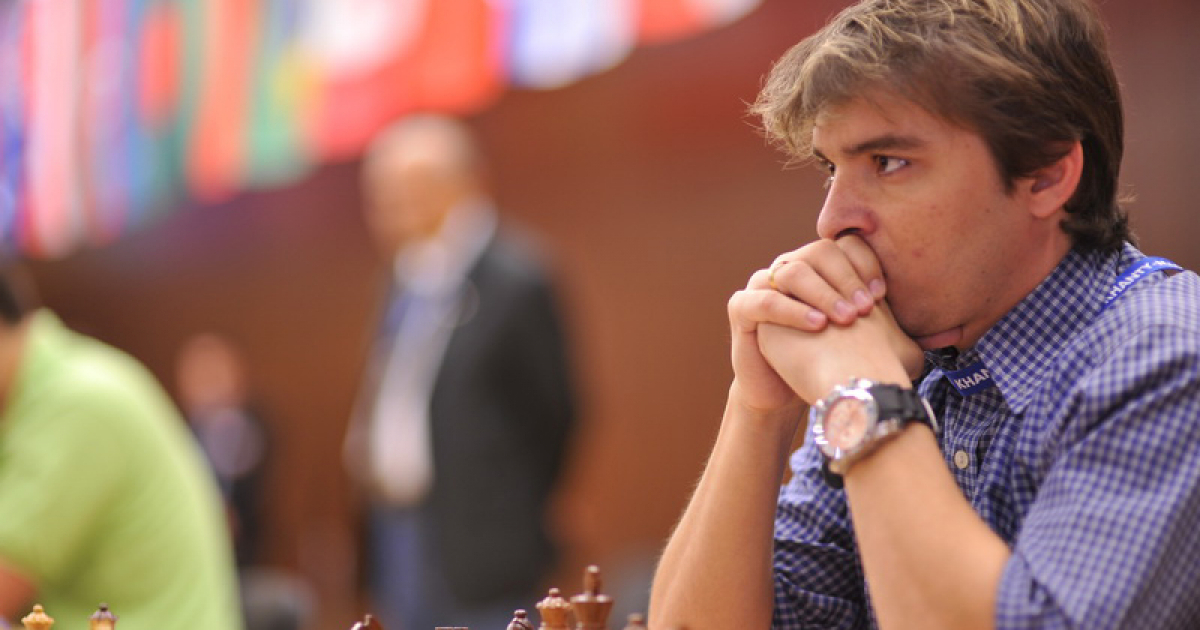
The great master Lázaro Bruzón, regarded as one of the best chess players from Cuba and Latin America in recent decades, explained in a detailed testimony on social media the reasons that led him to leave Cuba in 2018 and not return since then.
Bruzón, based in the United States and also remembered for his historic sports rivalry with Leinier Domínguez, shared a personal reflection on Facebook in which he confessed that, unlike many Cubans, he did not leave the island driven by extreme poverty or direct persecution, but rather by a process of disappointment and political awakening.
"I left Cuba many years ago and I haven't returned. What's interesting is that I didn't leave for the same reasons that most people do," he wrote.
A childhood marked by hardships, but a privileged life as an athlete
The chess player recalled that he grew up in difficult conditions, facing poverty and scarcity even before the Special Period. However, his talent on the board changed his fate from a very young age.
At just 14 years old, he began to travel abroad thanks to his sporting achievements, which also improved his family's financial situation.
For nearly two decades, he was part of the Cuban national team and represented the island in numerous international events. Furthermore, he acknowledged that he even held positions within the official structures of the system.
"I was a member of the UJC and the People's Power Assembly in Las Tunas," he pointed out, explaining that chess players were often assigned such roles because they were considered "thinkers."
"I believed in the Che that they taught me in school."
Bruzón confessed that for years he lived without questioning the regime. He even got a tattoo of Che Guevara on his arm, a symbol of the indoctrination he received, like many Cubans.
"My knowledge of politics and history was practically zero. My life revolved around chess, my athletic training, and my family," he stated.
He assured that he never had close experiences that pushed him to critique the system: he had no relatives in prison, no losses at sea, nor direct traumas.
The real reason for his departure: "The ceiling was too low."
So, why did he leave?
The great master explained that, although he lived better than most Cubans, he felt he could no longer grow in a country where everything had limits.
"I felt that I had already achieved everything that could be achieved there. I wanted to grow in other fields, and that was impossible in Cuba," she wrote.
He even left with the hope of continuing to represent the national team, but soon he discovered what he describes as the true nature of the system.
"When a Cuban leaves, the regime turns them into an enemy."
Bruzón recounted that after leaving the island, he was attacked and slandered by the authorities, which marked the beginning of his political awakening.
"They use you while you serve them, but you are nothing more than a disposable number," she denounced.
From then on, he began to read about the history of communism and Cuba, coming to the conclusion that the problem was structural. “The root issue was precisely the system established in 1959. I felt cheated.”
A commitment to denouncement and change
The chess player stated that he decided to raise his voice because he cannot stand injustices and because he could not remain silent while the country was falling apart.
"The little I have done, I have done for myself, for my conscience," he expressed.
He also acknowledged that his stance has cost him family rifts and personal attacks, but he assures that he remains hopeful. “I will only return when Cuba is free and democratic. Today, Cuba is the priority.”
Filed under: