
Related videos:
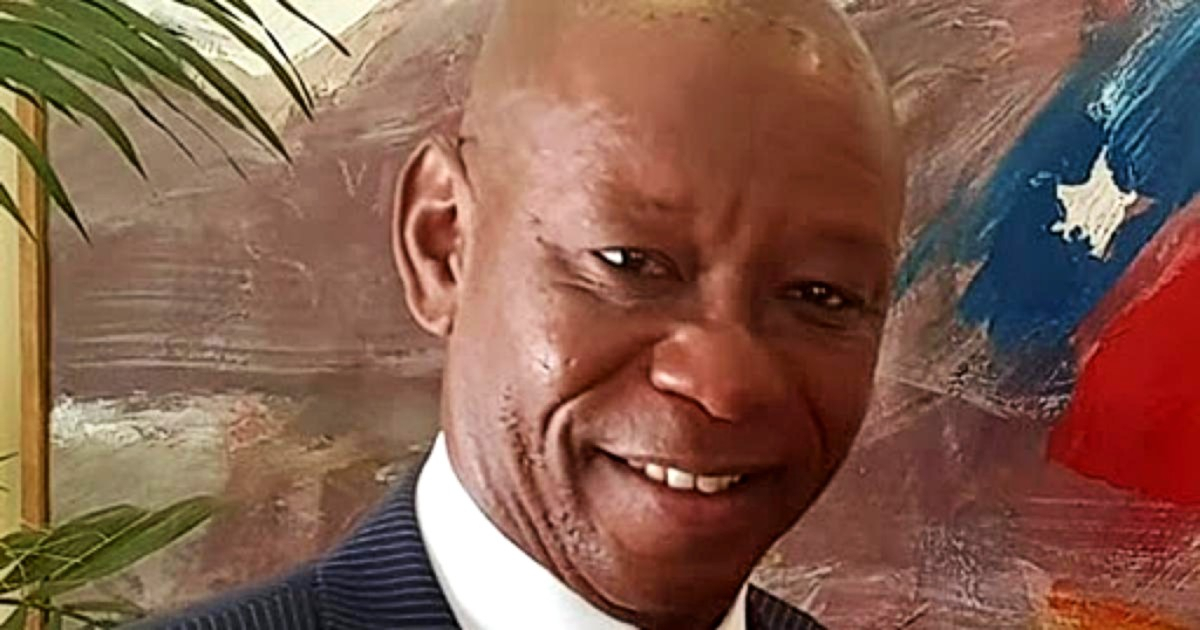
The voice of the Cuban dissident Manuel Cuesta Morúa once again highlights the root of the crisis facing the Island: a political system incapable of managing the country that, rather than creating opportunities, responds with increased control and punishment.
In an interview with EFE, the newly elected president of the Council for Democratic Transition in Cuba (CDTC) stated that "90% of this country wants change" and that this social majority is the foundation for a democratic transition with sovereignty, driven from within and without external impositions.
Cuesta Morúa describes a country ensnared in a "geopolitical trap" created by the government itself, which is unwilling to negotiate either with the Cuban people or with the international community.
"Listening to what they are saying, they do not seem ready and prepared for that conversation," she said, alluding to an elite without "state vision" or "responsibility."
While the economy is collapsing, with prolonged blackouts, food shortages, and a collapsed transportation system, the regime maintains its priority: to repress, silence, and deny the release of over a thousand political prisoners.
For the opposition leader, there are no real fractures within the power structure that would allow for a change agenda. "I absolutely do not see a Delcy Rodríguez in the Cuban reality, in the Cuban elite," he asserted, discounting the possibility of a scenario similar to that of Venezuela.
The absence of a willing interlocutor to open the system leaves the citizenry at the mercy of a state that governs by force rather than by consensus.
Regarding Washington's role, Cuesta Morúa advocates for it to be one of support and respect for sovereignty.
"If a negotiating table is opened among Cubans, then (the U.S.) should support it, encourage it, and do everything necessary to ensure that this process reaches a successful outcome," he said.
At the same time, he warns against delegating the transition to external actors: "What Venezuela is currently demonstrating is that those who strongly bet on a transition by ceding sovereignty are out of the transition game."
One of the most sensitive points in his analysis is the strategy of "suffocating" Cuba by preventing the arrival of oil and fuels. The country imports two-thirds of its energy, and cutting off supplies exacerbates power outages and productivity paralysis.
For Cuesta Morúa, that tactic does not bring us closer to democracy.
"Provoking an explosion only serves to strengthen the repressive machinery of the State." He also cautioned that this path could lead to "an even worse humanitarian situation" than the current general collapse.
He also does not believe in military interventions that would not address "the major demands of Cubans to democratize the country," he clarified regarding military involvement.
In response to this, he proposes a "humanitarian exit" that combines political and diplomatic pressure with clear objectives: "release political prisoners, establish a negotiation table with the Cubans, and open up the economy."
That is to say, alleviate the suffering of the people while simultaneously dismantling the control mechanisms that sustain the dictatorship of over six decades.
Cuesta Morúa also criticizes the warmongering rhetoric of the Castro regime: "Engaging in a war will not solve the country's problems... it will destroy a nation, and that nation deserves to be reclaimed."
For him, the dictatorship insists on empty epics while the population sinks into precariousness.
Despite everything, the opposition figure claims to maintain his optimism in a "tacit consensus" within society: Cuba cannot continue down its current path.
"The country needs to open up, and that is my hope," he asserts, acknowledging that civil society is still not strong enough, but there is a widespread conviction that the model has failed.
In a country marked by endless blackouts, hospitals lacking resources, salaries that are insufficient, and systematic repression against any critical voice, Cuesta Morúa's words highlight an uncomfortable reality for those in power: the crisis is not a result of external pressures, but of a system that refuses to change and only knows how to respond with more control and more imprisonment.
Filed under: