
Related videos:
Not all players in team sports can be regulars; that's why there are substitutes, known as "the bench," who often contribute to victories and create very good moments for their teammates.
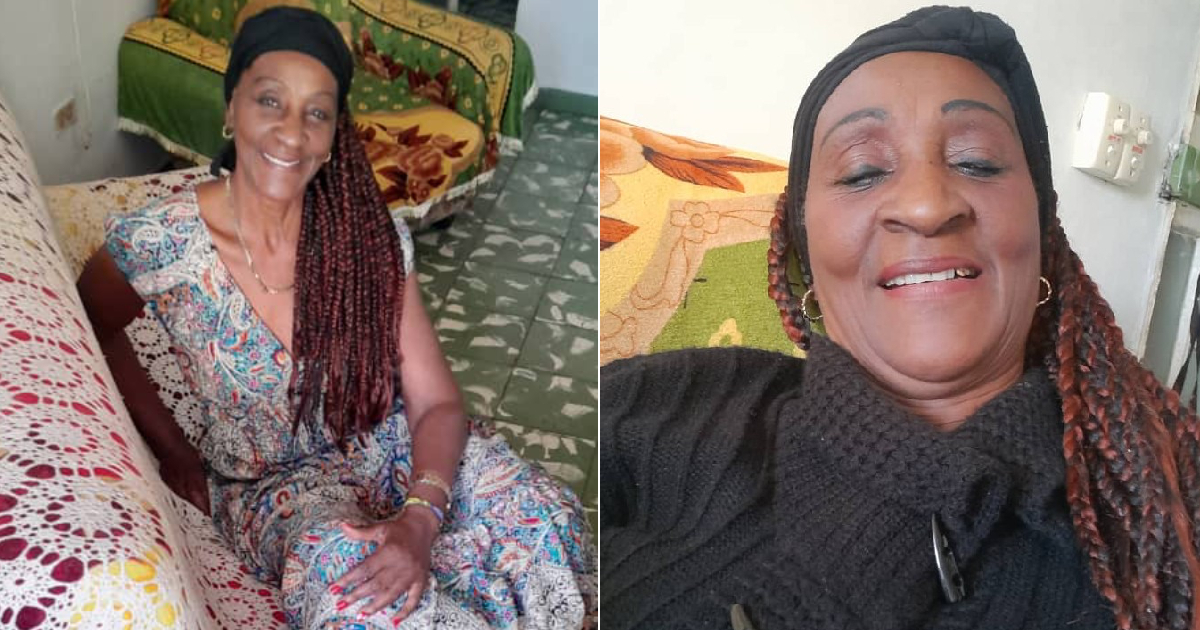
Such is the case of our interviewee today, the stunning Caribbean brunette Melania Tartabull, who always held a place on the court as a substitute player.
Melania, since when has volleyball been a part of your life?
Well, look, I was 12 years old and I was watching a volleyball match at a venue we called "El Coliseo" in my hometown of Güines when a gentleman, Carlos Martínez - now deceased - approached me and asked if I liked it. I said yes. He immediately took my name and surname, and about a month later, I received a telegram at home asking me to present myself in Havana, at INDER.
My mom took me, I enrolled, and soon I went to the EIDE "Adolfo López Mateo" in Miramar, which is now the Comodoro Hotel, and that’s where I took my first steps under the guidance of Benita Jiménez, who was my first coach.
Later, I moved to the ESPA "Giraldo Córdova Cardín," where I began training with Antonio "Ñico" Perdomo and Celestino Suárez, who were later joined by Jorge Pérez Vento and Luis Felipe Calderón. At the ESPA, I made my first international trip to Romania, the host of the Friendship Games, which were then called Olympic Hopes; we finished in fifth place. It was a great experience for me and for all of us, as we were very young. That competition earned me a spot for the "Cerro Pelado."
What did it mean to enter the grand house of Cuban sports?
It was a great satisfaction; the doors of heaven opened for me. Sharing experiences with so many wonderful people, players, and coaches. I joined in 1973 and quickly became part of the national team to attend the World Cup in Uruguay, where we finished sixth.
From there, I continued my career under the guidance of Eugenio George, “Ñico” Perdomo, Eider George, and Nelson Pollato, who helped me tremendously.
Tell me about yourself and the circumstances that led you to be with Eugenio George for nine years.
I was an outside hitter, a strong right-side attacker, with a blocking skill that wasn't very impressive, hahaha…, and I was 1.80 meters tall, which made blocking easier. I was the classic substitute player, useful for covering any position on the court. It was very difficult to be consistent on that team. I played alongside the famous "terror trio": Mamita Pérez, Nelly Barnet, and the left-handed Mercedes Pomares.
Also present were Evelina Borroto, Miriam Herrera, Mercedes Roca, Cristina Welch, Erenia Díaz, Ana María García, Maura Alfonso, Cirenia Martínez, Claudina Villaurrutia, and the very charismatic Mavis Guilarte. We were one team, guided by Eugenio and Ñico, along with other coaches who dedicated themselves to us.
Everyone knows the legend that is Eugenio George, one of the greatest coaches on the planet, chosen as the best coach of the 20th century. What does it mean for you to have been one of his disciples?
What can I say? He educated us, taught us how to express ourselves, how to sit at the table to eat, how to dress. He was a father to us. He instilled in us honor, a love for sports, for that passion that loved us back. We learned to reciprocate that affection by respecting the beautiful people who cheered for us on the field and followed us on television.
In general, the women's volleyball coaches were great educators and shaped us into what we are today, the spectacular Morenas del Caribe, good human beings both on and off the court.
Personally, what were your main events?
You know that in my time there weren't as many international tournaments as there are today, so the multiple games and the Championship and the World Cup were our main competitions. For the World Cup I could have attended, I didn’t go.
We finished sixth in the Montreal 76 Olympics and won the Pan American Games in Mexico 75, as well as the Central Caribbean Games in Santo Domingo 74 and Medellín 78.
In addition, I participated in two World Cups, in Uruguay and Japan; in the World University Games in Bulgaria, and, of course, in training sessions, preparation tours, and warm-up matches primarily in Europe and Asia.
Speaking of the World Cup you didn't attend. Cuban women's volleyball achieved its first great success in 1978, when the then USSR hosted the World Championship, and in the city of Leningrad, now St. Petersburg, the then-emerging spectacular Morenas del Caribe defeated Japan.
Our interviewee today could have been there. An effective substitute player, always on the court, intelligent and with a powerful attack, she was left off the roster, something she doesn't forget.
They had taken 13 players for a training camp in what was then Czechoslovakia, and when it came time for the final cut, I was left out. That "killed me"; the pain was unimaginable. I would have been a world champion. If you ask me, I believe the team was already selected by Eugenio George and Ñico Perdomo before the trip. Great players like Mercedes Pomares, Mamita Pérez, and Ana María García said that I should be on the team, but nothing changed; or maybe it did, as I found joy in the success of my teammates, even though I know I should have been there.
I can imagine your disappointment
That's right. Disappointment took hold of me, and it was no longer like before when I used to "hit the stage," and that's when I found out I was pregnant with my daughter. After that, I came back, but it was never the same again.
What was your relationship like with your colleagues?
What can I say about my teammates? I have a good relationship with them; we talk on the phone; some of us are like sisters. In fact, when they returned from the World Cup, they dedicated their medals to me, and I will never forget that gesture.
Melania, after so many years, do you feel supported by INDER?
I don't eat as I should, but my situation isn't unique. Like me, there are many forgotten athletes. Haven't you heard the saying that "with glory, memories are forgotten"? Well, that's what happens to us, the athletes who gave our all without a single penny in return, for the love of the sport, for the love of our flag.
And yes, it's all very nice, but what now? My body has never given me anything I've asked for, and don't think it was anything out of this world... No! It's true that there are material urgencies, but there’s also the human side, the essentials for the soul: to care for your health, that of your children, grandchildren...
What would you say to the institution to which you gave your life?
I would have just one request: that they care for those who gave everything for the "four letters" and have nothing; beyond material things, because I don’t even have a bicycle, but at least, let them care for us.
In addition to your medals and the experience gained from your competitions around the world, is there something you hold onto that you wish you had achieved?
Well, yes: that World Cup where I would have been crowned champion and never been a regular player. It’s true that I was always on the field, but only substituting for a regular. Ah! Yes, in my entire life, I played as a regular for just one set; it was in Montreal '76, because Mamita had bursitis in her shoulder. I think I should have pushed myself more, who knows? Now, at 70 years old, the story is written.
We talk about INDER, but tell me, does the national commission assist you?
Look, Tania Ortiz and Yumilka Ruíz are leading the committee and yes, I am receiving very good attention from them; what is within their reach, of course. They have invited me to the National School so that the new generations can get to know us. I say "us" because I have gone with Erenia Díaz, Teresa Santa Cruz, and others. As soon as we arrived, they immediately paused the training to introduce us. All of them are wonderful companions to me, whom I admire greatly and care for deeply. I had very good times with them.
Melania, you know that these times are not like the ones you experienced. Now we can say that Cuba has volleyball players abroad to form five national teams. If you could do it, would you do the same?
As you say, in my time there wasn't that possibility, but yes, of course, if I were a young and talented volleyball player now, I would play in any club or league in the world, although I want to clarify that whenever needed, I would come to represent Cuba. I don't criticize those who think differently; everyone is their own person and has their own thoughts, but I want to reiterate that I would always compete for Cuba whenever it was necessary.
What do you think about the current state of sport in Cuba, when we have fallen from the top to the bottom of the world?
I want everything to get better; I dream of it, and I just want to tell you that when that happens and good athletes emerge, they will be prepared with the necessary conditions to compete for Cuba, without having to leave anywhere, because there is more than enough talent in this country to regain the positions we held a few years ago. There is a pool of athletes and coaches, so it can be achieved.
At this moment, Melania Tartabull, at 70 years old, is a happy woman because she is gathered with her three children and her six grandchildren, three boys and three girls.
I feel very happy and proud to be a grandmother, and perhaps one of them will give me the joy of being a great volleyball player, who knows? Whenever I can, I visit them, or they come to my house, and I spend time with them. Those little pieces of heaven that are my grandchildren bring me comfort.
Filed under: