
Related videos:
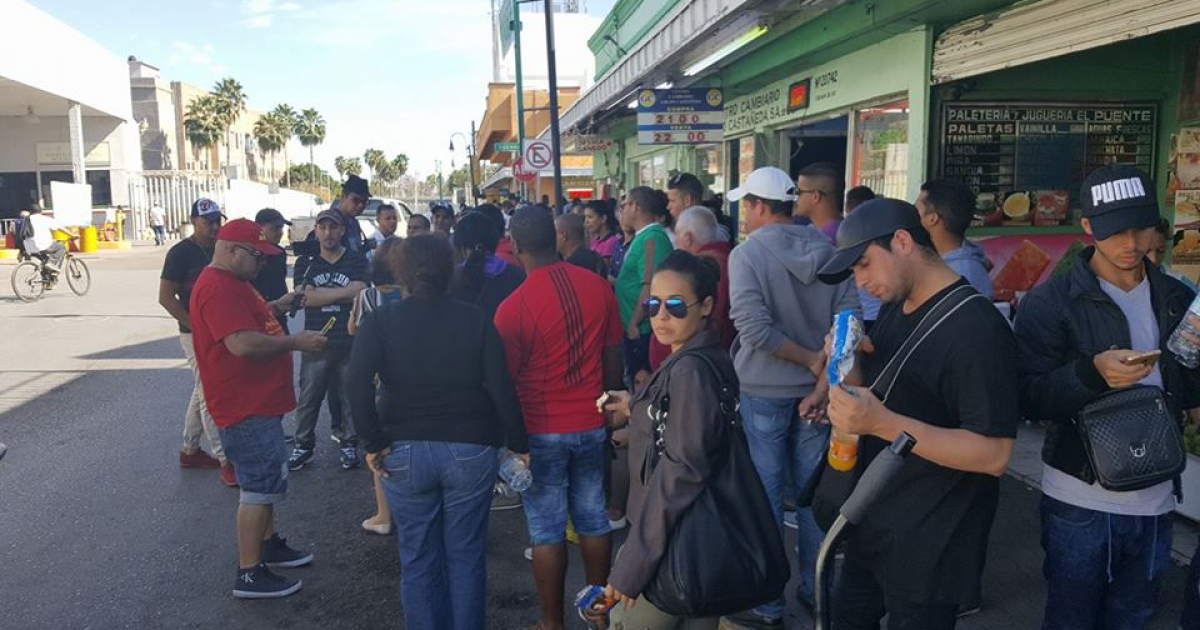
The Mexican city of Tapachula, on the border with Guatemala, has started to receive Cubans deported from the United States on direct flights, a situation that is raising concerns among activists and migrants, and reflects the tightening of immigration policies from Washington.
According to the agency EFE, authorities in the state of Chiapas confirmed that currently, between two and three flights per week are arriving with migrants deported from the United States, which has increased the presence of Cubans in the region, where thousands of people remain stranded while trying to resolve their immigration status.
Eduardo Antonio Castillejos Argüello, Undersecretary of Human Mobility of the Southern Border Secretariat, explained that Tapachula already has a large Cuban population, many of whom are forced to seek informal employment while attempting to regularize their status.
"We have a large population of Cuban nationality here in Tapachula (…) who need access to services, but above all, to employment," the official stated.
Local activists report that these deportations are carried out with little transparency, as the city increasingly becomes a hub for migrants from various nationalities.
Luis Rey García Villagrán, director of the Center for Human Dignification, told EFE that he estimates around 60,000 migrants are stranded in the area, particularly Haitians and Cubans, and criticized that no institution fully takes responsibility for addressing the situation.
Behind the numbers, there are personal stories that reflect the human impact of these deportations.
One of the cases that has sparked debate is that of a Cuban who arrived in the United States when he was just one year old and was deported to Mexico after more than four decades of living in that country. The man shared that he was a legal permanent resident but lost that status after committing a crime, which he did not specify, and had an outstanding deportation order dating back to the year 2000.
According to his testimony, in December 2025, he went to report to an ICE office and ended up being detained. After 66 days in detention centers, he was first transferred to Chihuahua and finally released in Tapachula, from where he managed to travel to Cancun in an attempt to rebuild his life.
Another example is that of Felipe Muñoz, a 70-year-old Cuban barber who was also deported from the United States and decided to start from scratch in Mexico. Set up in a park in Villahermosa, in the state of Tabasco, he offers haircuts for 50 pesos to those who pass by.
Wearing a white coat and using his tools purchased on credit that he still has from the U.S., Muñoz makes a living in Parque Juárez, relying on more than three decades of experience as a barber.
"I am here earning an honest living, cutting hair," he told the Mexican media Tabasco Hoy.
Stories like these reflect an increasingly visible reality: Cuban migrants who, after years or decades in the United States, end up rebuilding their lives in Mexico, often without prior plans or support networks.
Mexico, which for years was primarily a transit country for those seeking to reach U.S. territory, has now become a forced destination for many, amid the tightening of immigration policies since Donald Trump's return to the White House in January 2025.
As deportation flights continue to the southern part of Mexico, Tapachula is becoming one of the main points where the stories of Cubans converge. Having lost their status in the United States, they are trying to start anew, far from the island and also far from the country where they believed they had built their lives.
Filed under: