
Related videos:
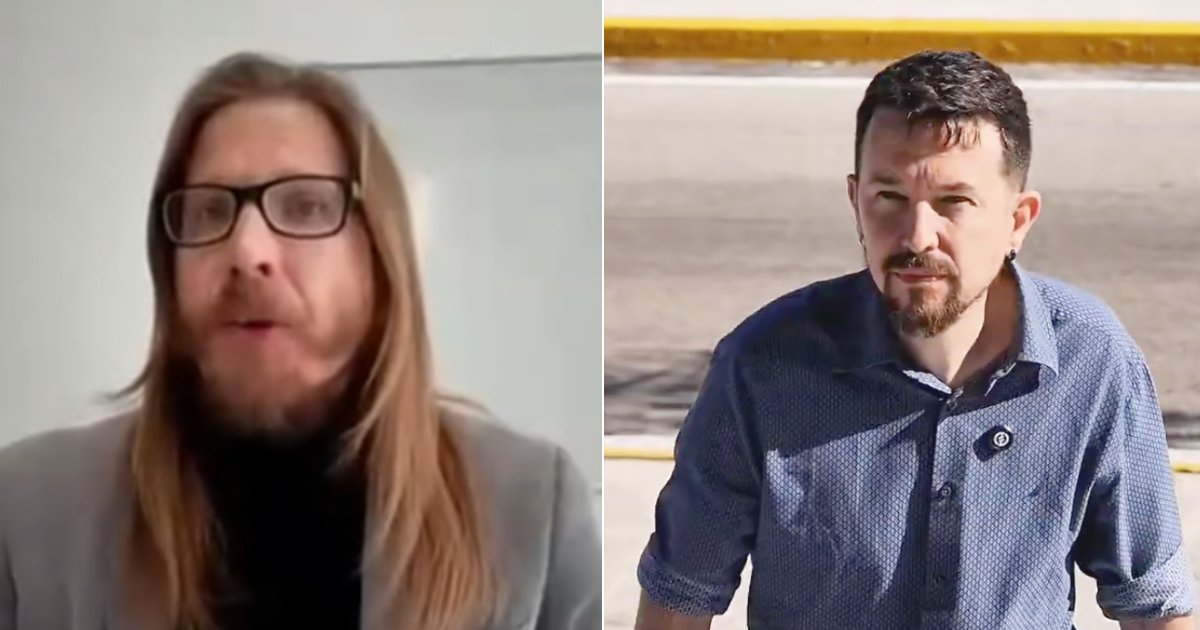
The visit to Cuba by former Podemos leader Pablo Iglesias, along with his party's support for the regime's official narrative, has sparked a strong reaction from Cubans both on the island and abroad, who have harshly questioned his statements and the narrative they promote.
Criticism has focused on social media, particularly in posts from Podemos and its spokesperson Pablo Fernández, where numerous users have rejected what they see as support for the Cuban dictatorship and a stance that ignores the suffering of the people.
The controversy intensified after Iglesias stated from Havana that the situation in Cuba "is difficult, but not as it is being portrayed from the outside," following a meeting with authorities from the Communist Party.
This positioning was reinforced by Pablo Fernández during a television debate with Cuban journalist Náyare Menoyo, where he defended this stance against criticism.
The statements come amid Iglesias's visit to the island, which had already sparked backlash among Cubans who denounced that he was downplaying the crisis while staying in a luxury hotel in Havana, in stark contrast to the situation faced by the population.
In that context, Menoyo herself also publicly challenged him to live for a month in her house in Cuba without privileges: “Pablo Iglesias, please, I invite you to spend a few days in my house in Cuba… I only ask that you don’t bring euros, nor bring food, and that you live with what they will provide you there.”
Outrage on digital platforms has continued to multiply. "So Trump has been in power for 65 years?" questioned one user. Another responded, "How can you know more than a Cuban?"
Many comments point directly to what they see as the real cause of the crisis. "Cuba is suffering because of a communist dictatorship," wrote one user, while another stated: "The only blockade and enemy of the Cuban people is the Communist Party."
The argument regarding the embargo was one of the most contested. A user summarized in a widely shared comment: “The ‘blockade’ does not prevent fishermen in Cuba from fishing; the communist dictatorship does. The ‘blockade’ does not confiscate what farmers harvest; the communist dictatorship does. The ‘blockade’ is not to blame for the lack of water and electricity in Cuban homes; the communist dictatorship is.”
Others insisted on the lack of freedoms: “What about political prisoners and the torture for thinking and saying what you think? Will you ask for their release and for freedom of expression? Is that also part of the blockade?”
One of the elements that generated the most outrage was the contrast between the conditions in which foreign visitors are hosted and the life of the average Cuban.
"A hotel where he has stayed costs 280 dollars, while a Cuban earns 15 dollars a month," noted a user. Another added, "Good hotel with electricity. Great vacation."
The criticisms also reflect exasperation towards external discourses. "Every time I see people opining about Cuba without knowing the reality from within, I wonder if they have really talked to the average Cuban," wrote a Cuban.
In that same vein, another comment pointed out: “It is not enough to visit and stay in comfortable hotels or to repeat speeches from the outside."
The messages converge on one idea: the disconnect between political discourse and daily reality.
"It is very easy to talk without knowing, without living, and without truly seeing reality," wrote one user. Another was more direct: "Go to Cuba, live like a Cuban... and you'll see how your perspective changes."
It was also questioned whom these politicians are meeting with: “If they wanted to help the Cuban people, then why meet with those who do not represent the Cuban people and were not elected by the Cuban people?”
The reactions reflect a growing discontent among Cubans towards political speeches that, rather than representing their reality, are perceived as a legitimization of a system that many hold directly responsible for the crisis. Amid blackouts, shortages, and a lack of freedoms, the message echoed both inside and outside the island is clear: supporting the regime is not the same as supporting the people, and the help that Cubans are calling for does not involve reinforcing its narrative, but rather acknowledging their situation and supporting real change.
Filed under: