
Related videos:
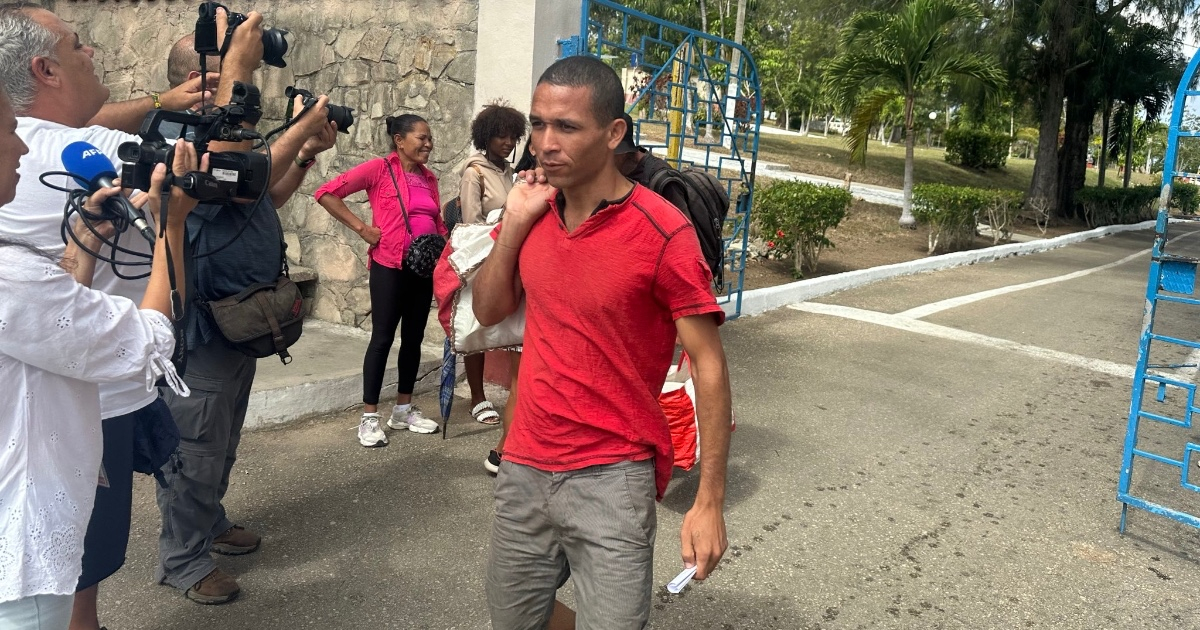
The first releases resulting from the pardon announced by the Cuban government began this Friday at the La Lima prison on the outskirts of Havana, confirming what human rights organizations had already warned: political prisoners are excluded from the measure.
The journalist Patrick Oppmann from CNN documented the releases and was straightforward: "The prisoners I spoke with had committed non-political crimes, such as armed robbery and fraud."
The regime announced on Thursday the pardon of 2,010 people, presented as a "humanitarian and sovereign gesture" in the context of Holy Week.
This is the largest pardon in decades and the fifth since 2011, the year when these measures began, benefiting more than 11,000 people in total.
However, the official decree establishes as a criterion for exclusion "crimes against authority," a category under which hundreds of protesters from the July 11, 2021 demonstrations were convicted for charges such as sedition, contempt, and public disorder.
This means that the majority of the prisoners from the 11J do not benefit from the measure. According to the organization Justicia 11J, there are at least 760 prisoners in Cuba, including 358 from the 11J.
The Cuban government denies the existence of political prisoners and claims that all were sanctioned for "criminal acts," allowing it to present the pardon as a broad-reaching measure without acknowledging the political nature of the convictions.
The reactions from civil society have been skeptical. Javier Larrondo, president of Prisoners Defenders, stated: "If they release some political prisoners, even if it's just a few, we must celebrate with their families, but we do not have much hope that this measure is truly serious".
The opposition figure José Daniel Ferrer was more emphatic and accused the regime of trying to escape the predicament with these pardons without freeing political prisoners.
The Cuban Observatory of Human Rights called for the pardon to include all political prisoners, an "efficient and transparent" process.
This is not the first pardon of 2026. On March 12, following a dialogue with the Holy See, the regime announced the release of 51 individuals. Just over 20 political prisoners were released, but the releases did not constitute full amnesties but rather conditional and revocable penitentiary benefits, with sentences remaining intact.
The announcement of the pardon comes amidst significant pressure from the United States on Cuba, with tensions surrounding access to oil and bilateral negotiations, although the regime insists that the measure is based on sovereign and humanitarian criteria.
Filed under: