
Related videos:
The Bank of France has completed the full withdrawal of its gold reserves stored at the Federal Reserve in New York, in an operation that combines technical, financial, and geopolitical motivations, sparking a debate about a potential massive repatriation of European gold held on U.S. soil.
Between July 2025 and January 2026, the French central bank sold the 129 tons of old gold it held in New York -equivalent to 5% of its total reserves- through 26 distinct transactions, taking advantage of the metal's prices at historic highs.
Far from chartering planes loaded with ingots, the strategy was more sophisticated: the Bank of France sold the gold in the U.S. market and purchased new ingots of higher quality in the European market, storing them directly in its vaults in Paris, known as La Souterraine.
The operation proved to be extraordinarily profitable, with exceptional revenues of up to 14.76 billion dollars, allowing for the transformation of the net losses of 7.7 billion euros in 2024 into a net profit of 8.1 billion euros in 2025.
France now concentrates all of its 2,437 tons of gold in Paris, establishing itself as the fourth largest holder of the metal globally, behind the United States, Germany, and Italy.
The governor of the Bank of France, François Villeroy de Galhau, stated that the decision "is not politically motivated," and that the aim was to replace old and "non-standard" bars with modern ingots.
However, the bank itself acknowledged that the process accelerated with Donald Trump's return to the White House.
The attacks from Trump on the president of the Federal Reserve, Jerome Powell, including pressures to control monetary policy and investigations by the Department of Justice, have raised growing concerns among European central banks about who really controls the institutions that safeguard their gold.
This is coupled with the precedent of the freezing of Russian assets following the invasion of Ukraine, which demonstrated that sovereign assets in third countries can be frozen by political decision.
From the monetary policy forum OMFIF, they note that "the location of gold storage has once again become a priority for central banks" precisely since that episode.
Which other European countries could be next?
The movement in France has brought the spotlight onto Germany and Italy.
Germany retains 1,236 tons in the vaults of New York —37% of its total reserves— while Italy holds 1,053 tons there, which is 43% of the total.
Together, both countries accumulate the equivalent of 245 billion dollars in bullion on American soil.
Michael Jäger, president of the European Taxpayers Association, was straightforward.
"The unpredictability of Trump and his relentless pursuit of income make our gold no longer safe in the Federal Reserve's vaults. What happens if the provocation over Greenland continues? The risk of the Bundesbank being unable to access its gold is increasing. That’s why it should repatriate its reserves," Jäger said.
France is not the only country that has acted: India repatriated 274 tons since 2023, and the Netherlands was the first European country to take this step, withdrawing 122.5 tons from New York in 2014.
The operation is also set against the backdrop of the deterioration of relations between Paris and Washington.
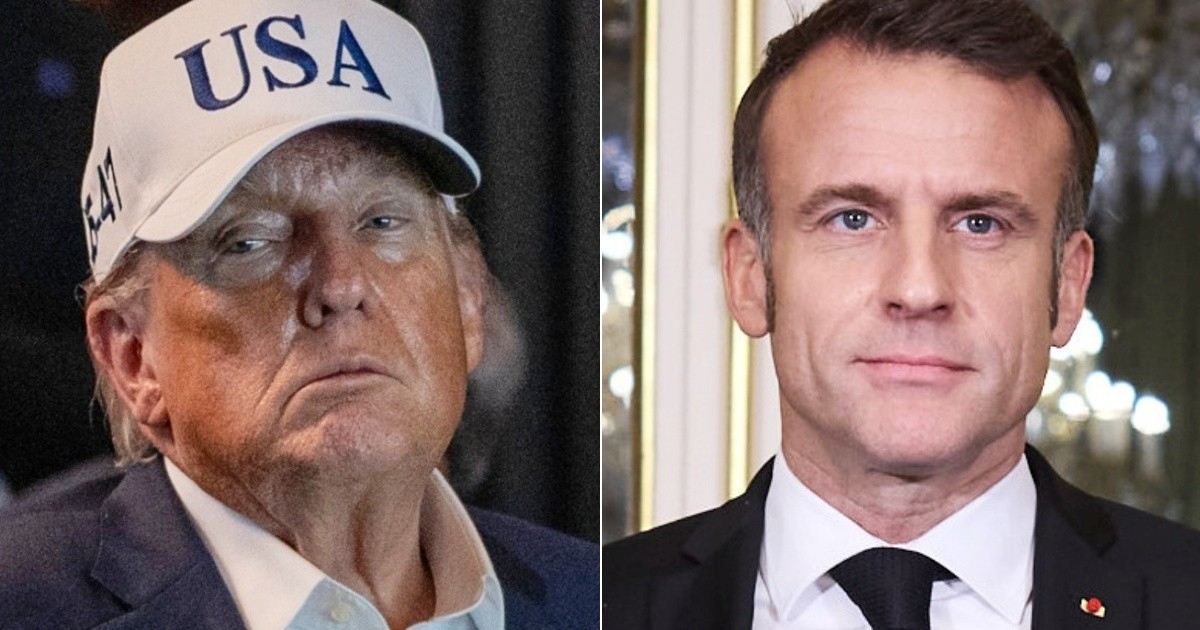
The tensions between Macron and Trump have escalated due to France's refusal to participate in the military operation in Iran, Trump's comments mocking Macron in a video from the White House - which was removed shortly after - and the diplomatic crises involving Ambassador Charles Kushner, who was summoned by the French Ministry of Foreign Affairs but did not attend.
Paris responded with an unusual measure among allies: restricting the access of the American ambassador to senior officials in the Executive.
For now, neither Germany nor Italy have announced an official decision regarding the future of their gold in the United States, but the political debate is becoming increasingly intense in both countries, and the French precedent acts as a catalyst for what some analysts are already calling the beginning of a major European gold repatriation.
Filed under: