
Related videos:
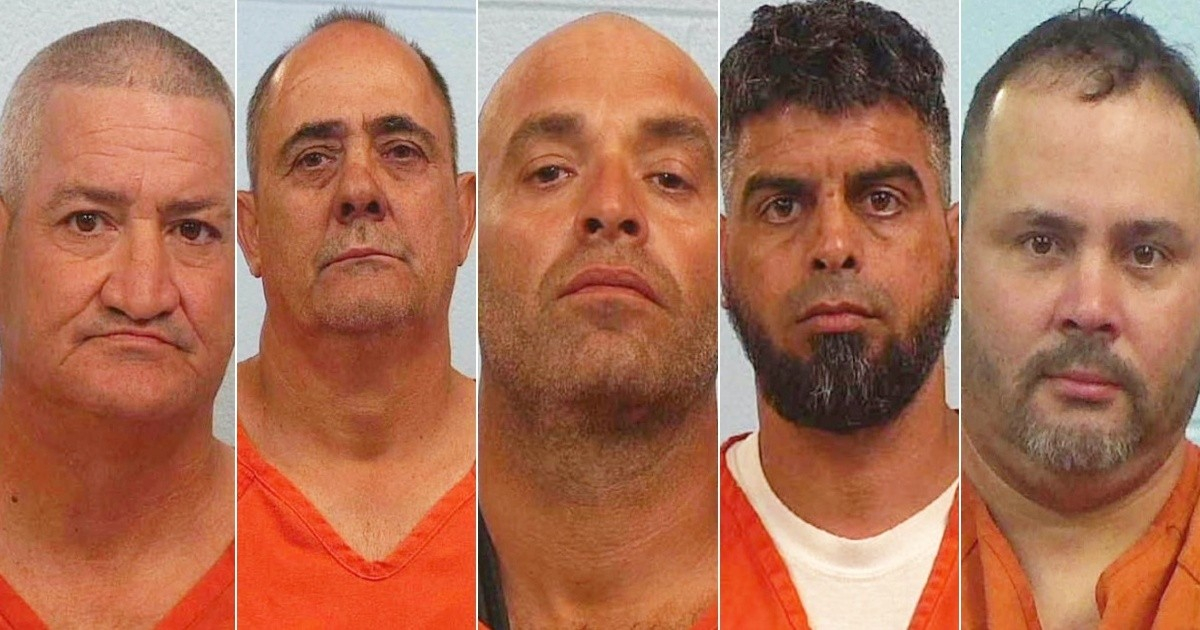
Five men of Cuban origin were arrested in Williamson County, Texas, following an extensive investigation that uncovered an organized operation of illegal cattle theft and slaughter that spanned several months and resulted in significant losses for local producers.
According to a official statement from the Sheriff's Office of the county, those arrested are Ramon Martínez Miranda (50 years old), Miguel Martínez Mons (58), Orleydis Martin Reyes (42), Yasmani Galis-Hernandez (34), and Reidel Martínez (41).
The arrested individuals remain in custody, accused of cattle theft valued between $30,000 and $150,000, a third-degree felony under state law.
The Beginning: A Traffic Stop That Exposed the Network
The investigation began on December 3, 2025, when agents from the Florence Police Department stopped a truck towing a trailer with malfunctioning lights.
What seemed like a minor infraction ended up uncovering a much larger case.
Inside the trailer, the officers found three dead cattle "along with evidence indicating that the animals had been recently slaughtered."
From that moment on, the authorities began a more in-depth investigation that would lead to the dismantling of the entire network.
An organized and sustained framework over time
The investigations, led by the Williamson County Sheriff's Office (WCSO), confirmed that the cattle had been stolen from Capitol Land & Livestock, in Schwertner, Texas.
With the progress of the investigation, the detectives concluded that the five suspects were part of a structured scheme that operated for several months and managed to steal and sacrifice approximately 70 head of cattle.
Among the evidence gathered are physical proofs, witness statements, digital forensic analysis, and geolocation data from mobile phones that placed the defendants in the areas where the robberies occurred.
This is how they operated: Cut fences, sacrifice, and sale
The group's modus operandi was clearly defined during the investigation.
According to the authorities, the suspects acted in a coordinated manner:
-They identified ranches with vulnerable livestock.
-They systematically cut the fences of the pastures to access the animals.
-They were stealing the cattle at night.
They were sacrificed shortly thereafter using specialized tools.
-They were documenting part of the activity on mobile phones.
The investigators found “ammunition, tools used in the processing of animals, and photographic documentation of the stolen and slaughtered livestock found on a suspect's mobile phone.”
Additionally, the digital records and location data reinforced the hypothesis that this was an organized operation rather than isolated incidents.
The alleged leader and the key clue
According to court documents cited by local media, Reidel Martínez -who was driving the initially stopped vehicle- allegedly attempted to justify the origin of the animals by claiming that he bought them for 800 dollars each in the city of Temple.
However, the investigators later identified him as the alleged leader of the network, which led to the arrest of the other individuals involved.
The case has raised concerns among local ranchers. Jim Schwertner, the owner of the affected lands, explained that they noticed irregularities in their inventory for several months.
“Yes, it was unusual. We knew we were missing cattle, but we couldn’t figure out why,” he said in statements collected by the local press.
The economic impact has been significant.
According to Schwertner, each cattle can reach a value of nearly $2,000. "It's a serious matter," he stated, emphasizing that cattle theft is a crime that has historically been harshly punished in Texas.
Authorities also warn that this type of crime tends to increase when meat prices rise, as the stolen product can end up in the black market.
The dismantling of the network was made possible through the collaboration of multiple agencies, including the Florence Police Department, the Texas and Southwestern Cattle Raisers Association, and game wardens from the Texas Parks and Wildlife Department.
County Sheriff Matt Lindemann highlighted the coordinated effort in the case:
"This case highlights the dedication of our researchers and the strong collaboration among agencies to combat organized agricultural crime. Livestock theft has a significant financial impact on our agricultural community, and we remain committed to holding criminals accountable."
Open investigation
Despite the arrests, authorities believe that the investigation is still ongoing and do not rule out the possibility of more individuals involved or further ramifications of the network.
For this reason, they have requested the public's collaboration and urge anyone with relevant information to contact the Williamson County Sheriff's Office.
Those with any information can contact the (512) 943-1300 or the non-emergency line at (512) 864-8282.
Filed under: