
Related videos:
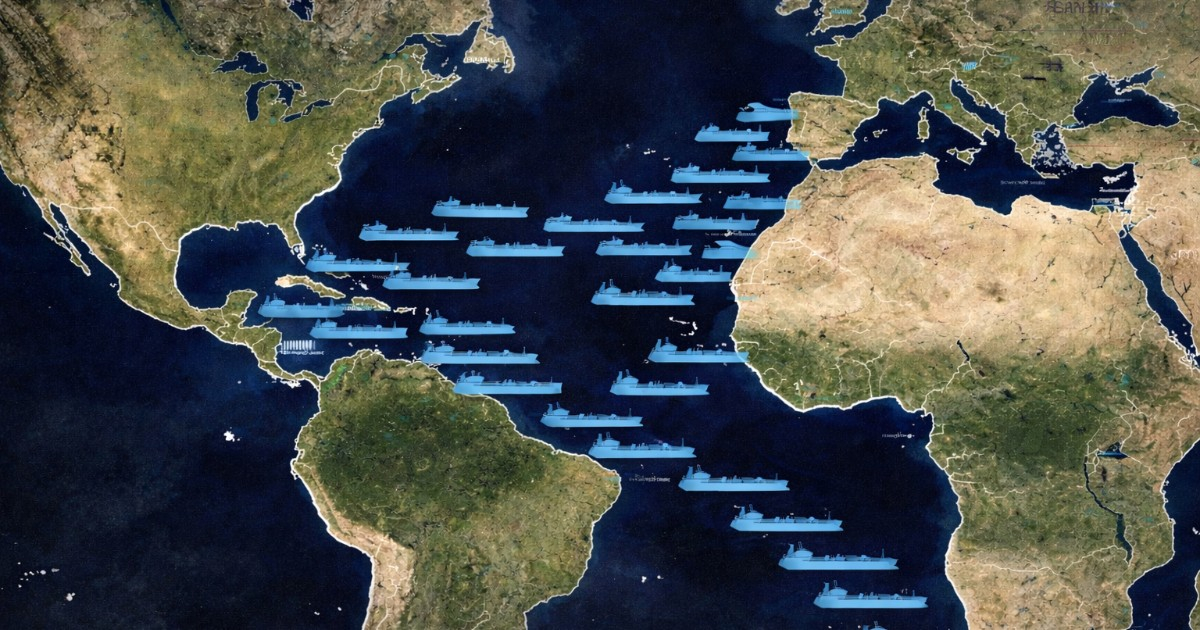
A maritime tracking firm reported this Monday that 121 empty oil tankers are heading towards the Gulf Coast of the United States, in direct response to President Donald Trump's call to the countries affected by the crisis in the Strait of Hormuz to seek American energy supplies instead of those from the Persian Gulf.
TankerTrackers and MarineTraffic confirmed the movement, which Fox News described as a breaking alert under the headline "121 empty oil tankers heading to the U.S."
Trump publicly urged nations facing challenges due to Iran's incursion in the strait to replace Persian Gulf oil with U.S. crude and gas, a call that the market responded to with this massive shift of vessels.
Of the 121 oil tankers on their way, 68 are ultra-heavy cargo ships, each capable of holding up to two million barrels, which represents a combined capacity exceeding 136 million barrels.
The movement comes hours after Trump announced, early Monday morning, a naval blockade on Iranian ports effective from 10:00 a.m. Eastern Time, following the collapse of peace negotiations in Islamabad led by Vice President JD Vance, which lasted nearly 20 hours without an agreement.
The crisis in the Strait of Hormuz was triggered on February 28 with "Operation Epic Fury," a joint attack by the U.S. and Israel against Iranian nuclear and naval facilities that resulted in the death of the Supreme Leader Ali Jamenei.
Iran responded by blocking the strait on March 4 with mines, drones, and missiles, declaring "full control" and paralyzing 20% of the world's oil and liquefied natural gas, equivalent to between 16.7 and 20 million barrels per day.
The Iranian blockade stranded nearly 2,000 ships with 20,000 sailors, and at least 187 tankers with 170 million barrels were trapped inside the Persian Gulf. Iran reportedly charged tolls of over a million dollars per vessel to ships attempting to transit.
The price of Brent crude surged from 67 dollars per barrel before the conflict to over 126 dollars at its peak in March, and this Monday it hovered around 102-104 dollars following the announcement of the U.S. naval blockade.
On April 9, Kevin Hassett, director of the White House National Economic Council, had already proposed to allies guaranteed purchase agreements for U.S. oil and gas as an alternative to supply from the Persian Gulf.
Trump warned that any vessel approaching the blockade will be "immediately eliminated" and that "no one paying an illegal toll will have safe passage," in direct reference to Iranian extortions.
Iran called the naval blockade "piracy" and warned that no port in the Gulf will be safe if theirs are blocked, while two tankers —including the "Rich Starry"— changed course just 20 minutes after the blockade came into effect.
U.S. crude oil exports approached five million barrels per day in April 2026, although analysts warn that the sustainable maximum capacity from the Gulf Coast is below six million barrels per day due to bottlenecks in infrastructure and logistics.
Filed under: