
Related videos:
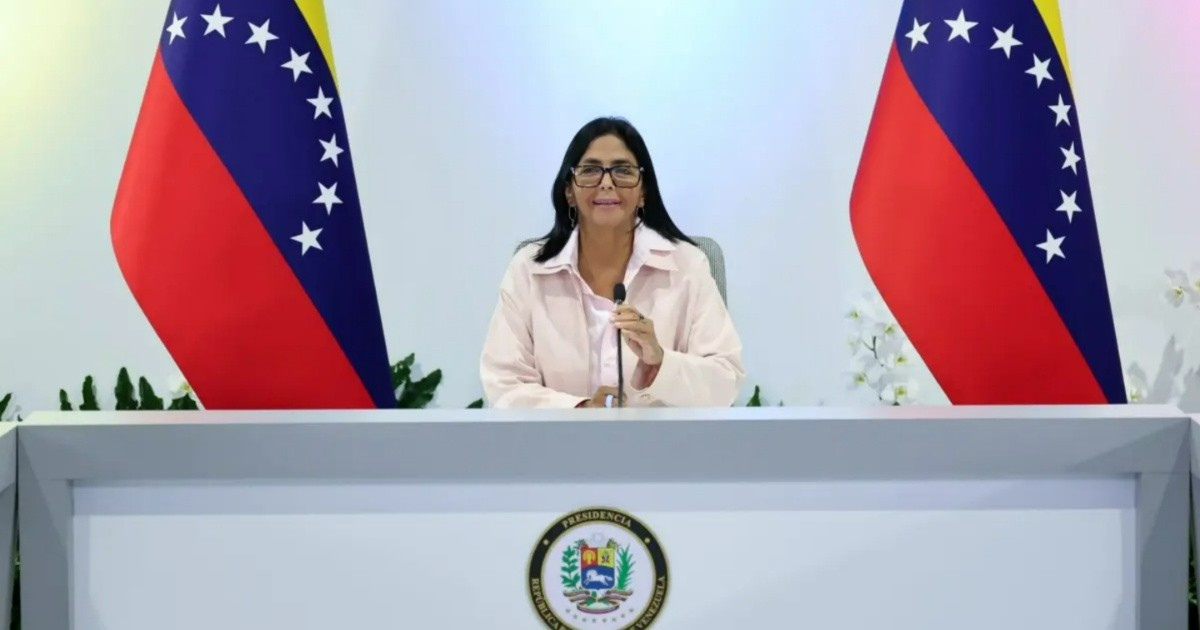
The acting president of Venezuela, Delcy Rodríguez, summoned this Sunday the start of the so-called Great Pilgrimage for Peace and Sanctions Relief, a national mobilization lasting 13 days that will traverse the country from end to end to demand the total lifting of international sanctions against the chavista regime.
The spectacle's paradox is hard to ignore: Rodríguez launches this march just 18 days after Washington removed her from its own sanctions list, a decision she publicly thanked Donald Trump for as a step towards the "normalization" of bilateral relations.
The mobilization, which will conclude on May 1, will follow three simultaneous routes from the extremes of Venezuelan territory: one will depart from the state of Zulia, bordering Colombia, and will traverse six regions in the west to Caracas; another will leave from Táchira and will cross seven Andean and plains states; the third will start from Amazonas and will pass through eight eastern regions before reaching the capital.
The pilgrimage also includes Guayana Esequiba, the disputed territory with Guyana that chavismo refers to as its "24th state."
The government called on Venezuelans to march "hand in hand, regardless of political party, raising a single voice against the blockade and the sanctions that aim to suffocate" the economy, according to statements made by spokespersons of chavismo at a press conference.
However, the U.S. has already significantly relaxed the sanctions that the regime complains about: in February, it authorized Repsol, Chevron, BP, Eni, and Shell to reactivate operations in the Venezuelan oil sector, and on April 14, it lifted sanctions on the Central Bank of Venezuela and three public banking entities through a general license from the Office of Foreign Assets Control.
Rodríguez acknowledged these advancements but insisted that a license "does not provide legal certainty" because it is "subject to temporality," he stated on Tuesday during a meeting with a delegation from the U.S. Department of Energy in Caracas, where he also urged Trump to lift the sanctions so that all investments "can fully develop."
The conclusion of the pilgrimage on May 1st coincides with the date when Rodríguez plans to announce a "responsible" increase in the minimum wage, which has been frozen since March 2022 at 130 bolívares per month, equivalent today to just 27 cents at the official exchange rate.
The figure is grotesque compared to a family food basket that, according to the Center for Documentation and Social Analysis (Cendas), amounts to 677 dollars.
Labor unions, students, and officials already marched on April 9th towards the Miraflores Palace demanding a "fair, sufficient, and dignified" salary, without receiving a concrete response from the government.
While Chavismo organizes its pilgrimage, Venezuelans abroad flooded the Puerta del Sol in Madrid this Saturday in support of María Corina Machado, who demanded to move "without delays" towards free elections, a request that Rodríguez's regime continues to ignore after more than three months in power without setting an election date.
The regime has been governing for 100 days without popular mandate, and the response it offers to Venezuelans is a two-week walk.
Filed under: