
Related videos:
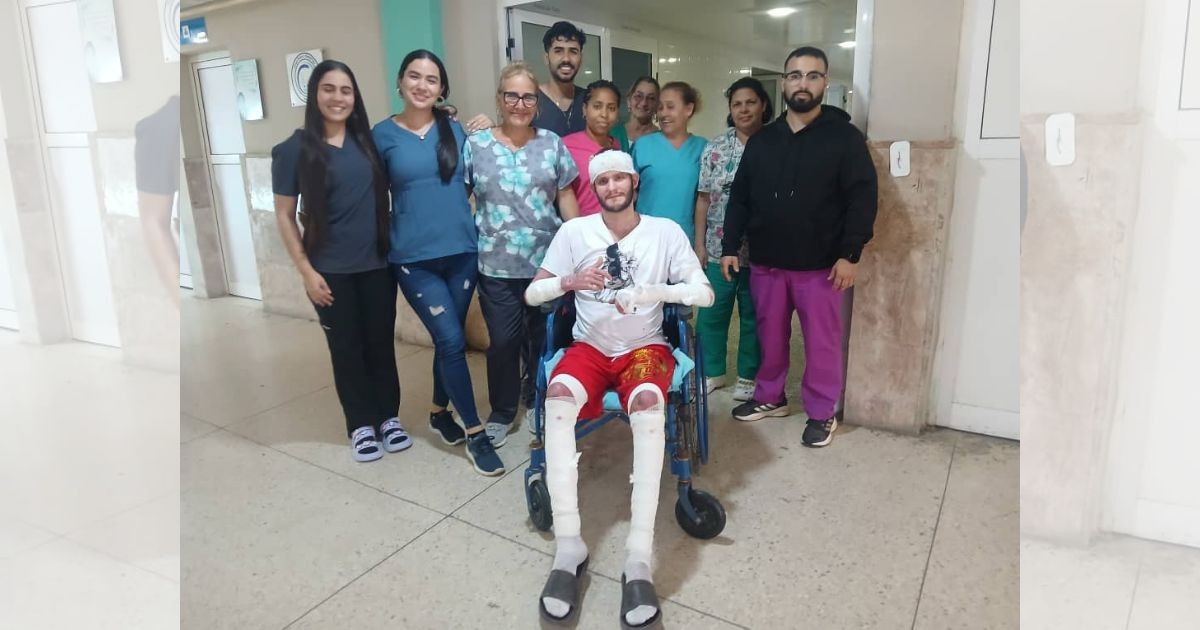
Abel Hondal Toledo, a 27-year-old resident of Guayos, survived burns on 95% of his body after an explosion caused by fireworks that occurred on February first, marking a unprecedented event in the history of medicine in Sancti Spíritus.
According to a report from Radio Sancti Spíritus, the patient was urgently transferred to the Camilo Cienfuegos Provincial General Hospital following an explosion that occurred during the handling of gunpowder.
He arrived with severe injuries covering almost his entire body, in addition to cranioencephalic trauma, ocular damage, and deep injuries to his hands.
Upon arrival, the case triggered an emergency protocol that involved the immediate preparation of the duty team, specialized reception, and the simultaneous intervention of several medical teams.
The initial priority was to stabilize him, protect his vital functions, and reverse the hypovolemic shock caused by the extent of the burns.
Meanwhile, another patient injured in the same incident was admitted in critical condition, but passed away 48 hours later, which illustrates the level of risk both cases faced from the outset.
The treatment of the young survivor was not limited to a one-time intervention but extended over weeks under constant supervision.
Intensive fluid replacement, hemodynamic control, and infection prevention defined the initial stages, which are considered crucial for patients with massive burns.
As the days went by, the main risk became sepsis, one of the most common and deadly complications in these situations.
Other factors contributed to this, such as protein loss, nutritional deterioration, and the challenges associated with the healing process in extensive injuries.
The management included frequent dressings, antibiotic treatment, continuous monitoring, and specialized nutritional support, in a context where each improvement depended on the stability of multiple clinical variables.
Evolution was not linear; rather, it was characterized by gradual advances and moments of regression.
Due to established protocols, the patient remained unaccompanied during their stay, so daily care was entirely the responsibility of the healthcare staff, who took on tasks such as hygiene, feeding, mobilization, and continuous observation.
Despite the initially unfavorable prognosis, the young man managed to overcome the most critical phase.
His recovery continues to be slow and with lingering effects, but his survival has been possible after a prolonged process influenced by both sustained medical care and the responsiveness of his body.
The case highlights the complexity involved in the care of severely burned patients, where survival depends on a continuous chain of interventions, management of complications, and intensive monitoring over weeks.
Filed under: