
Related videos:
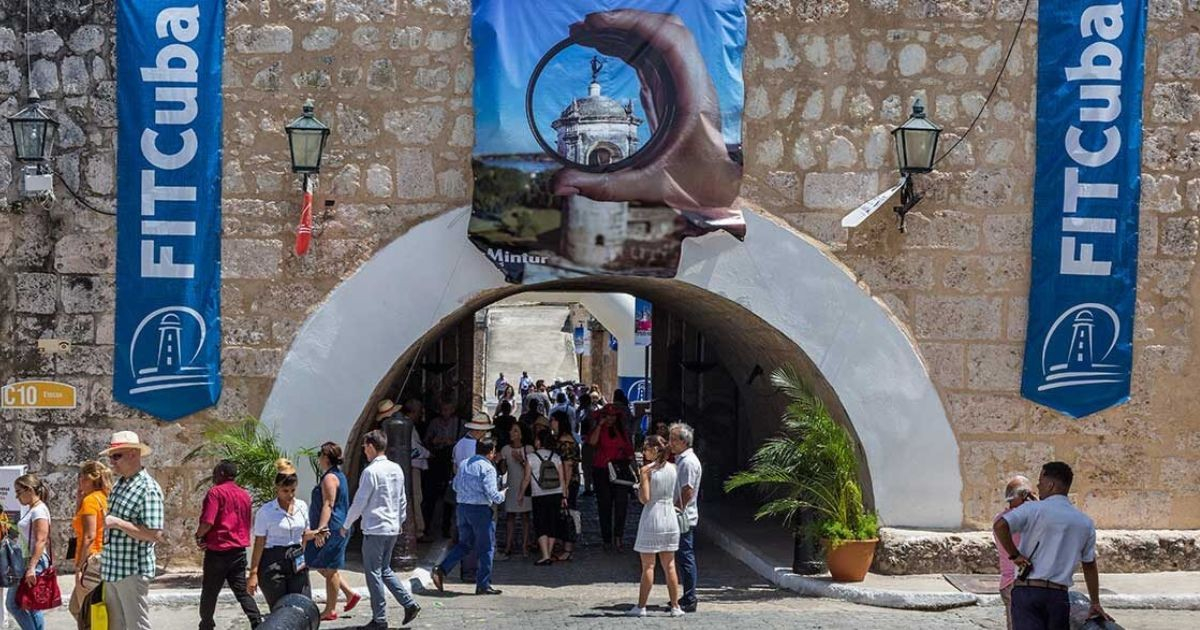
The Cuban regime will celebrate the 43rd edition of the International Tourism Fair (FITCuba 2026) from May 7 to 9, in a hybrid format that combines virtual sessions with one day in person in Varadero, while the sector is experiencing the worst decline in visitors since 2002.
Lessner Gómez, Director of Marketing at the Ministry of Tourism, confirmed the new format in an interview with Travel Trade Caribbean and was emphatic: "We are going to show the world that tourism is not dead, that Cuba is still alive."
The events on May 7 and 8 will be entirely virtual through the platform www.fitcuba.net, while Sunday, May 9 will feature an in-person day open to the public at Parque Josone in Varadero.
Among the new offerings that the regime will present at the fair are bike excursions, birdwatching, sail catamarans, bar tours in Varadero, and electric trains in Havana — panoramic vehicles with solar power operated by Ecotur and Cubatram, also accessible for individuals with reduced mobility.
Gómez attributed the change in format to the impact of the U.S. embargo on the energy sector, which directly affected airlines. However, he added, "We have not given up on new products," raising questions about what the official means when the sector has been in free fall for several years.
The virtual platform, designed by the state-owned company Desoft, will serve as a fairground with interactive booths, live conversations, document downloads, and continuous programming of music, dance classes, and cocktail demonstrations.
Visitor access is free with prior registration, which the regime promotes as an advantage to increase participation.
The official also announced a prioritized care policy for the Cuban resident abroad, with benefits in reservations, car rentals, and purchases for their families on the island.
Official optimism contrasts sharply with a devastating reality: Cuba closed 2025 with just 1.81 million international tourists, the worst record since 2002, a decline of 17.8% compared to 2024 and a plummet of 62% from the record of 4.7 million visitors in 2018.
The hotel occupancy fell to 18.9% in 2025, and tourism revenues decreased by 9.3%.
In February 2026, the decline worsened: international visitors fell by 30%, with the United States dropping by 53.8% and Canada by 28.4%.
The shortage of Jet A1 fuel at major Cuban airports led to over 1,700 flight cancellations, the repatriation of 27,900 Canadian tourists and 4,300 Russians, and the suspension of operations by Air Transat until October 2026 and by Air Canada until November 1.
Hotels such as Meliá Buenavista in Cayo Santa María, Valentín Perla Blanca, and Sol Cayo Santa María have temporarily closed due to the crisis.
Gómez acknowledged the importance of the Canadian market, which provided 754,010 visitors in 2025 compared to 860,877 in 2024: "Canada remains our most loyal market. Many are looking for alternative ways to arrive because Cuba is their second home."
While the regime organizes fairs with electric trains as an attraction, economist Pedro Monreal summed up the situation with a phrase: "Cuban tourism cannot get back on its feet."
Filed under: