
Related videos:
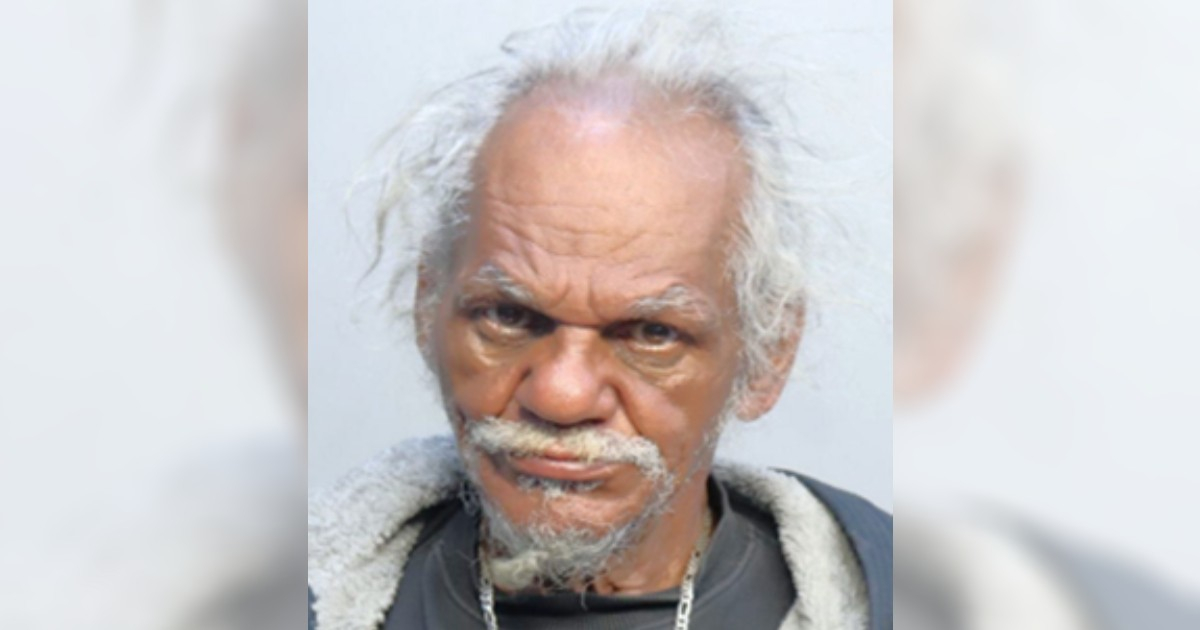
The Immigration and Customs Enforcement (ICE) in Miami took custody of the undocumented Cuban immigrant Eledoro Valenzuela Rodríguez from a jail in South Florida, putting an end to a criminal career spanning more than four decades in the United States, which sanctuary jurisdiction policies in New York and Maryland allowed to prolong, according to the official announcement made by the federal agency this Tuesday.
Valenzuela Rodríguez, a repeat offender with an extensive criminal history across several states, was incarcerated at the Turner Guilford Knight Correctional Center (TGK) in Miami-Dade when ICE officers took him into custody on March 24. Authorities "will ensure that he is deported swiftly," warned the statement.
The Cuban citizen has a final deportation order issued in 1980 —more than 45 years ago— that was never enforced, which allowed him to continue committing crimes on U.S. soil for decades and to keep "abusing innocent people," emphasized ICE.
At the time of his arrest by immigration agents, he had outstanding charges in Miami for possession of cocaine with intent to sell, possession of a firearm and ammunition by a convicted felon, and breaking and entering after prior warning.
His documented criminal history spans four decades and multiple states: in 1984, he was convicted in New York County, in the state of the same name, for weapon possession, receiving only 30 days in jail; in 1985, in Prince George's County, Maryland, for possession of a controlled substance, he received 19 days, a sentence that was suspended; in 1986, again in New York, for possession of a controlled substance, resulting in three years of probation; and in 1989, in Marion County, Indiana, for possession and trafficking of cocaine, with a sentence of 20 years and five concurrent years.
ICE also indicated that Valenzuela Rodríguez accumulated numerous additional accusations—including assault, drug trafficking, alcohol-related offenses, and others—that were dismissed by the courts over the years.
"Sanctuary politicians released this criminal from prison multiple times," the official statement warned emphatically, pointing out the responsibility of the authorities in the areas where the Cuban citizen committed crimes. The official list of sanctuary jurisdictions published by the Department of Justice includes some of the territories where Valenzuela Rodríguez was able to evade deportation for decades.
Regarding this case, the director of ICE, Todd M. Lyons, stated that "sanctuary policies protect criminals like Valenzuela Rodríguez and allow them to take advantage of generations of innocent Americans."
"These policies do not make communities safer. They hinder law enforcement and force federal agents to confront more dangerous situations and with greater public exposure," he argued. "ICE will continue to enforce the law, regardless of local policy."
In other recent cases, ICE arrested the Cuban Alexander García Peñate in Pennsylvania as part of similar operations. Additionally, two other citizens from the island, José Rivera Orta and Rigoberto Iglesias Díaz, were detained in Florida, both of whom have violent criminal records.
These arrests come after the Cuban government began accepting back nationals with criminal records, which opens up new possibilities for the effective implementation of final expulsion orders that have been pending for decades.
On February 9th, the first ICE deportation flight to Cuba in 2026 returned 170 Cubans, including at least 50 with convictions for serious crimes such as murder, rape, kidnapping, and drug trafficking.
For years, deportation flights from U.S. territory to the island did not include Cubans with a criminal record who had been in the U.S. since before January 2017. The regime in Havana systematically refused to accept these individuals, rejecting their inclusion in the lists of deportables presented to them by the State Department, in accordance with bilateral migration agreements.
Due to the regime's reluctance to accept its nationals, the administration of President Donald Trump has deported numerous Cuban immigrants with serious criminal records to third countries, whom it regards as highly dangerous.
According to official data from the Department of Homeland Security (DHS), there are over 42,000 Cubans ineligible for legal residency in the United States who have final deportation orders.
Filed under: