
Related videos:
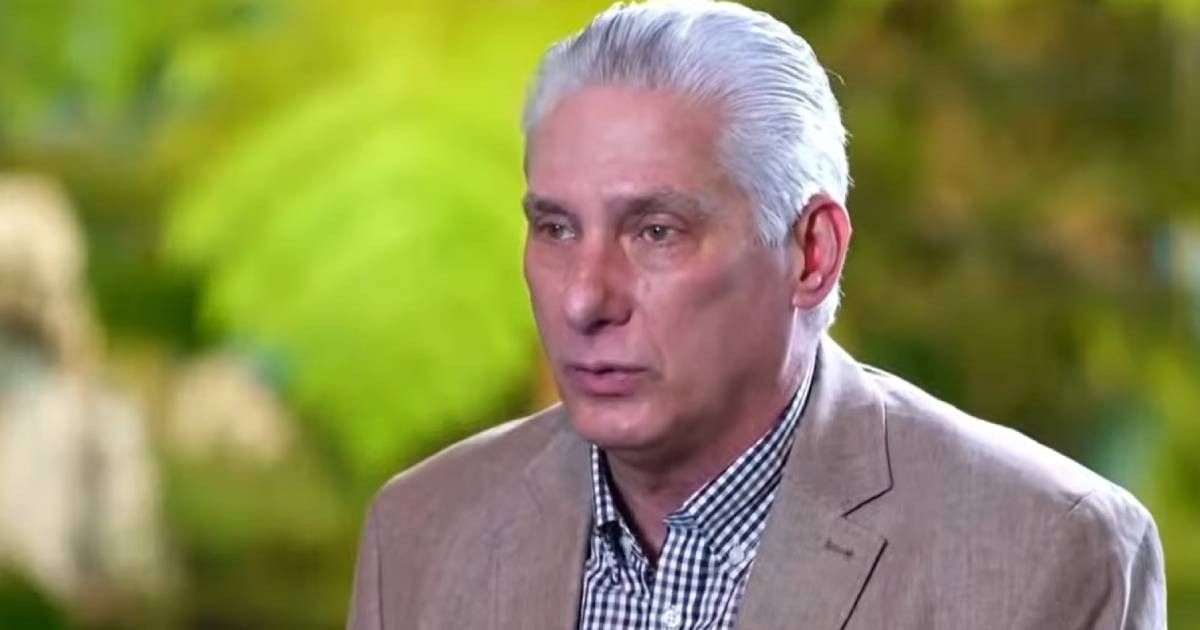
Miguel Díaz-Canel acknowledged that Cuba is in a very initial phase of what could become a broader dialogue process with the United States, and he was emphatic in rejecting regime change as a condition for any negotiation.
The statements were made in an exclusive interview granted to Brazilian journalist Breno Altman for the "20 Minutes" program from Opera Mundi, recorded in Havana amidst the greatest energy and diplomatic crisis the island has faced in decades.
In response to the question of whether Cuba would accept the "regime change" language used openly by the Trump administration, Díaz-Canel replied, "absolutely not. That's not a topic. Our internal issues are not on the table for a conversation with the United States or for negotiation."
The Cuban leader conditioned any progress on the process developing under equal terms and with respect for the island's sovereignty, warning that if Washington seeks to impose its terms, the dialogue will break down. "If one of the parties does not support that dialogue, does not support that conversation, and wants to impose, it breaks the conversation, it breaks the negotiation," he declared.
The statements come two days after the regime publicly confirmed the secret meeting on April 10, when a delegation from the State Department—the first official U.S. aircraft to land in Cuba since 2016—met in Havana with Cuban officials at the vice-ministerial level and, separately, met with Raúl Guillermo Rodríguez Castro, grandson of Raúl Castro and colonel of the MININT.
According to USA Today, Washington has imposed a for the regime to release high-profile political prisoners such as Luis Manuel Otero Alcántara and Maykel Osorbo.
The regime denied the existence of that ultimatum, describing the exchange as "respectful and professional."
The conversations take place against the backdrop of an unprecedented humanitarian crisis on the island, exacerbated by Trump’s Executive Order 14380, signed on January 29, which imposed a formal energy blockade on Cuba.
Since then, Cuba went four months without receiving external fuel, operating solely with domestic crude—which covers only 40% of its needs—and renewable energy sources.
A few weeks ago, the first Russian ship with fuel arrived as a donation from Russia, enough to cover, according to Díaz-Canel, "a third of what we need in a month" and about 10 days of operation.
The leader also reiterated that Cuba does not seek military confrontation, but warned that it does not fear war "if we have to defend the revolution, sovereignty, and independence of the country."
Filed under: