
Related videos:
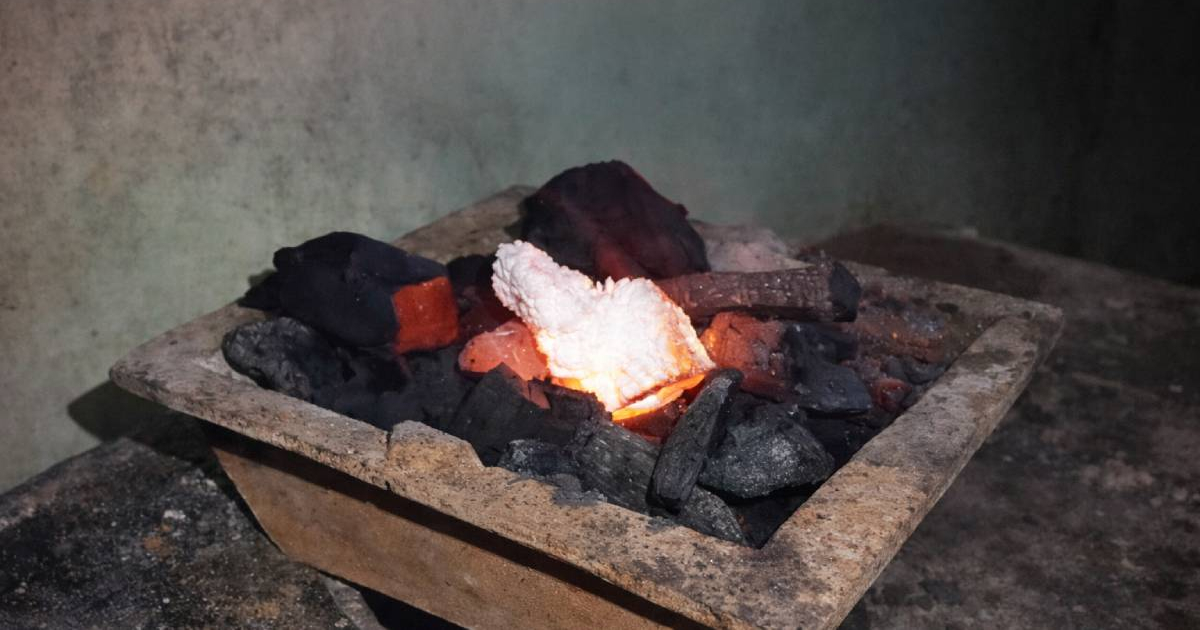
An economic association from Camagüey exported more than 150 tons of charcoal to Europe in the first quarter of 2026, generating revenue exceeding 55,000 dollars, while millions of Cubans rely on this same fuel for cooking due to the collapse of the electricity and gas supply on the island.
The International Economic Association Project Camagüey Invasive Route plans to export four thousand tons of the product throughout the year, as reported by the Cuban News Agency.
Santos Pineda Zamora, the director of the entity, stated that by 2025 they managed to sell more than 500 tons "primarily to the Italian market, which allowed them to raise over 180,000 USD."
The Vegetable Charcoal Beneficiation Plant, located in the municipality of Vertientes, has the capacity to produce 20 tons daily, although it currently operates only one of its two production lines.
Pineda Zamora explained that the foreign currency income "is used in the supply chain of coal marketing, starting from the acquisition of parts, pieces, and necessary inputs that ensure exports and allow for the capitalization of rice production and agricultural activities."
The paradox is striking: while the regime exports charcoal to earn foreign currency, the government of Díaz-Canel instructed in March to ensure the availability of materials for cooking from charcoal to firewood as an official guideline in response to the energy crisis.
More than nine million Cubans cook without stable access to conventional energy sources due to the collapse of fuel supply, worsened since January 3, 2026, when the Venezuelan supply of between 25,000 and 35,000 barrels of crude oil per day was interrupted following the capture of Nicolás Maduro.
Power outages are extending up to 36 hours, and the electricity generation deficit is around 2,040 megawatts compared to a demand of 3,000 megawatts.
Given this reality, Cubans have turned to improvised solutions: stoves made from recycled pots, rocket stoves from the eighties and handmade biomass ovens.
On April 19, a Cuban content creator demonstrated how to convert a pressure cooker into a charcoal stove in a video that went viral on social media as a symbol of ingenuity forced by the crisis.
The energy paradox is compounded by a serious accusation: the NGO Prisoners Defenders warned in September 2025 that at least 60,000 Cuban prisoners are involved in the production of charcoal under forced labor conditions, without pay, benefiting around 60 European companies, one third of which are Spanish.
In 2023, Cuba exported 61.8 million dollars in charcoal, making it the sixth largest export product of the country, with the European Union as the main destination: 87,000 tons, with Spain being the largest buyer at 15.7 million dollars.
The Agroindustrial Grain Company Ruta Invasora also aims to obtain foreign trade authority to lead the export production hub of Camagüey, with plans to export fruits, vegetables, tubers, and nectar to Canada, Spain, and Italy, as reported by its director.
Filed under: