
Related videos:
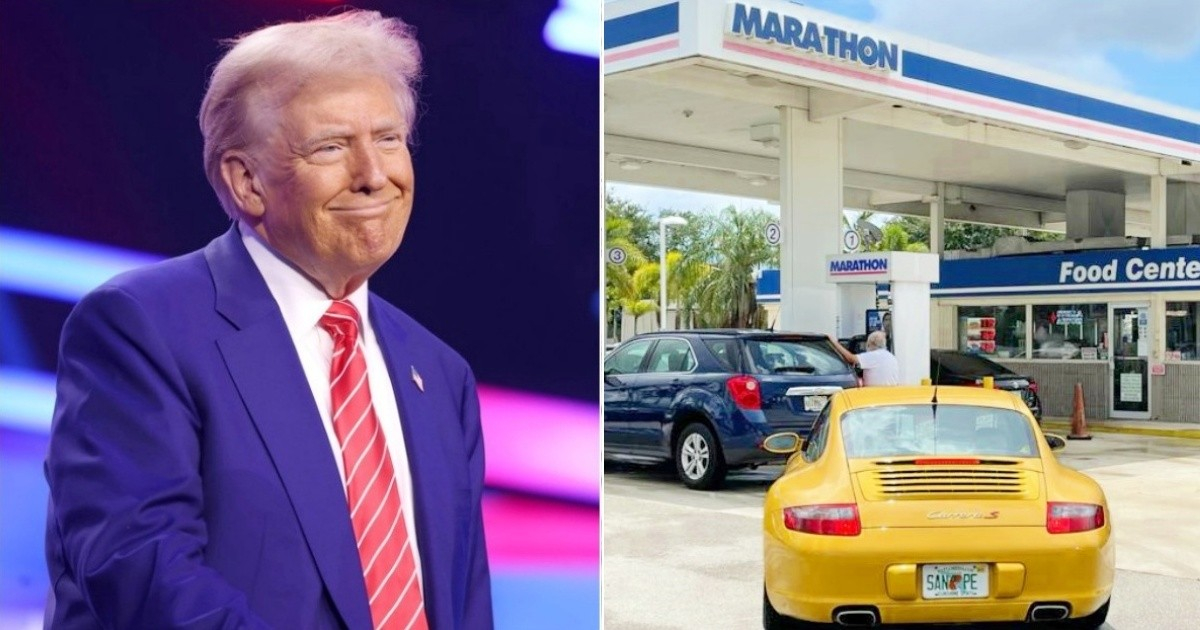
The President of the United States, Donald Trump, acknowledged this week that gasoline prices will not drop soon and will remain high “for a while,” although he avoided stating how long this situation might last.
His statements contrast with the forecasts of analysts in the energy sector, who are already warning of a period of high prices that could extend throughout 2026.
The president's words come at a time when industry experts increasingly agree on a discouraging diagnosis: fuel will remain expensive even if some of the current geopolitical tensions ease in the short term.
"Probably we will see those elevated prices persist for a longer time," warned last week Rebecca Babin, senior energy trader at CIBC Private Wealth, in statements to Yahoo Finance.
His forecast is not isolated. Other analysts, such as Patrick De Haan from GasBuddy, estimate that, even in a relatively favorable scenario - like the full reopening of the Strait of Hormuz - gas prices will remain between $3.35 and $3.95 per gallon throughout the summer months.
A new floor for prices
The current data already reflects that trend.
According to the American Automobile Association (AAA), the average price of gasoline is around 4 dollars per gallon, more than a dollar above the levels recorded before the start of the conflict in the Middle East.
In some states, the situation is even more critical.
In California, for example, drivers are facing prices exceeding 6 dollars per gallon, which has intensified social unrest and pressure on household incomes.
Experts warn that this new reality could establish a higher "floor" for fuel prices.
Among the factors explaining this phenomenon are the damage to oil infrastructures in conflict zones, the prolonged uncertainty regarding global supply, and the tendency of some countries to increase their strategic reserves.
“I believe that the minimum price will tend to be higher,” noted Babin, emphasizing that more and more governments are considering accumulating reserves more aggressively as a protective measure.
Trump: Between Acknowledgment and Justification
For weeks, Trump had downplayed the impact of the war on energy prices.
However, in a recent appearance before the press at the White House, he took on a more realistic tone.
“I have to be honest, the market is at its peak right now. I thought it would have dropped by 20 or 25 percent,” he stated.
"I thought that oil would rise to about 200 dollars a barrel. But the price is very different from what everyone imagined," he added.
Even so, the president acknowledged that consumers will feel the impact at the pumps.
“Do you know what they achieve with that? They will go without nuclear weapons,” he said, suggesting that the rising cost of fuel is an affordable expense within the geopolitical strategy of his administration.
Trump also stated that the United States maintains “total control” over the Strait of Hormuz, a key route through which nearly one-fifth of the world's oil passes.
However, he avoided specifying how long this situation could last or when the markets might return to normal.
At the same time, he made it clear that he is in no rush to reach a peace agreement with Tehran, which adds uncertainty about the evolution of the conflict and its effects on global energy supply.
“Rockets and Feathers”: Why Gas Prices Drop Slower Than They Rise
Even if the price of crude oil starts to decline, consumers would not see immediate relief at the gas stations.
Economists explain this behavior through a phenomenon known as "rockets and feathers."
The expression describes how gasoline prices tend to rise quickly when crude oil costs increase—like a rocket—but fall much more slowly when oil becomes cheaper—like a feather that descends.
The Federal Reserve Bank of St. Louis has identified this pattern as a case of “asymmetric transmission,” related to structural market factors: the purchasing times of refineries, inventory management, and the need to protect profit margins in contexts of high uncertainty.
In practice, this means that drivers are often the last to benefit when tensions in the oil market ease.
The phenomenon is not new.
Following the Russian invasion of Ukraine in 2022, oil and gasoline prices soared simultaneously, but the subsequent drop in crude prices took months to be reflected at the pumps.
The situation generated frustration within the Biden administration, which even went so far as to publicly pressure energy companies to lower prices without achieving immediate results.
Direct impact on the wallet
The rising cost of fuel is already having visible effects on the daily lives of Americans.
According to a national economic survey by CNBC, nearly 80% of citizens have cut back on their spending due to the rise in gasoline prices.
The study, conducted among 1,000 people, also reveals that the majority expect prices to remain high for at least the next six months.
Other surveys point in the same direction.
Two-thirds of Americans believe that the price of gasoline is a problem for their households, and nearly a third consider it to be a serious issue.
This context is also having political repercussions.
A recent survey from NBC News places Trump's approval rating at 37%, with 63% disapproval, in a context where the cost of fuel has become one of the main economic concerns.
Tensions within the government itself
The uncertainty about the future of prices is also reflected in contradictory messages from within the administration itself.
The Secretary of Energy, Chris Wright, recently warned that gasoline may not drop below 3 dollars per gallon until next year or even later.
However, Trump immediately rejected that forecast, calling it "completely wrong."
The discrepancies highlight the difficulty of predicting market evolution in a context marked by unpredictable factors, such as the development of the conflict with Iran, OPEC decisions, and the response of financial markets.
A prolonged pressure scenario
For analysts, the conclusion is clear: even if diplomatic progress is made or supply stabilizes, gasoline prices will not quickly return to pre-crisis levels.
The combination of geopolitical tensions, changes in global energy strategies, and structural dynamics within the market suggests a prolonged period of elevated prices.
In that scenario, American consumers will need to continue adjusting their budgets as fuel costs remain a key factor in both the domestic economy and the national political debate.
Filed under: